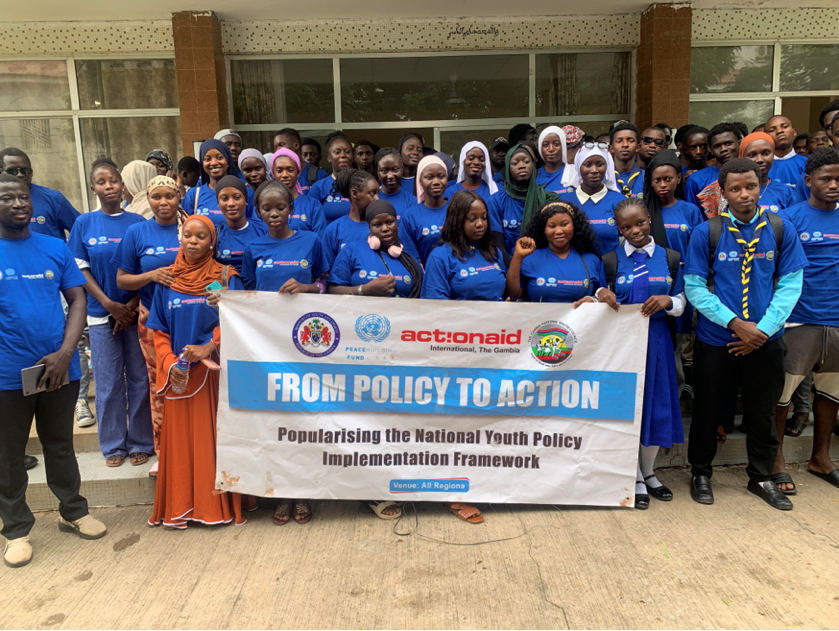
ActionAid International – The Gambia (AAITG) and the National Youth Council (NYC) have engaged 3,000 young people in 11 regional town halls to drive youth participation in the National Youth Policy Implementation Framework.
Held from October 1 to 10 across Upper River Region, Central River North, North Bank Region, Kanifing Municipality and Banjul, the forums broke down the framework and the role of stakeholders in turning policy into action.
Saikou F Bah, Project Officer at ActionAid, said youth unemployment should be considered as national crisis.
Participants demanded investment in skills development, entrepreneurship, access to finance and decent jobs, especially for rural youth. They also flagged limited economic opportunities, poor access to quality education, and exclusion from decision-making.
“Young people want to move beyond consultation. They want to plan, implement and monitor policies that affect their lives,” Bah said.
He said recommendations will be documented and shared with government ministries, departments and agencies to shape national and regional action plans. Bah urged youth to monitor implementation, track commitments and report service delivery gaps.
Ebrima Ndow, Monitoring and Evaluation Officer at NYC, said the Council will tighten coordination with the Ministry of Youth and Sports, local authorities and partners to ensure youth concerns are reflected in programmes and budgets.
“Our objective is to ensure that the voices of young people are not only heard but also reflected in policies, programmes and decisions that affect their lives,” Ndow said.
He added that NYC will strengthen monitoring, close the implementation gaps, and use digital platforms to report progress and gather youth feedback.
Alasan Jawo, Youth Coordinator at the Department of Youth and Sports, said the Policy rests on eight pillars and is aligned with the ministry’s strategic plan. But delivery requires stronger coordination, he urged.
He cited skills gaps, entrepreneurship barriers and mismatch between qualifications and jobs as critical challenges. He pointed to the National Enterprise Development Initiative (NEDI) for business training and called for deeper partnerships with the private sector and agriculture to expand jobs.
“The Youth Policy says no one should be left behind. We will therefore strengthen information dissemination to ensure that young people, including those in the most remote communities, are reached,” Jawo said.
The town halls form part of efforts to put youth at the centre of accountability for the Youth Policy with stakeholders warning that success depends on coordination, investment and real power for young people to influence their future.