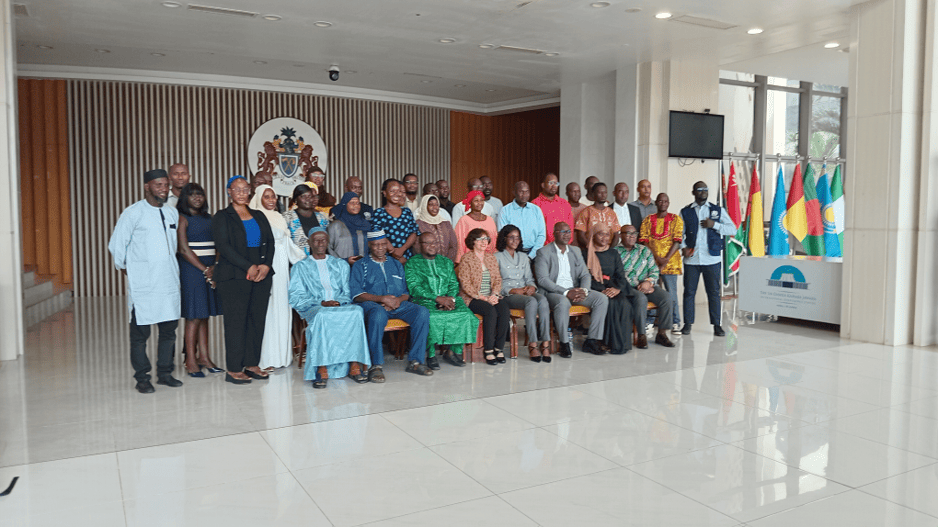
The Gambia on Monday made history at the Banjul International Conference Centre validating its first-ever National Dementia Plan 2027-2031, with the World Health Organisation, and declaring dementia is not a private family shame, not witchcraft, but a national public health emergency.
The five-year plan seeks to overhaul the country’s response through mental health, neurological and substance-use services. It covers aggressive awareness, prevention and risk reduction, early detection and diagnosis, treatment, care and support, workforce development, research, data collection and community-based services.
The plan follows The Gambia’s bold advocacy at the 78th World Health Assembly, after which The Gambia was selected as one of only three countries globally, and the only African country, for intensified WHO support to strengthen dementia response. That alone signals how seriously the world now takes Gambia’s leadership.
Director of Health Services, Momodou T Nyassi, said validation marks another milestone in strengthening mental health and neurological care. Dementia, he said, affects not only patients but families, caregivers and entire communities.
Programme Manager of National Mental Health Programme, Mam Jarra Marega said an estimated 3,000 to 4,000 people are currently living with dementia in The Gambia, with figure expected to surge as population ages. Globally, about 57 million people live with dementia, with 10 million new cases annually.
“More than 60% are in low- and middle-income countries like The Gambia, where condition has remained largely overlooked, undiagnosed and untreated.”
Veteran mental health expert Professor Lamin Sidibeh said dementia remains under-recognised and under-diagnosed in The Gambia and the sub-region because of cultural misconceptions. “Some families still associate memory loss, confusion and behavioural change with witchcraft, curses and traditional explanations, hiding patients at home until death.
That must end,” he said.
Caregiver and President of Foundation for Epilepsy and Stigma Support-Gambia, Adama Janneh, demanded greater openness, saying stigma and silence continue to crush families. She said plan must go beyond policy paper and protect dignity of people living with dementia while strengthening support for caregivers mostly women who carry the burden alone with no training, no respite, no money.
Dr Tarun Dua, Unit Head of Non-communicable Diseases and Mental Health at WHO headquarters, stressed that dementia is among the world’s leading causes of death, with LMICs carrying the heaviest burden. “Tackling stigma while strengthening health systems is non-negotiable.”
WHO Country Representative Dr Selassi D’Almeida commended the Ministry of Health for leading development of a plan, describing the validation as important step in addressing dementia as both health and socio-economic concern.
The Permanent Secretary at the Ministry of Health, Lamin Dampha, who deputised for Minister Samateh, said it is the first national dementia plan in the country’s history.
He said dementia should not be treated as private family problem to be managed behind closed doors, but as a public health and national development issue as populations across Africa age rapidly.
If implemented, the plan will train health workers to detect dementia early at PHC level, create caregiver support programmes, launch nationwide awareness to kill myths of witchcraft, collect data, and integrate dementia into NCD and mental health services.