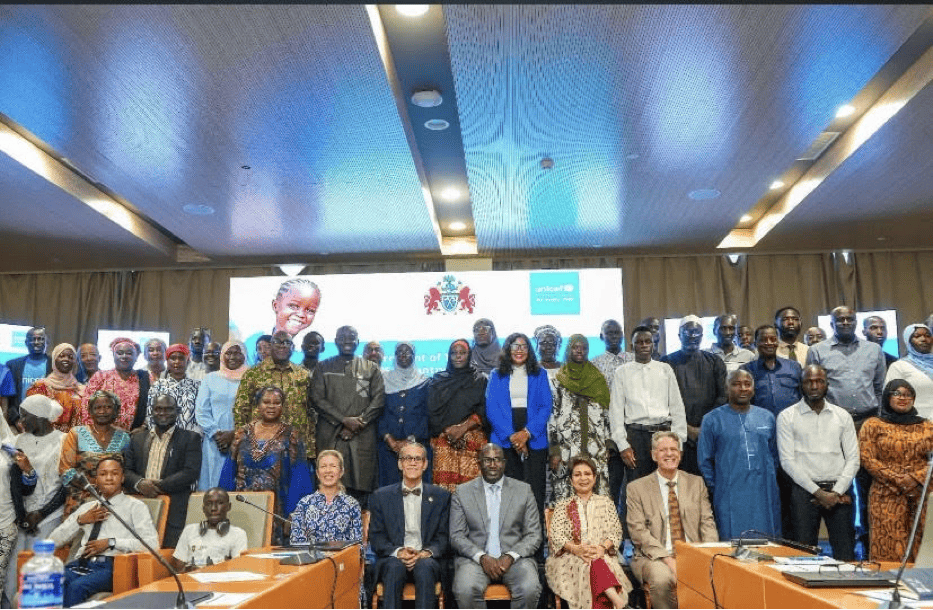
The Government of The Gambia and Unicef have begun a hard mid-term review of their 2024–2028 Country Programme — assessing what has worked, what has failed, and what must change in the next two years for Gambian children.
The review started with a strategic moment of reflection held Wednesday at the Sir Dawda Kairaba Jawara International Conference Centre.
The five-year programme focuses on health and nutrition, education, child protection, water, sanitation and hygiene (WASH), and social policy — the real-life issues.
The review will assess achievements, challenges and impact, with recommendations from technical consultations to be presented to the Steering Committee for endorsement.
Unicef Country Representative Nafisa Binte Shafique said there can be no development without investment in children.
“About 54 percent of the entire population of 2.4 million in this country are below the age of 19. When we talk about sustainable development and the future of The Gambia, we cannot move forward without investing in this 54 percent, who are the majority of the population today,” she said.
She warned that changing global environment economic and financing pressures, climate change, rapid technological transformation and emerging social challenges are hitting children the hardest.
“Programmes and policies must adapt or become irrelevant.”
UN Resident Coordinator Karl Frederick Paul described the 2024–2028 Country Programme as one of the most consequential instruments through which UN systems translate commitment into meaningful results for children, in direct support of national development priorities.
He commended progress in health, nutrition, WASH, education, child protection and social policy, as well as efforts to strengthen evidence generation to support decision-making.
Secretary to Cabinet Aliue Njie said significant challenges remain despite progress.
“Our data systems are fragmented. Inequities still affect many children, especially in rural Gambia and children with disabilities. Funding has declined as a result of current geopolitical factors. A reliable source of funding also continues to be a grave concern,” he said.
The programme is aligned with Government’s Recovery-Focused National Development Plan Yiriwa, UN Sustainable Development Cooperation Framework, and Unicef’s global and regional priorities.