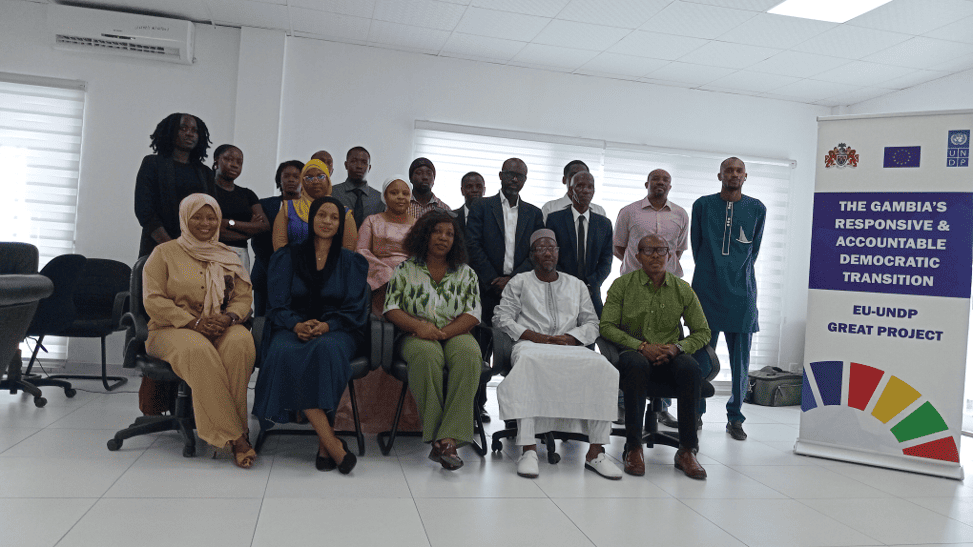
The Ministry of Justice, in partnership with the United Nations Development Programme (UNDP) on Monday held a validation workshop on its 2027–2030 Communications Strategy, with officials calling for improved public understanding of the Ministry’s mandate and stronger accountability in the justice sector.
The day-long workshop, held at the UN House in Bakau, brought together Ministry officials, representatives of UNDP and communications experts to review the proposed strategy and make recommendations ahead of its finalisation.
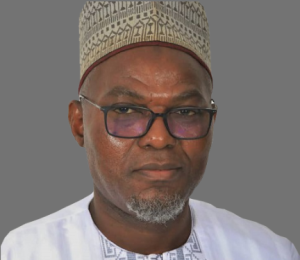
James Monibah, manager of the EU-UNDP GREAT Project, said limited public understanding of the Ministry’s responsibilities remained a challenge, with many citizens confusing its role with that of the judiciary.
He said effective communication was essential to building public trust, improving institutional transparency and ensuring citizens understood the services available to them.
Monibah said the strategy was informed by a public perception survey involving more than 1,100 respondents, alongside interviews, focus group discussions, a review of media coverage and an assessment of the Ministry’s social media presence.
The strategy identifies key areas for communication, including transitional justice, access to justice and legal aid, service modernisation, the rule of law, and institutional transparency and accountability.
He urged stakeholders to ensure the strategy was practical, adequately funded and supported by clear coordination mechanisms. He also called for a dedicated communications budget for the ministry beginning with the 2027 budget cycle.
Monibah said the initiative forms part of UNDP’s support for justice sector reforms through the EU-UNDP GREAT Project and aligns with national development priorities and Sustainable Development Goal 16, which promotes effective, accountable and transparent institutions.
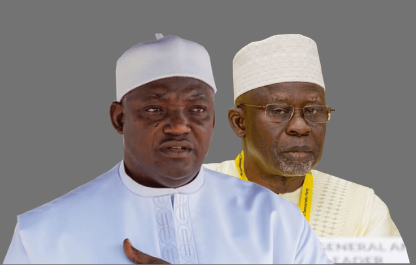
Ameth Tijan Jobe, Deputy Permanent Secretary at the Ministry of Justice, who was deputising for the Solicitor General, said the strategy should serve as a practical guide for communicating with the public rather than remain a document for approval.
He said the ministry’s responsibilities in providing legal advice to government, conducting prosecutions, protecting human rights and facilitating access to justice must be matched by efforts to provide citizens with accurate and timely information.
Jobe also highlighted the need for coordinated and inclusive communication, particularly as social media continues to influence public discourse and misinformation spreads rapidly.
He urged participants to ensure the strategy has clear priorities, defined responsibilities and effective mechanisms for gathering public feedback and measuring results. He added that its implementation should reflect the Ministry’s actual capacity and operational needs.
Jobe said the strategy should also support ongoing governance and justice sector reforms, including the implementation of recommendations from the Truth, Reconciliation and Reparations Commission (TRRC).
Jobe called on stakeholders to contribute constructive recommendations to strengthen the final document and ensure the Ministry communicates clearly, listens to citizens and responds to their concerns.
During the workshop, communications expert Demba Kandeh presented the proposed 2027–2030 Communications Strategy and its annexes for consideration by participants.