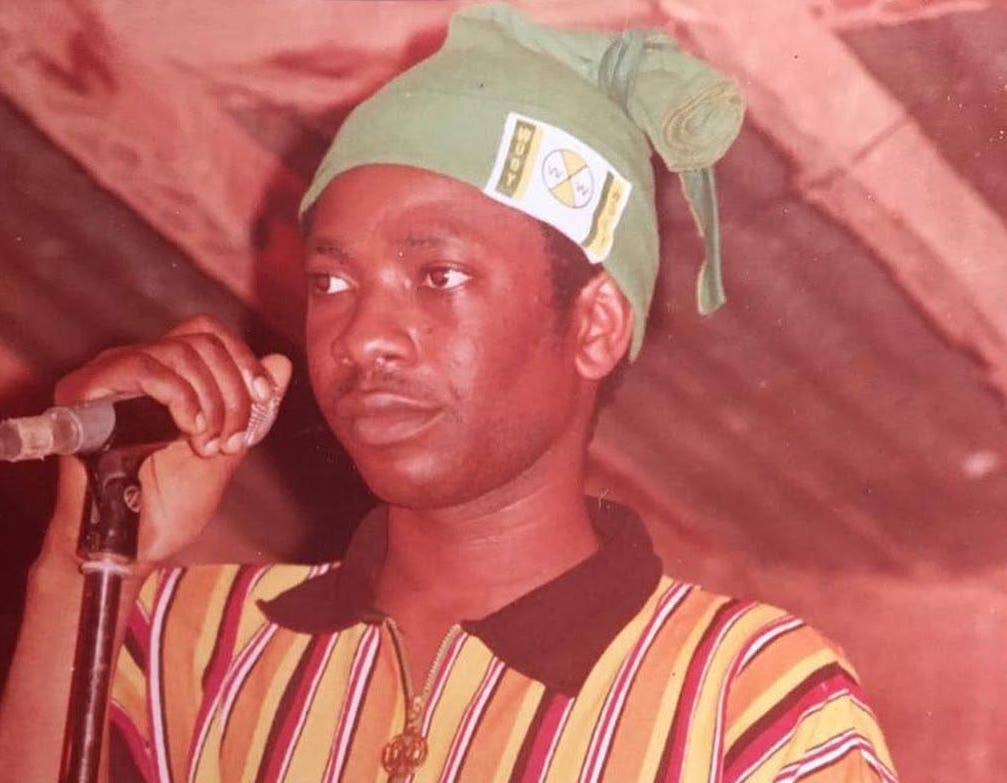
Ousainu Darboe is not the President of The Gambia. He is not in government, does not control the national treasury, does not allocate taxpayers’ money and is not responsible for implementing government policies.
This does not mean that Darboe, or any opposition leader, should be immune from legitimate public scrutiny. Every individual aspiring to lead our country must face reasonable questioning about their character, competence, policies, and vision.
However, the greatest burden of accountability must rest with those who exercise executive power, control our national resources and make decisions that directly affect the lives of ordinary Gambians.
Why, then, are we spending so much time interrogating a man who is not governing the country while failing to subject President Adama Barrow and his administration to the same intensity of questioning?
The Questions We Should Be Asking President Barrow:
Why is our country burdened with such substantial public debt? What do the inconsistencies and weaknesses in our national income, expenditure and financial management tell us about the direction of our economy?
Why are so many of our young people unable to secure meaningful, full-time employment, despite years of government promises about economic transformation and opportunities?
What is the true extent of wastage within our economy, whether financial, human, institutional, infrastructural or capital?
How much of our national wealth is lost through inefficiency, questionable expenditure, poor procurement practices, abandoned projects and weak financial controls?
What has happened to our education system, our healthcare services, agricultural productivity, commerce, national security and the effectiveness of our public institutions?
Are the failures across these sectors not serious enough to justify independent public inquiries, thorough investigations and meaningful institutional reforms?
Our national political debate should prioritise these fundamental questions, with far greater emphasis on the Commander-in-Chief and what his nearly ten years in office have meant for ordinary Gambians.
President Barrow came to power in December 2016 on a platform of democratic renewal, institutional reform, transparency, accountability and a better future for every Gambian.
Nearly ten years later, we must ask:
– What happened to the promises made to the Gambian people in 2016?
– Why have so many expectations of democratic transformation remained unfulfilled?
– What has happened to the promised institutional reforms and constitutional safeguards, including presidential term limits?
– Where has every dalasi collected, borrowed or received in the name of the Gambian people been spent?
– What meaningful action has been taken regarding the financial irregularities and allegations highlighted in public audit reports?
– Why do ordinary Gambians continue to struggle with the cost of living, unemployment, inadequate healthcare and unreliable essential services?
– What makes President Barrow believe that additional years in the highest office will deliver what his administration has struggled to achieve over nearly a decade?
These are not unreasonable questions. They are fundamental questions of democratic accountability.
The responsibility of government is not simply to announce projects, celebrate achievements or make promises. It is to demonstrate measurable improvements in the lives of the people it governs.
The acute kidney injury tragedy: a national wound that demands accountability:
Perhaps one of the most painful and disturbing questions concerns the deaths of approximately 70 Gambian children associated with the acute kidney injury tragedy of 2022.
How could so many innocent children lose their lives in circumstances that raised such serious concerns about medicine safety, regulatory oversight, corporate responsibility and failures in public protection?
How could medicines intended to relieve suffering become associated with such devastating loss of life?
What has happened to accountability for those deaths? Have the affected families received justice, adequate compensation and meaningful assurances that such a tragedy will never happen again?
What institutional safeguards have been strengthened to ensure that medicines entering our country meet the required safety standards?
These questions must not be allowed to disappear beneath political arguments and electioneering.
Approximately seventy young lives cannot simply become another forgotten chapter in our national history. Their families deserve answers, justice and compassion, and the nation deserves credible evidence that the lessons have been learned.
A government must ultimately be judged not only by the roads it constructs or the buildings it commissions, but also by how effectively it protects the lives, health, dignity and wellbeing of its citizens.
Ten years in government: where are the results?
The central issue before us is not whether Ousainu Darboe is perfect. No politician is.
The issue is whether those entrusted with our country’s leadership have honoured their commitments, protected public resources, upheld the rule of law, strengthened our institutions, and improved the lives of ordinary citizens.
President Barrow has had nearly ten years to demonstrate his leadership. He must now defend his record rather than expect Gambians to accept another round of promises.
Our hospitals, schools, agricultural communities, young people, struggling families and vulnerable citizens deserve more than political rhetoric.
The Gambian people are entitled to know whether the enormous financial resources committed to national development have produced outcomes proportionate to the expenditure.
We must also question the opportunity costs of poor governance. Every dalasi wasted represents a potential classroom not built, a hospital bed not provided, a medicine not purchased, a farmer not supported, or a young person denied an opportunity.
When public resources are poorly managed, ordinary citizens ultimately pay the price.
The presidency must therefore be judged through the lived experiences of the population, not merely through political speeches, ceremonial inaugurations and government publicity.
The presidency is not an entitlement. It is a public trust, and that trust must be earned through performance, integrity, transparency and accountability.
The December 2026 election must be a referendum on government Performance: PERIOD.
As we approach the presidential election of 5 December 2026, the national conversation must return to where it rightfully belongs: the government’s record, the management of our national resources and the wellbeing of the Gambian people.
Let us scrutinise every aspiring leader, including Ousainu Darboe. Let us question their policies, examine their promises and assess their suitability for the highest office.
But let us never confuse the responsibility of an opposition politician seeking office with that of an incumbent President who has exercised executive authority for nearly a decade.
The two responsibilities are fundamentally different.
Ousainu Darboe can legitimately be asked what he intends to do if elected President.
Adama Barrow must be asked what he has actually done with the power, public resources and opportunities entrusted to him since December 2016.
That distinction should form the foundation of our political discourse.
Why should Gambians be persuaded to grant another mandate without a convincing account of the previous one?
Why should promises about the future take precedence over an honest examination of the past ten years?
And why should the perceived shortcomings of opposition leaders dominate the political conversation while the incumbent administration escapes sustained scrutiny over the management of our national affairs?
Our political journalists, commentators, civil society organisations and citizens must recognise this distinction and direct their questions accordingly.
Democratic accountability requires more than criticism of those seeking power. It demands rigorous examination of those already exercising it.
Conclusion: The Gambian people deserve answers, not distractions:
The challenges confronting The Gambia are too serious for our national political discourse to be consumed by personality contests, trivial arguments and endless distractions.
Our people are struggling with economic hardship, unemployment, inadequate essential services and uncertainty about their future.
Our institutions require strengthening. Our public finances require greater transparency. Our young people require opportunities. Our families require security, and our vulnerable citizens deserve protection.
These matters should dominate our national political debate.
Let Ousainu Darboe and every other opposition leader be scrutinised fairly. But let us never lose sight of the fact that President Adama Barrow has governed this country for nearly ten years.
He carries the greatest responsibility for explaining what has been achieved, what has failed, what resources have been used and why he believes he deserves another mandate.
The burden of proof rests with President Adama Barrow and his administration, not with those who have remained outside executive power.
The Gambian people deserve answers, not distractions.
They deserve accountability, not excuses.
And above all, they deserve a government that understands that political power is a responsibility to serve the people, not a privilege to be enjoyed indefinitely.
By Salifu Manneh