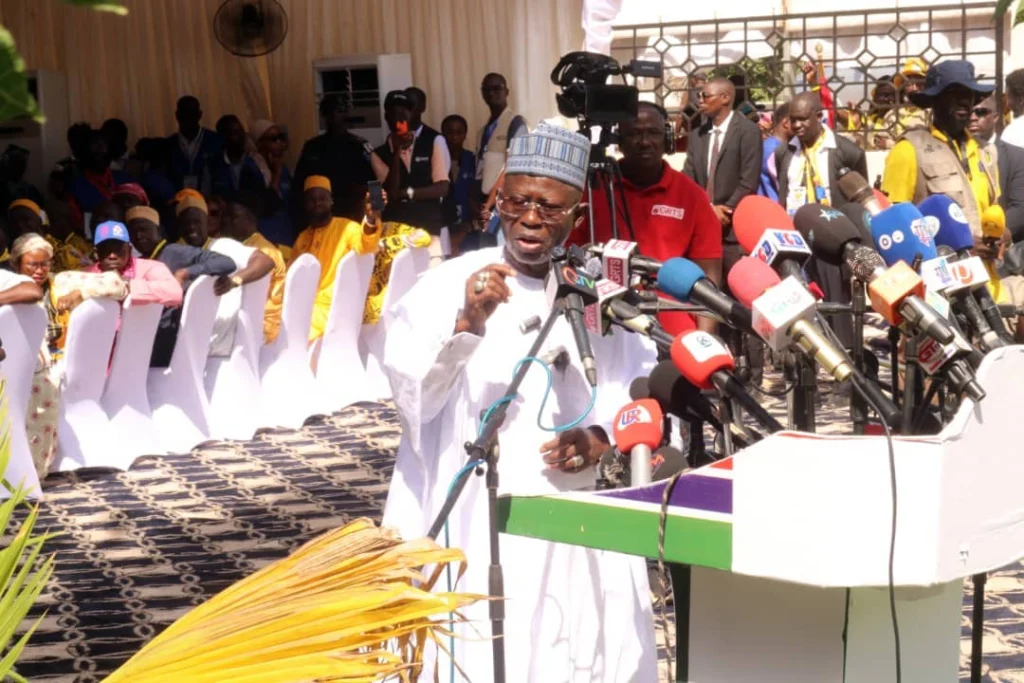
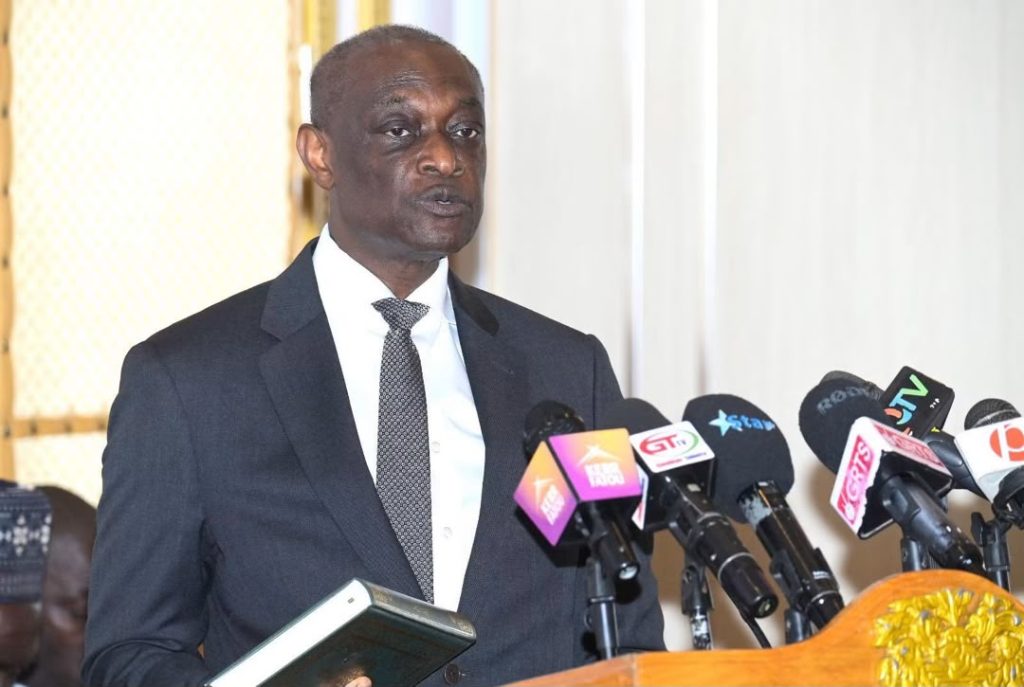
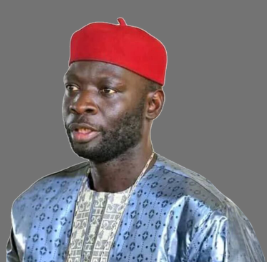
Ousainu Darboe has made his bid official. By tendering his nomination papers to the Independent Electoral Commission ahead of the 5th December presidential election, the veteran leader of the United Democratic Party has set the terms of his campaign: constitutional reform, security sector transformation, a corruption-free government, and, most strikingly, a promise to serve only one term.
It is a bold pledge. It is also a familiar one in Gambian politics. Darboe says one term will be enough to deliver far-reaching reforms and leave a lasting legacy. He wants to lay the foundation for economic take-off, move The Gambia from least-developed-country status toward middle-income status, and implement the kind of structural change that has eluded successive governments since 1996.
If he means it, and we believe he does, it would be a significant break from a pattern that has haunted this country: leaders who arrive promising reform and leave clinging to power. But a promise is not a guarantee, and Darboe himself was pressed on that very point by journalists. Asked how his single-term vow would be legally guaranteed rather than remain a personal commitment, his answer was simple: his word was his bond. For an honourable person like him, is that not enough?
His critics say it is not. They said The Gambia has learned, painfully, that personal assurances do not restrain power. Constitutions do. Institutions do. Laws with teeth do. That if Darboe intends his single-term pledge to be taken seriously, he must say how he would entrench it. Would he commit to not seeking re-election in writing? Would he accept a binding mechanism that makes a second-term bid legally impossible, not merely politically embarrassing?
They argue that without that detail, voters are asked to trust a man, not a system. And trust, in this election, is precisely what is in short supply. To be fair, Darboe’s record on corruption gives his pledge some weight. He reminded reporters that the UDP has raised concerns about economic malfeasance since 1996, pointing to the party’s role in exposing the US$3 million Swiss Bank saga involving members of the junta in the 1990s, and later the crude oil saga. He has reiterated his commitment to implementing the recommendations of the Janneh Commission, a test that every serious presidential candidate must pass.
Corruption is not an abstraction in The Gambia. It is the road not built, the hospital without medicine, the young person who leaves on a boat because opportunity was stolen at home. Any government that is serious about transformation must start there. Darboe is right to put it at the centre.
His other priorities are equally urgent. Constitutional reform remains unfinished business. The 1997 Constitution, patched and strained by decades of political manipulation, still does not fully reflect the democratic aspirations of 2016. Security sector reform, promised after the fall of Yahya Jammeh, remains incomplete. The civil service needs professionalisation, not politicisation. And the economy needs more than slogans — it needs predictable policy, investor confidence, and jobs that keep young Gambians at home.
Darboe’s call for rationality over emotion deserves to be heard. “Let us not be guided by our emotions,” he said. “We should not do anything that will disturb the tranquillity and stability of this country.” In an election season where tempers run high and social media rewards outrage, that is responsible counsel. Peace is a collective responsibility, and no candidate’s ambition is worth a single Gambian life.
Yet peace is not merely the absence of violence. It is the presence of justice. It is the belief that elections are free, that institutions are fair, that losers will accept results because winners will govern for all.
As the campaign intensifies, Gambians should demand more than pledges. They should demand plans: a draft constitutional reform timetable, a concrete security sector roadmap, a published anti-corruption implementation plan based on the Janneh Commission, and a legal mechanism for the single-term promise.
Darboe has set a high bar for himself. Now he must show how he intends to clear it — not with his word alone, but with law, with detail, and with a vision that survives beyond any one man. The fact is The Gambia does not need another saviour for one term. It needs a system that works for many terms to come.