It is never an easy feeling or situation when a member of the family or community is identified to have one form of mental disorder or another.
The statistics are very scary, but instead of motivating us to fight the problem, the subject of mental health remains a taboo in most homes and communities.
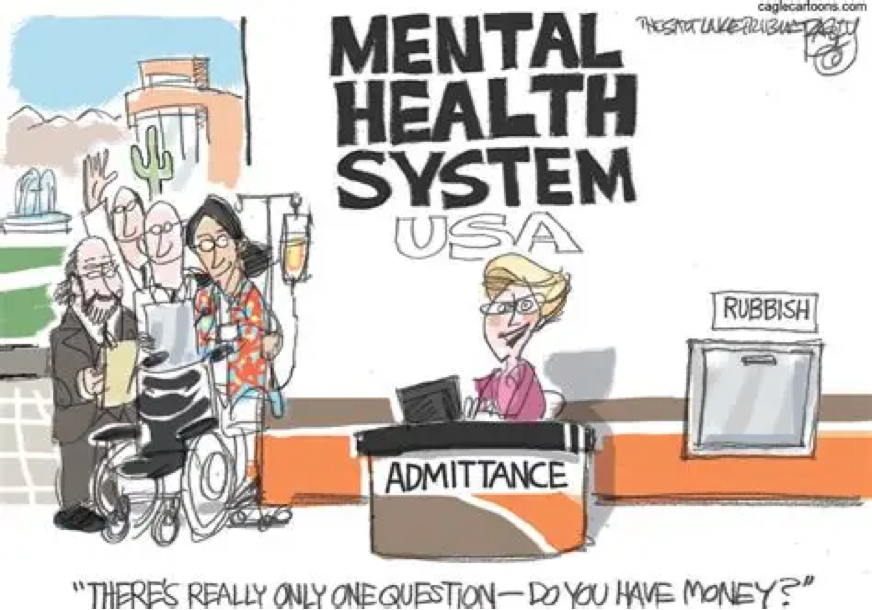
This situation often makes some families abandon their mentally challenged relatives on the streets or treatment centres. What is even more worrying is the inadequate resources provided for the country’s psychiatric facilities to care for such patients.
That is why marking Mental Health Day in The Gambia should alert us on the need to raise awareness and help address the problems associated with mental health care delivery in the country.
In The Gambia, the day was marked through coordinated national campaigns, institutional messaging, and civil society advocacy aligned with the global theme: “Lived experiences heard: real voices, real change.”
Mental health care in The Gambia has historically faced significant challenges, characterised by a lack of resources, infrastructure bottlenecks, and social stigma.
The country relies heavily on Tanka Tanka Psychiatric Hospital (located in the Western Region) as its sole dedicated psychiatric in-patient facility for a population exceeding 2.6 million people. This centralised structure creates severe access gaps for rural communities outside the Greater Banjul Area.
Care delivery has traditionally suffered from fragmentation, with limited integration between community-level general health care and specialised psychological support.
Public perception of mental illness has often relegated psychological conditions to traditional or spiritual remedies, delaying professional medical intervention.
Tanka Tanka Psychiatric Hospital has to depend on donor support to enable it to provide for the needs of its patients, especially the inmates.
According to the World Health Organisation, approximately 12% of the population in The Gambia is likely to have a mental disorder, with about 3% suffering from a severe mental disorder.
Historically, this translated to an estimated 120,000 people. However, as the population has grown to nearly 2.8 million, local health authorities citing foundational WHO data frameworks estimate the following burden among the adult population (aged 15 and above):
Severe disorders: At least 50,000 people (approx. 3% of the adult population) suffer from severe conditions.
Mild to moderate disorders: Around 200,000 people (approx. 10% of the adult population) suffer from mild to moderate mental illnesses.
Total impact: This equates to at least 250,000 adults (13% of the adult population) requiring varying levels of care and treatment.
It therefore goes without saying that the mental health sector is confronted with many challenges, including the lack of mental health facilities, lack of funding, inadequate professional health staff, social exclusion and the abuse of the rights of people with mental health conditions.
It is on this basis that the government must rally Gambians to help not only deal with the stigma associated with mental health but also mobilise the requisite resources to cater for mental health patients.
We know that as part of comprehensive efforts to improve access to mental health care services, the Gambian government, alongside international partners like the WHO, has stepped up efforts to decentralise and modernise mental health services.
The Ministry of Health advanced the Mental Health Bill, moving through final stakeholder engagements to replace outdated colonial-era legislation.
The framework aims to anchor mental health care in human rights, eliminate historical institutional neglect, and mandate community-based care protections.
A National Technical Working Group on Mental Health and Psychosocial Support (MHPSS) was inaugurated to harmonise efforts, eliminate fragmented service delivery, and improve coordination between government sectors, local communities, and international development agencies.
Recent initiatives backed by the WHO focused on training frontline health workers across regional clinics. By equipping general nurses and community health workers with basic mental health screening and management skills, the Ministry is working to shift care out of centralised hospitals and directly into local communities.
Expanded programmes have been introduced to address trauma, depression, and psychosocial distress linked to vulnerable groups, including irregular migration returnees (“back-way” survivors).
Whether it is family, friends, neighbours or colleagues, the chances are that we all know someone who is affected.
Gambians therefore have a duty to be supportive of and sympathetic to the depressed, vulnerable and destitute in society in order to prevent them from developing mental conditions.
It is on this basis that we further call on families and institutions, including the political elite, to intensify efforts at providing safety nets for the vulnerable and less privileged in our society. They should also provide access to quality mental health care services in our country.
We must all join the campaign to make the provision of quality mental health care possible to make The Gambia a better place to live.
Together, we can build a society or environment where people can receive assistance to prevent a situation where some of us would even go to the extent of taking their lives.
Let us work together to tackle the problem of inadequate investment in the mental health sector and also remove the stigma associated with the condition.
By Mamsait Ceesay