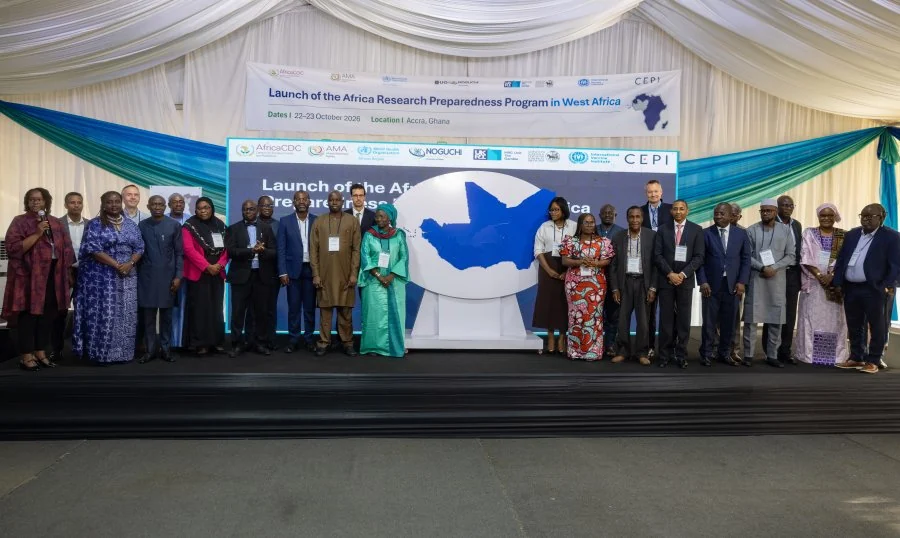
The Coalition for Epidemic Preparedness Innovations (CEPI) has announced up to US$8.2 million in additional funding
CEPI is a global partnership between public, private, philanthropic and civil organisations. Its mission is to accelerate the development of vaccines and other biologic countermeasures against epidemic and pandemic threats so they can be accessible to all people in need.
The initiative will connect experienced research centres (hubs) with a wide network of clinical trial sites closer to outbreak-prone communities. As a hub, MRCG will work to strengthen coordination and ensure that research infrastructure, trained personnel, and systems are in place and effective when outbreaks occur.
“Effective preparedness depends on sustained investment in research systems, people and partnerships long before a health emergency occurs. With our experience implementing and supporting clinical trials in the region and through this collaboration with CEPI, IVI, Africa CDC and regional partners, we are helping to strengthen a connected network of clinical trial sites that can generate evidence rapidly, while building lasting research capacity across West Africa,” said Professor Ed Clarke, Director of MRC Unit The Gambia at LSHTM.
Dr Mohamed Yakub Janabi, WHO Regional Director for Africa stated: “No single institution can make Africa research-ready on its own. WHO, Africa CDC, the African Medicines Agency, CEPI, and our Member States must work as one ecosystem, with shared research priorities, harmonised protocols, coordinated ethics and regulatory review, and trial sites linked to national outbreak response systems.”
MRC Unit The Gambia at the London School of Hygiene & Tropical Medicine (MRCG at LSHTM) is one of Africa’s leading centres for health research, with a vision to save lives and improve health in The Gambia and around the world.
For more than 75 years, it has worked with the government, communities and partners to train the next generation of African scientists and to reduce the burden of disease and death.
As a centre of excellence for research and training, the Unit remains committed to improving public health, by generating the scientific evidence that informs policy, drives implementation and delivers impact.