In Senegal, baguettes are a daily staple, with citizens consuming an average of over half a baguette daily. The Russo-Ukrainian war increased wheat prices, prompting the government to cap baguette prices. Consequently, many bakeries now mix wheat with local grains like millet, maize, sorghum, and fonio. Meanwhile, rising costs for diesel, transportation, and electricity led bakers to request a price increase. Senegal’s electricity generation relies heavily on thermal production and involves high costs. To address energy challenges, Senegal entered the petroleum era, exporting crude oil and liquefied natural gas. The government also began construction on a northern gas pipeline to transport gas to power stations.
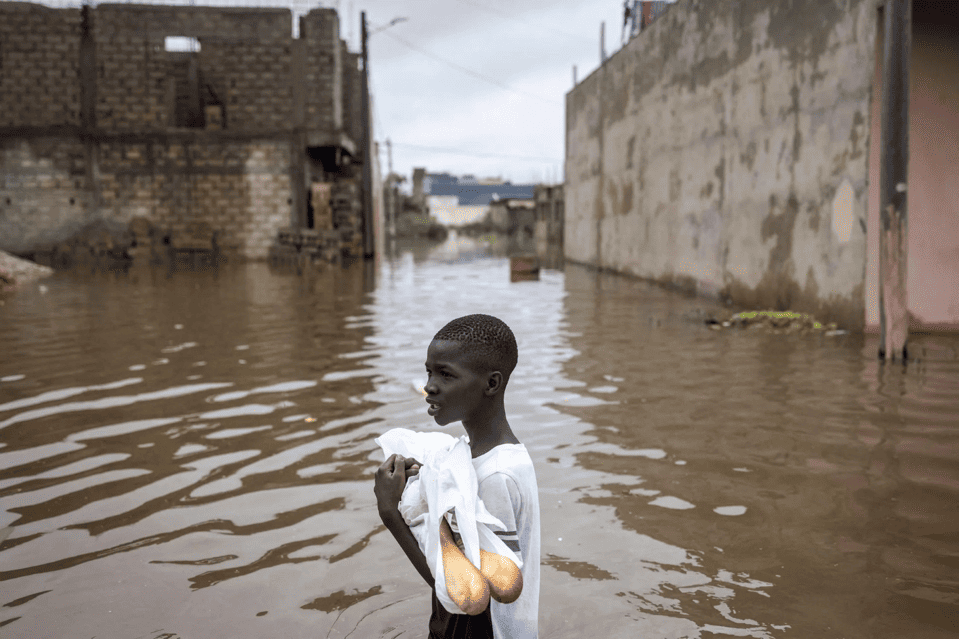
The Senegalese love a good baguette but, the simple life pleasure comes at significant cost to the country.
Baguettes of varying qualities are a staple of most former French colonies. In Vietnam, they serve the banh mi sandwich. The Mexican torta sandwhich has similar roots in short-lived client state “His Imperial Majesty” Napoleon III propped up in Mexico.
In Senegal, it is on an entirely different level, with a baguette and a coffee being the ideal start to most people’s day. The Russo-Ukrainian war has hit that tradition hard, sending wheat prices spiraling. The government has responded by capping baguette prices.
Many bakeries across Dakar and regional towns now offer baguettes with a mixture of wheat and usually local millet, maize, or sorghum. Fonio, a local grain native to West Africa, is a future “superfood.” It’s gluten-free and packed with nutritional properties that exceed those of wheat. It’s also resilient to climate change and requires comparatively little water.
Still, local grains make up 15% to 20% of the loaves sold each day in Senegal. Local wheat is also produced, but it is closer to whole-wheat bread, and many Senegalese prefer the white bread of baguettes.
“10 million baguettes are sold every day in this country of 17 million people, according to Senegal’s National Association of Grain Importers. That means every person eats, on average, more than half of a baguette every day,” said a report in The World published in 2023.
The war in Europe has led many Senegalese suppliers to seek wheat from new sources.
France, the former colonial power, remains Senegal’s largest wheat supplier, accounting for 29% of imports in 2025. Russia was not far behind at 27%, followed by Lithuania at 18% and Argentina at 12%. Argentine shipments increased more than fourfold in a single year. Senegal imported approximately 982,106 metric tons of wheat in 2025, an 8.5% increase from 2024.
According to Senegal’s national electricity utility, Senelec, thermal generation accounted for approximately 78% of the country’s electricity production in 2025. The US Commerce Department estimates Senegal’s electricity generation costs at 34–38 cents per kilowatt-hour, with consumers paying roughly 24 cents and the difference covered by government subsidies. By comparison, average electricity tariffs are around 11 cents per kilowatt-hour in Côte d’Ivoire and 9 cents in Ghana, although those retail tariffs are not directly comparable to Senegal’s generation costs.
Rising input costs
With supply shortages, the humble baguette faces a new challenge – rising energy costs. Last month, Senegalese bakers called for the regulated price of a 190g baguette to rise from 150 CFA to 210 CFA. A list of complaints is almost a miniature energy-economics textbook: flour costs, to be sure, but also rising energy prices for diesel, transportation, and electricity.
Alongside yeast and salt, it’s something for policymakers to knead into the country’s stated pledge of universal electricity access for 20 million by 2029.
Conversely, Senegal has entered the petroleum era in force, producing substantial quantities of natural gas. Sangomar is producing roughly at its designed production plateau. The Greater Tortue Ahmeyim (GTA) project is already exporting LNG. In August alone, Senegal exported 2.97 million barrels of Sangomar crude and 0.49 million cubic meters of LNG from the Greater Tortue Ahmeyim project.
The trick is that Senegal needs to use more of its gas locally. In April, the government effectively nationalized the plant, which produces 25% of the country’s electricity. The move was a key part of Senegal’s “Gas-to-Power” strategy and in accordance with its Agenda Sénégal 2050.
In July of this year, the Senegalese government reported that West African Energy’s 366 MW plant was being supplied through a haphazard system. First, LNG was transported by tanker truck, then regasified and finally delivered to the power station through a dedicated pipeline. A direct gas supply pipeline would dramatically reduce energy costs.
Elsewhere, the government is pursuing precisely that solution. In September 2026, construction began on an 85-kilometer (53-mile) northern gas pipeline intended to transport gas from the Greater Tortue Ahmeyim hub to power generation facilities, including the 250 MW Gandon power station. The pipeline is not yet operational but represents an important step toward replacing imported fuels with domestic natural gas.
“Senegal and the Sahel nevertheless hold exceptional solar and wind potential; decentralized renewable energy—especially solar mini-grids and off-grid systems—can bring electricity to schools, health centres, water systems, and productive activities while strengthening local resilience,” said Thierno Souleymane Diop Niang, a Senegalese foreign policy and security expert I spoke with in Dakar.
Security challenges are also an issue
Security is another aspect of the equation. Senegal has largely avoided the terrorist attacks that now plague Mali, Burkina Faso and Niger. However, the threat is growing along Senegal’s eastern border with Mali. The Al-Qaeda-affiliated terrorist group JNIM attacked Diboli, Mali, less than a kilometer from the Senegalese town of Kidira last year, according to Africa Center, a think-tank funded by the U.S. government.
“In the Sahel, energy is not merely a developmental issue. It is a matter of security, dignity and stability. With roughly two-thirds of the region’s population lacking access to electricity, energy poverty weakens livelihoods, limits public services and increases the cost of living. These factors deepen vulnerabilities on which armed groups and illicit economies feed.”
It is the baguette tells the story of Senegal’s economic dependencies in miniature. For all the talk of pipelines, power stations and regional security, the success of Senegal’s energy strategy will ultimately be judged at street level.
“The bread is expensive; what can you do? We must eat,” said Mohammed Diallo, a guard on a bustling road near the Bargny-Sendou Mineral and Bulk Port (PMVB). The project is Senegal’s primary strategic infrastructure project; it’s designed to serve as a massive mineral and bulk export terminal but will also handle grain imports.
“Le pain, c’est la vie,” he said; bread is life.
Source: Forbes