From the first republic to the third republic: a fundamental institutional transformation
During the First Republic, under President Sir Dawda Kairaba Jawara, The Gambia maintained a multiparty electoral system and conducted regular elections. The country attained independence in 1965 and became a republic in 1970. Elections were conducted within a political environment dominated by the People’s Progressive Party (PPP), which remained in power for nearly three decades.
However, the institutional arrangements for administering elections were fundamentally different from those existing today. According to the IEC’s own historical account, the Ministry of Local Government supervised elections, while administrative area Commissioners served as Returning Officers. In practical terms, electoral administration was embedded within the government’s administrative machinery rather than entrusted to a permanent, constitutionally established electoral commission.
This distinction is significant. It does not erase the historical contribution of the First Republic to parliamentary democracy, universal suffrage and political participation. It simply demonstrates that the institutional architecture of election management has undergone considerable transformation.
The military takeover of July 1994 interrupted the constitutional order. Under the Armed Forces Provisional Ruling Council (AFPRC), headed by Yahya Jammeh, the country entered a transitional political period. In December 1995, a seven-member Provisional Independent Electoral Commission (PIEC) was established to oversee the transition towards civilian government.
Following the adoption of the 1997 Constitution, the permanent Independent Electoral Commission was established on 17 April 1997. This was a defining institutional development. For the first time, the country had a permanent electoral body with a constitutionally recognised mandate rather than relying on the Ministry of Local Government to administer national elections.
The Second Republic subsequently conducted presidential, parliamentary and local government elections under the IEC framework. Nevertheless, the existence of an electoral commission did not automatically eliminate every challenge associated with political competition, institutional autonomy, public confidence and electoral administration.
The Third Republic [sic], which emerged following the 2016 political transition and the departure of Jammeh in January 2017, introduced a renewed democratic environment in which electoral institutions became increasingly important to national governance.
The significance of this transition cannot be measured merely by the number of elections conducted. It must also be assessed by the extent to which electoral administration has become more professional, transparent, accessible to scrutiny and responsive to the demands of democratic participation.
The increasing independence of electoral administration
One of the most important developments in The Gambia’s democratic architecture is the constitutional positioning of the IEC.
Section 42 of the 1997 Constitution establishes the Commission and defines its constitutional existence. Its responsibilities include voter registration, electoral boundary demarcation, conducting public elections and referenda, registering political parties, announcing results and administering other electoral functions.
This represents a significant departure from the administrative arrangements of the First Republic.
Today, the Commission operates as a distinct constitutional institution. Its operational responsibilities are not supposed to be directed by political parties, candidates or government departments. Its decisions must be guided by the Constitution, the Elections Act and applicable electoral regulations.
The distinction between institutional independence and institutional perfection is important. Independence is not simply a declaration; it must be demonstrated through impartial administration, transparent decisions, equal treatment of contestants and the willingness to apply the law irrespective of political influence.
The appointment of electoral commissioners under the constitutional framework, the Commission’s independent operational mandate and its accountability through public financial oversight all form part of this institutional arrangement.
At the same time, the appointment process and public funding arrangements deserve continued scrutiny and safeguards to ensure that constitutional independence is protected in practice.
The practical reforms that have changed the electoral landscape
Electoral progress must be evaluated through actual administrative improvements rather than political declarations.
The 2021 general voter registration exercise was a particularly important development. The IEC introduced biometric voter registration, capturing photographs and fingerprints as part of the registration process. The exercise ran from 29th May to 11th July 2021.
The Commission initially registered 987,824 voters, with the verified register subsequently reduced to 962,157. Women accounted for 57 per cent of the final registered electorate, while men represented 43 per cent.
This was a major operational exercise involving registration teams, technical personnel, regional structures, political stakeholders and the general public. The introduction of biometric identification represented an important step towards improving voter identification and the integrity of the register.
Another significant development was the public display and scrutiny of the voters’ register. The use of revising courts provided a formal avenue through which objections and claims concerning voter registration could be considered. This demonstrates that electoral administration is not exclusively an internal IEC responsibility; it also involves judicial processes and citizens’ rights to challenge matters through established legal procedures.
The experience of the 2021 presidential election also demonstrated the importance of independent observation, political competition and public scrutiny. The European Union Election Observation Mission documented both improvements and outstanding weaknesses, including the need for stronger legal safeguards, institutional capacity and greater transparency.
The 2023 local government elections further demonstrated the importance of organised election management. Polling operations, observer accreditation, the participation of party agents and the publication of results became essential components of the country’s evolving electoral administration.
The United States Department of State, reporting on observer findings from the 2023 elections, noted that results were announced within 24 hours of election day, an improvement over earlier concerns about delays in result publication.
These developments are not merely administrative statistics. They illustrate how electoral institutions are increasingly expected to operate within a framework of timeliness, accountability and public scrutiny.
The Joseph Colley era: continuity, experience and institutional responsibility
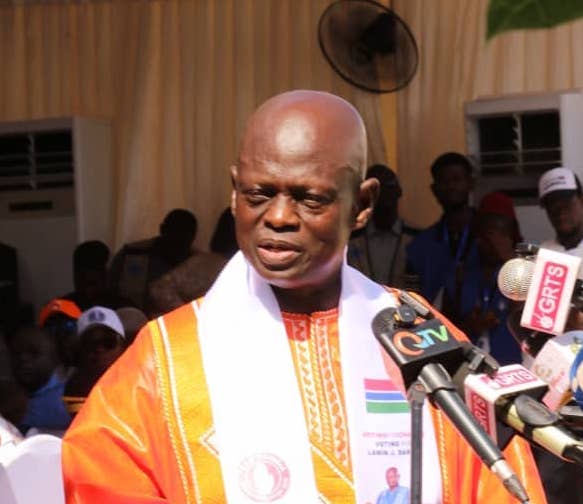
The appointment of Mr Joseph Colley as chairman of the IEC in June 2025 marked a new chapter in the commission’s institutional leadership.
His appointment followed the retirement of Alieu Momarr Njai, who had served as chairman during a significant period of The Gambia’s democratic transition.
Mr Colley’s professional progression within the commission is particularly relevant to understanding the institutional continuity he represents. Before becoming chairman, he served as director of communications and subsequently as vice chairman from 2021 to 2025.
This progression has exposed him to several critical dimensions of electoral administration: public communication, stakeholder engagement, institutional coordination, policy implementation and strategic electoral planning.
His experience within the commission is relevant because electoral administration requires more than an understanding of election-day procedures. It requires familiarity with the entire electoral cycle, including voter registration, political party engagement, nomination procedures, electoral logistics, legal compliance, public education and results management.
There is also a practical institutional advantage in leadership continuity. An individual who has served within an institution before assuming its highest executive responsibility can bring knowledge of existing procedures, administrative challenges and areas requiring improvement.
The present commission also includes Vice Chairman Cherno M Jallow and members Haddy Sedat Jobe-George, Anthony Robert Secka and Lamin Cham. Their collective constitutional responsibilities underscore that the IEC is a commission, not a one-man institution.
The chief electoral officer, Samboujang Njie, and the commission’s professional and administrative staff also play indispensable roles in translating institutional decisions into operational activities.
It is therefore important that public discussion of the current IEC recognises the wider institutional team, rather than concentrating exclusively on the Chairman.
Strategic planning and a more structured electoral cycle
One of the notable developments associated with the current institutional leadership is the preparation of the IEC Strategic Plan for 2025–2029.
The validation process, held in Soma from 23 to 29th June 2025, brought together institutional and development stakeholders to assess the Commission’s future priorities.
The exercise was supported through the European Union-UNDP GREAT Initiative.
The strategic plan is important because credible elections cannot be prepared for only during an election year. They require continuous institutional investment, human-resource development, logistics, technology, financial planning and public education.
The commission has also been working on internal policy development, including policies relating to finance, procurement, asset disposal, information technology and occupational health and safety.
These may appear to be ordinary administrative matters, but they are fundamental to institutional accountability. An electoral body that manages public resources and sensitive national information must operate through clear procurement procedures, financial controls and appropriate information-management systems.
Development partners have also contributed to institutional capacity. UNDP-supported refurbishment and equipment of regional IEC offices in Kanifing, Brikama, Kerewan, Mansakonko and Basse between 2021 and 2023 provided practical improvements to the commission’s operational infrastructure.
Such investment demonstrates that electoral integrity is not achieved by the IEC alone. It requires cooperation between national institutions and development partners while preserving the Commission’s decision-making autonomy.
The 2026 electoral preparations: a test of institutional capacity
The preparations for the 5th December 2026 presidential election provide another opportunity to assess the Commission’s administrative systems.
The IEC has undertaken stakeholder engagement and communicated its electoral roadmap, covering voter registration, revising-court proceedings, presidential nominations, observer accreditation, campaign arrangements and election-day preparations.
The commission has reported that 14 revising courts are hearing objections arising from the voter registration exercise.
The nomination period has been scheduled for 3rd to 14th November 2026, with the campaign period scheduled for 16th November to 3rd December. The Commission has also communicated arrangements for polling, accreditation and stakeholder training.
These activities require considerable coordination.
Political parties must comply with nomination requirements. Candidates must fulfil the constitutional and statutory conditions. The judiciary must independently address matters before the revising courts. Security agencies must maintain an environment in which citizens can participate without intimidation. The media must report accurately, while civil society organisations and accredited observers must be allowed to undertake their legitimate monitoring responsibilities.
The IEC’s responsibility is to ensure that these different actors operate within the same legal framework, without favouritism or selective enforcement.
Chairman Colley has publicly stated that the commission is not under the control or direction of any other authority or institution. Such statements are important expressions of the constitutional responsibility entrusted to the Commission. Their enduring significance, however, will be measured through transparent conduct, consistent application of the law and the commission’s treatment of all electoral contestants.
The importance of the other key players
A credible election is a national undertaking. It cannot be produced by the IEC in isolation.
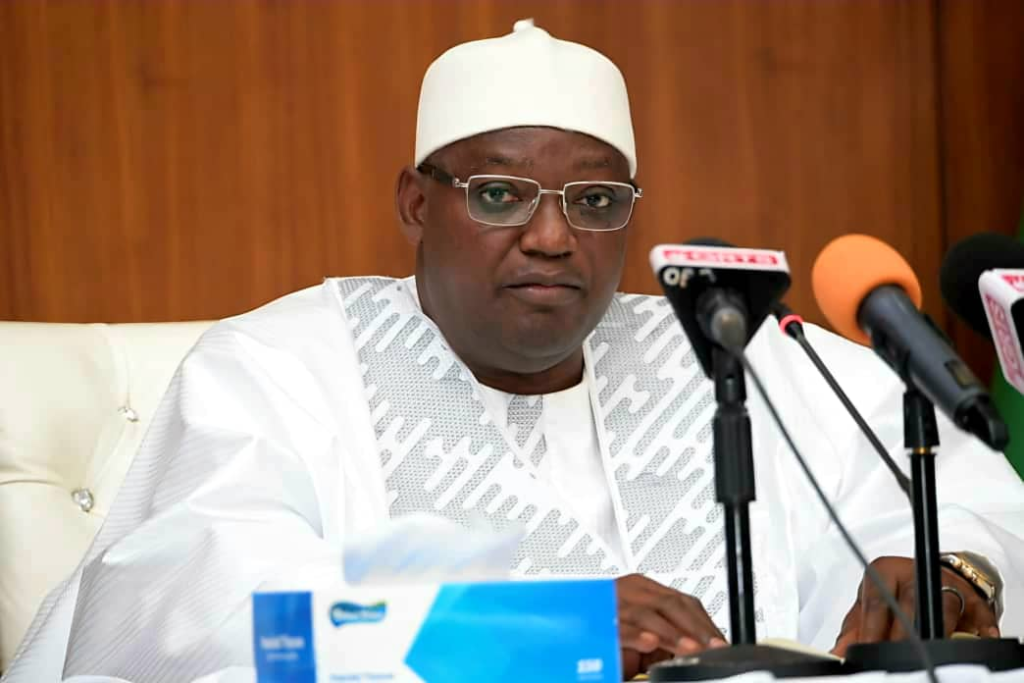
President Adama Barrow has a constitutional role in the appointment of electoral commissioners under Section 42(3), but the Commission’s subsequent electoral decisions must remain independent of the appointing authority.
The National Assembly has responsibilities relating to legislation, public funding and institutional oversight. The judiciary provides legal interpretation and adjudication of electoral disputes. Political parties and candidates must respect the electoral framework, while their agents must participate constructively in the process.
Civil society organisations, including Gambia Participates and Wanep-The Gambia, contribute through public education, electoral observation, violence monitoring and advocacy for institutional reforms.
The media remains an essential accountability mechanism. Journalists must provide accurate information, challenge misinformation and give citizens access to relevant electoral developments.
Security agencies must protect voters, candidates, election officials and electoral materials while maintaining political neutrality.
International partners, including the European Union, UNDP, African Union, Ecowas, GIZ and the Commonwealth Secretariat, have supported different aspects of electoral capacity development, observation and democratic governance.
The National Election Response Group, operationalised with the involvement of Wanep-The Gambia and other state and non-state institutions, is another practical initiative aimed at identifying and responding to threats of electoral violence.
The strength of the electoral process therefore depends on the willingness of every institution and stakeholder to respect its respective responsibilities.
The work that remains: reform must be continuous
Recognising progress must never become an excuse for complacency.
The Gambia still needs sustained attention to electoral legislation, campaign financing, political accountability, women’s participation, accessibility for persons with disabilities, diaspora enfranchisement, voter education and the protection of institutional independence.
The EU Election Observation Mission’s 2021 report raised important concerns about legal gaps, the Commission’s limited institutional capacity and the need for stronger constitutional protection of electoral independence.
These findings should not be dismissed. They should inform the next phase of reforms.
The government, National Assembly, IEC, political parties, civil society and the wider public must continue working towards a transparent and predictable electoral framework.
The objective should be an electoral institution that is adequately financed, professionally staffed, technologically equipped and protected against actual or perceived political interference.
Likewise, the Commission must remain accessible to citizens, responsive to legitimate complaints and willing to explain its decisions.
Institutional credibility is not inherited permanently from previous elections. It must be earned repeatedly through every registration exercise, every nomination, every campaign period, every polling operation and every declaration of results.
By Mohammed Jallow