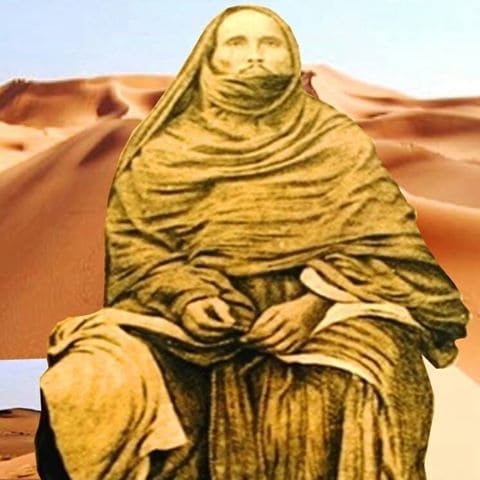
Few surnames in the West African Sahel carry as much spiritual weight, scholarly prestige, and historical depth as Hydara, (also written Haïdara, Aïdara, Aidara, or Haydara). To the outside world, it may appear as one name among many. But within the Mandé, Soninké, Peul, Songhay, and Dyula worlds, Hydara is not merely a family name. It is a declaration of Prophetic descent, a memory of the Lion of God, a lineage of judges and manuscript keepers, and one of the most important branches of the wider Sharif (Sheriff) family tree.
The spelling variations; Hydara, Haidara, Haïdara, Aïdara, Aidara, are not evidence of different peoples. They are the result of French and English colonial orthography, local pronunciation, and the simple fact that the Arabic name Hydar (حيدر), meaning “Lion”, was transcribed differently across West Africa. In French-speaking Mali, Guinea, and Senegal, the accent is often placed on the “i”: Haïdara. In English-speaking Gambia and Sierra Leone, the name may appear as Hydara, Haidara or Aidara. In all its forms, the name points to the same foundational truth: This is a family that claims descent from the Prophet Muhammad through his cousin and son-in-law Ali ibn Abi Talib, whose famous epithet was Hydar, the Lion.
The meaning of Hydara: The Lion of Ali
The Arabic root of the name is Hydar (حيدر), which translates as “lion”. In Islamic tradition, this is one of the most celebrated epithets of Ali ibn Abi Talib, the fourth caliph, the cousin of the Prophet Muhammad, and the husband of his daughter Fatima. Ali was renowned for his courage, his strength in battle, and his unwavering devotion to the Prophet. To call someone “Hydar” is to invoke the memory of Ali’s lion-like bravery and his status as the spiritual and biological progenitor of the Prophet’s descendants.
The name Hydara, therefore, is not a random surname. It is a patronymic of nobility. It declares that the bearer is connected to the family of Ali, and through Ali, to the household of the Prophet. This is why, across the Islamic world, the name Hydara is often used interchangeably with Sharif. In some traditions, a Sharif may be called a Hydara as a mark of respect; in others, Hydara is the specific family name of a branch of the Sharif lineage that has become particularly prominent in a certain region.
The connection to Sheriff: one tree, many branches
The relationship between Hydara and Sheriff is not a relationship of two different families. It is the relationship between a title and a clan name within the same sacred genealogy.
· Sheriff (Sharif) is the broad, honorific title. It means “noble” and designates any descendant of the Prophet through Fatima and Ali, whether through the line of Hassan or Hussein. A Sheriff is a Sharif, but not every Sharif necessarily uses “Sheriff” as a surname.
· Hydara is a specific surname that identifies a particular branch or family within that broader Sharifian tree. It is a clan name that carries the additional meaning of “The Lion,” linking the family specifically to the warrior-saint legacy of Ali.
In practical terms, this means that a Hydara is a Sharif, but a Sharif is not necessarily a Hydara. The Hydara name is one of the most visible and historically documented Sharifian lineages in West Africa, particularly in Mali, Guinea, and Senegal. The French Wikipedia entry on “Chérif” explicitly lists Aïdara and Haïdara as synonyms or variants used for a Sharif, confirming that the two names are understood in the same genealogical universe.
The Hydara as universally acknowledged Sharifs
Among the Dyula and Manding-speaking communities of northern Côte d’Ivoire, Mali, and Guinea, the Hydara are not merely claimants to Sharifian descent. They are universally acknowledged as Sharifs, direct descendants of the Prophet. This is a crucial distinction. In many parts of the Islamic world, claims to Prophetic descent can be contested. But in the regions where the Hydara are established, their status is accepted as a matter of communal consensus. They are the scholars, the judges, the imams, and the custodians of sacred knowledge.
The Hydara scholars of towns like Kadioha and Boron are cited in academic literature as a case in point: families whose Sharifian identity is not a matter of debate but a foundation of their social and religious authority. This authority is rooted not only in genealogy but in centuries of scholarship, teaching, and the preservation of Islamic learning.
The scholars of Timbuktu: The Mamma Haidara Library
If there is one institution that embodies the Hydara legacy, it is the Mamma Haidara Memorial Library in Timbuktu. This is not simply a library. It is a family inheritance that stretches back to the sixteenth century, a collection of manuscripts that has been passed down from generation to generation.
The Hydara family is renowned for its scholars and judges. Mamma Haidara, the father of the current custodian, was a qadi (judge) and a scholar who taught classical Islamic sciences such as jurisprudence and Arabic grammar. His personal library, built upon the collection of his forebear Mohamed El Mawlud, is one of the largest and oldest private manuscript collections in Timbuktu. His son, Abdel Kader Haidara, became internationally famous for his role in preserving and evacuating these manuscripts during the crisis in Mali, ensuring that centuries of Islamic scholarship would not be lost.
The Haidara library is not an isolated case. The Sidi Zeyane Haidara Family Library and the Oumar Haidara Family Library are also documented collections in Timbuktu, demonstrating that the Haidara name is synonymous with manuscript culture, Islamic learning, and the intellectual history of the western Sudan. These libraries are not merely repositories of old books. They are proof that the Hydara family has been a pillar of West African Islamic civilization for centuries.
The Hydara in contemporary religious life: Chérif Ousmane Madani Haïdara
In the modern era, the most prominent figure bearing the Hydara name is Chérif Ousmane Madani Haïdara, the founder of the Ançar Dine movement in Mali. His title, “Chérif,” explicitly links him to the Sharifian tradition, and his surname, Haïdara, identifies his specific lineage. He is described in academic literature as a Sharif and a spiritual guide whose influence extends across Mali and beyond.
His career illustrates the enduring power of the Hydara name. He began by criticising the hereditary claims of other religious families, but eventually began to advance his own Sharifian lineage, emphasising his descent from the Prophet and his status as a member of the Ashrāf (the noble ones). Whether one agrees with his theology or not, his success demonstrates that the Hydara name still carries immense social and spiritual capital in the contemporary Sahel.
The difference between Hydara and Sheriff
To understand the relationship between the two names, consider the following distinctions:
1. Sheriff (Sharif/Cherif) is a title of descent. It is a general designation that can be applied to any descendant of the Prophet, regardless of their specific family name. A Sheriff is a Sharif, but their surname might be something else entirely.
2. Hydara is a specific clan name within the Sharifian lineage. It is a surname that identifies a particular branch of the Prophet’s descendants, one that traces its identity through the epithet of Ali as the “Lion.”
3. All Hydara are Sharifs, but not all Sharifs are Haidara. The Hydara name is a subset of the larger Sharifian world. Just as a member of a specific family is part of a larger tribe, a Hydara is part of the broader community of Sharifs.
4. The names can be used together or interchangeably in some contexts. A person may be called “Sheriff Hydara,” combining the title and the clan name, as in the case of Chérif Ousmane Madani Haïdara. In other contexts, “Hydara” alone is sufficient to signal Sharifian status because the connection is so well established.