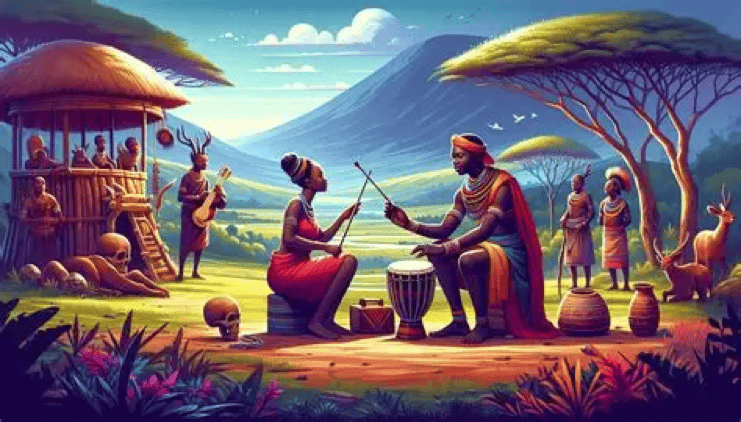
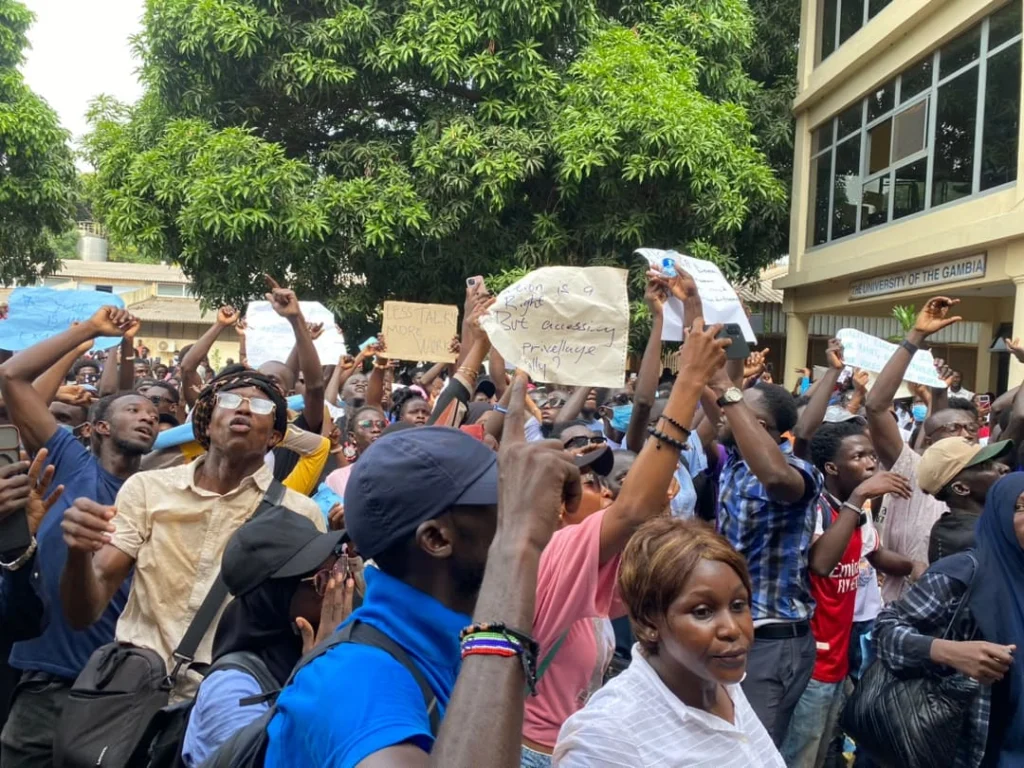
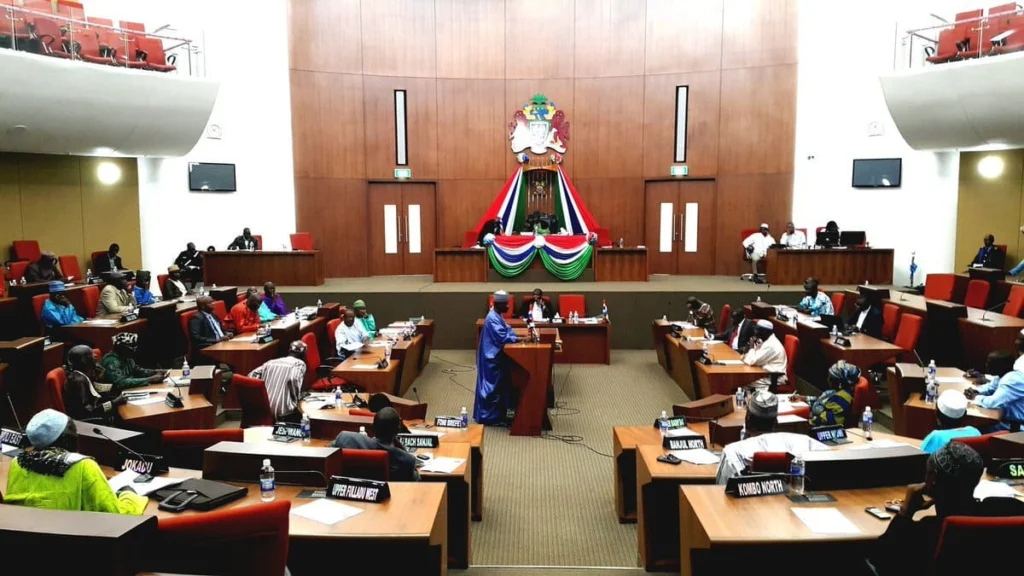
Africa is gradually losing something far more precious than many of its people realised: its indigenous languages. Across the continent, languages that have survived for centuries are slowly disappearing, not necessarily because their speakers have been wiped out, but because their own children are abandoning them. From one generation to another, the ability to speak ancestral languages is declining, while English and French increasingly dominate homes, schools, social interactions, and public life. What makes this tragedy particularly disturbing is that, in many instances, the process is happening within African families themselves. We are becoming witnesses to the gradual death of our languages, often without recognising that we are also losing important parts of our identity, history, and cultural heritage.
Consider the Manjago people, my ethnic community whose language and cultural traditions form part of Africa’s rich heritage. The Manjago language, like many other indigenous African languages, is facing the danger of gradual extinction as younger generations increasingly lose the ability to speak it fluently. This should be a source of serious concern, not only to the Manjago people but also to everyone who understands the importance of preserving Africa’s cultural identity. The situation is not peculiar to the Manjago. Languages such as Wolof, Mandinka, Serer, Fula, Jahanka, Igbo, and numerous other African languages face varying degrees of pressure from dominant languages, changing social attitudes, and declining intergenerational transmission. Although the circumstances differ from one community to another, the underlying problem is similar: indigenous languages are gradually losing their place in the everyday lives of the people who inherited them.
One of the most troubling features of this development is the growing number of young Africans who cannot speak their mother tongues, even when both parents belong to the same ethnic group. Some understand their ancestral languages but struggle to express themselves in them. Others can manage only a few words and familiar expressions. Even among those who speak their languages, conversations are frequently mixed with English or French, sometimes to such an extent that the indigenous language becomes secondary. Code-switching, in itself, is not evidence that a language is dying; multilingual people naturally move between languages. The real danger emerges when younger speakers can no longer sustain ordinary conversations in their mother tongues, when children cannot understand their grandparents, and when parents no longer consider passing their ancestral language to their children a priority.
Why are we allowing this to happen? A major explanation lies in our attitude towards foreign languages. Across many African societies, English and French have acquired a social prestige that indigenous languages are often denied. They are associated with formal education, professional advancement, government employment, international communication, and economic opportunity. Consequently, some parents believe that speaking English or French at home will give their children a better start in life. In pursuing this ambition, they deliberately or unconsciously push their indigenous languages aside, treating them as obstacles to progress rather than valuable cultural assets.
This is a dangerous misconception. There is absolutely nothing wrong with learning English, French, or any other international language. Indeed, these languages provide important opportunities for education, diplomacy, trade, scientific exchange, and global engagement. The problem arises when proficiency in a foreign language is achieved at the expense of one’s mother tongue. Why should an African child have to lose the language of his or her ancestors to become educated, successful, or internationally competitive? Why should speaking Manjago, Wolof, Mandinka, Serer, Fula, Jahanka, Igbo, or another indigenous language be regarded as less valuable than speaking English or French? Such attitudes reflect a deeply rooted linguistic inferiority complex that Africa must confront.
The home is where much of this tragedy begins. In many households, parents communicate with their children almost exclusively in English or French, even when they share a common indigenous language. Their intention may be understandable: they want their children to speak fluently, perform well in school, and compete successfully in the modern world. Yet, in the process, they may be depriving those children of an essential connection to their cultural roots. A child who grows up unable to communicate in the language of the family may eventually struggle to understand traditional expressions, ancestral stories, proverbs, songs, ceremonies, and the wisdom of older generations. The result is a gradual cultural alienation in which children may know more about foreign cultures than their own.
The consequences are far-reaching. Indigenous languages are not merely instruments of communication; they are repositories of collective memory, historical experience, moral instruction, and traditional knowledge. Through our languages, communities have preserved their histories, explained their understanding of the world, transmitted agricultural knowledge, identified medicinal plants, interpreted the environment, and taught younger generations the values that sustain communal life. Proverbs, folktales, oral traditions, and ceremonial expressions often carry meanings that cannot be adequately conveyed through direct translation. When a language disappears, the knowledge embedded within it may also be lost, particularly where it has not been documented or preserved.
This is why the extinction of indigenous languages should concern historians, educators, cultural institutions, governments, and ordinary citizens alike. A community that loses its language risks weakening its connection with its past. Although cultural identity can survive changes in language, the loss of an ancestral tongue makes it more difficult to transmit certain traditions and historical experiences in their original richness. We cannot continually celebrate African heritage at cultural festivals while neglecting the very languages through which much of that heritage has been preserved.
Colonialism contributed significantly to the problem by establishing European languages as dominant instruments of administration, formal education, and public authority. Unfortunately, many African countries retained these arrangements after independence. Over time, the language of the colonial administration became the language of opportunity, while indigenous languages were frequently confined to informal conversation and domestic settings. However, colonial history alone cannot explain our present predicament. More than six decades after independence in many African countries, African parents, communities, educational institutions, and governments must also accept responsibility for the choices that are accelerating linguistic decline.
What, then, must be done? The first responsibility rests with parents and families. We must begin by speaking our indigenous languages to our children at home. Grandparents should tell stories, explain family histories, teach proverbs, and encourage conversations with younger relatives in their ancestral languages. Parents must understand that teaching children English or French does not require abandoning Manjago, Wolof, Mandinka, Serer, Fula, Jahanka, Igbo, or any other indigenous language. A child can learn several languages and benefit from each of them. Multilingualism should be treated as an advantage, not as a reason to sacrifice cultural identity.
Second, African governments must move beyond rhetorical commitments to cultural preservation. Indigenous languages should receive meaningful support through educational policies, teacher training, textbook production, literature, broadcasting, and cultural programmes. Schools should provide appropriate opportunities for children to learn to read, write, and speak their local languages, while ensuring that they also acquire the international languages required for wider communication. Universities and research institutions should document endangered languages, record oral histories, compile dictionaries, and preserve traditional knowledge for future generations.
Technology also offers opportunities to reverse the trend. African languages should become more visible in digital communication, social media, films, music, mobile applications, and online educational resources. Young people are more likely to value their languages when they see them functioning effectively in contemporary settings rather than being treated as relics of the past. Cultural associations, traditional rulers, religious institutions, writers, and community leaders must equally encourage language use and create opportunities for younger generations to engage meaningfully with their heritage
Overall, the survival of our indigenous languages depends on whether we are prepared to use them, teach them, and value them. Governments can formulate policies, universities can conduct research, and cultural organisations can organise festivals, but these efforts will have limited impact if parents continue to raise children who cannot speak the languages of their ancestors. Language preservation must begin in the home and extend into schools, public institutions, and the wider society.
Africa must awaken to this silent cultural emergency. The gradual disappearance of the Manjago language and the declining use of Wolof, Mandinka, Serer, Fula, Jahanka, Igbo, and other indigenous languages should serve as a warning to all African communities. We must not wait until the last fluent speakers have died before realising the magnitude of what we have lost. By then, dictionaries and recordings may preserve some words, but they cannot fully recreate a living language spoken naturally between parents and children, elders and grandchildren, and communities and their members.
The tragedy is not simply that our languages are dying; it is that we are sometimes raising the very generations that may allow them to die. We cannot continue to exchange our linguistic heritage for the mistaken belief that foreign languages are inherently superior. English and French may open doors to the wider world, but our indigenous languages connect us to our roots. We need both.
If we allow our ancestral languages to disappear, we will bequeath to future generations a diminished inheritance: a people increasingly disconnected from the words, memories, and cultural expressions that shaped their ancestors. The time to act is now. Let us speak our languages to our children, teach them with pride, and preserve them with determination. Before the voices of our ancestors become silent, we must ensure that their languages continue to live on the tongues of generations yet unborn.
By Andrew Sylva