On 5th December 2026, Gambians will once again exercise one of the most sacred rights of citizenship: the right to determine who shall govern them. They will vote according to their convictions, their hopes, their disappointments and their aspirations for a better future. Some will vote for continuity, others for change. Some will celebrate the eventual outcome, while others will experience the bitterness of electoral defeat. Such is the nature of democracy.
But there is a truth far greater than the outcome of any election. When the counting is over, whoever wins the presidency, The Gambia must not lose.
I write these words before the election, before the results are known and before anyone can accuse me of favouring a victor or consoling a defeated candidate. I write not as an advocate of any political party, but as a Gambian profoundly conscious of the fragility of peace and the enormous responsibility we owe to generations yet unborn.
I have previously written about the power of one vote and the moral responsibility of every citizen to participate in determining the destiny of our country. Today, I write about an equally solemn responsibility: the duty to preserve the country after exercising that vote.
For what value is the right to vote if, in exercising it, we destroy the very country whose future we seek to determine?
What is the worth of political victory if the streets are filled with fear, businesses are shuttered, schools are closed, families are displaced and innocent lives are lost?
And what consolation is there in occupying the highest political office in the land if the nation over which one presides has been torn apart by the struggle to acquire it?
These are not rhetorical questions. They are questions that history has answered, sometimes in the most devastating ways imaginable.
The history of nations teaches us that peace is among the most precious possessions of a people, yet it is also among the easiest to squander. A country may spend generations building institutions, nurturing coexistence, educating its children and establishing the foundations of prosperity, only to see much of that progress undone by a few days of political recklessness.
A reckless statement can ignite a crowd. An unverified allegation can become a rallying cry. A provocative speech can turn neighbours into enemies. A single act of violence can provoke retaliation, and retaliation can create a chain of events beyond the control of those who first set it in motion.
Civil unrest rarely announces the full extent of its consequences at the beginning. It begins with anger, suspicion, inflammatory rhetoric and the dangerous belief that political opponents are enemies who must be defeated at all costs. By the time reason returns, the damage may already have been done.
And when that happens, those who suffer most are rarely those who sought political power.
It is the ordinary citizen. The market woman whose livelihood disappears. The father whose business is destroyed. The student whose education is interrupted. The child who suddenly becomes an orphan. The family that abandons its home, not because it has somewhere better to go, but because remaining has become too dangerous.
No political victory can restore a life unnecessarily lost. No presidential inauguration can erase the trauma of a child who has witnessed violence. No campaign promise can rebuild overnight the trust that once allowed neighbours of different political persuasions to live together as one community.
The true cost of electoral violence is therefore not measured only in destroyed property or lost revenue. It is measured in broken families, shattered trust, interrupted futures and the dreams of children who had no part in the political quarrel that destroyed their world.
We do not need to imagine what could happen when political competition overwhelms national responsibility. Africa’s recent history provides painful evidence.
In Kenya, the disputed presidential election of December 2007 was followed by devastating violence. More than 1,100 people were killed and approximately 600,000 displaced, according to figures reported by the International Criminal Court. Communities that had lived together were divided by political and ethnic tensions. Homes were burned, families fled and an entire nation confronted the terrible consequences of an electoral dispute that spiralled into violence.
The tragedy was not simply that one political side accused another of wrongdoing. It was that political disagreement became a justification for violence against fellow citizens.
In Côte d’Ivoire, the crisis following the disputed presidential election of 2010 was even more devastating. Rival claims to political authority contributed to months of armed conflict and violence that claimed at least 3,000 lives. What began as a struggle over who had won an election became a national catastrophe, leaving families grieving, communities divided and institutions struggling to recover.
The lesson from these countries is not that elections should be avoided or that genuine electoral grievances should be ignored. It is that political grievances, however serious, must never be allowed to become permission for violence against the nation itself.
There is no contradiction between demanding electoral justice and rejecting bloodshed. Indeed, the pursuit of justice loses its moral foundation when innocent lives become its casualties.
History also offers examples of political leaders who understood that their personal ambitions could never be greater than the countries they sought to govern.
In Nigeria, President Goodluck Jonathan conceded defeat in the 2015 presidential election to Muhammadu Buhari. In his statement following the announcement of the results, he declared:
“Nobody’s ambition is worth the blood of any Nigerian.”
Those words remain among the most profound expressions of political restraint in contemporary African democratic history.
Jonathan did not cease to be a Nigerian because he ceased to be President. His concession demonstrated that there is dignity in relinquishing power and honour in placing national stability above personal ambition.
In Ghana, following the December 2024 presidential election, Vice President Mahamudu Bawumia conceded defeat to John Dramani Mahama even before the Electoral Commission formally declared the result. His declaration was brief but memorable:
“Ghana has won.”
What extraordinary wisdom lies in those three words.
Not merely that a candidate had won, nor that a political party had prevailed, but that the country had emerged with its democratic continuity preserved.
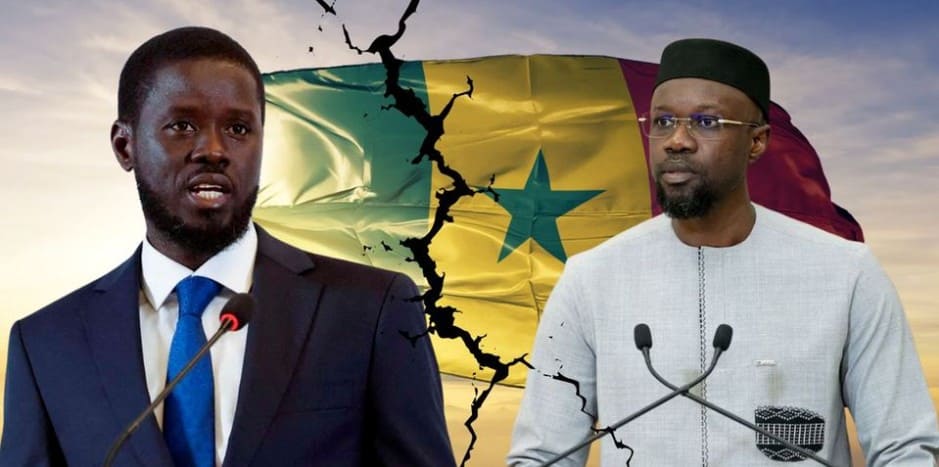
Our neighbour Senegal provides another important lesson. Its 2024 presidential election was preceded by serious political tensions, protests and controversy over the attempted postponement of the vote. Yet constitutional intervention helped restore the electoral process, and the eventual election produced a peaceful transfer of power to Bassirou Diomaye Faye.
Senegal’s experience reminds us that democratic peace is not necessarily the absence of disagreement or political tension. It is the ability of constitutional institutions, political leaders and citizens to resolve their differences without allowing the nation to descend into sustained violence.
But the responsibility to preserve national peace does not rest upon incumbent Presidents alone. History also offers equally inspiring examples of opposition leaders who, having failed to unseat sitting Presidents, demonstrated that accepting a legitimate electoral outcome is not a sign of weakness, but an expression of political maturity and patriotism.
In Ghana, following the disputed presidential election of December 2012, opposition candidate Nana Akufo-Addo challenged the victory of incumbent President John Dramani Mahama before the Supreme Court. When the Court dismissed his petition in August 2013, Akufo-Addo accepted its decision, notwithstanding his disagreement with the judgment, and personally telephoned President Mahama to congratulate him. His conduct demonstrated that even the most vigorously contested electoral disputes can be resolved through constitutional institutions without sacrificing national peace.
Similarly, in the United States presidential election of 2012, Republican opposition candidate Mitt Romney conceded defeat to the incumbent President Barack Obama. Addressing his supporters, Romney declared: “I have just called President Obama to congratulate him on his victory.” He went further, expressing his hope that the President would succeed in guiding the nation. In those words, lay an important democratic principle: wishing a political opponent success in governing is not a betrayal of one’s political convictions, but an acknowledgment that the welfare of the country is greater than the ambitions of any individual.
In India, following the 2019 general election, opposition leader Rahul Gandhi accepted the electoral verdict and congratulated incumbent Prime Minister Narendra Modi on his re-election, notwithstanding their profound ideological differences. His acknowledgment of the outcome demonstrated that political opposition and respect for the democratic will of the electorate are not mutually exclusive.
These examples, taken together with those of incumbent Presidents who have gracefully relinquished power, convey one unmistakable message: the responsibility to protect the peace of a nation belongs equally to those who govern and those who aspire to govern. Whether an incumbent President is re-elected or an opposition candidate emerges victorious, the obligation remains the same: respect the freely expressed will of the people, pursue legitimate grievances through constitutional means, and never place political ambition above national stability.
For ultimately, democracy is not strengthened merely when a President accepts defeat. It is strengthened equally when an opposition leader acknowledges a legitimate victory by an incumbent, and when both recognise that the country belongs to neither of them.
The contrast could not be clearer. Where political ambition becomes an obsession with power at any cost, nations risk destruction. Where political leaders accept constitutional limits and place national interest first, democracy is given the opportunity to mature.
One path leads towards fear, displacement and despair. The other creates the conditions for reconciliation, confidence and progress.
The choice is ours.
We Gambians need not look beyond our borders to appreciate the danger.
The presidential election of December 2016 and the political crisis that followed brought our country dangerously close to a national emergency of unimaginable proportions. A result initially accepted was subsequently rejected by the incumbent President. Political uncertainty deepened, regional intervention became necessary, and thousands of people fled their homes in fear of what might follow.
By 20th January 2017, the United Nations Refugee Agency reported that approximately 45,000 people had crossed into Senegal amid the uncertainty.
For many families, the prospect of violence was no longer an abstract possibility. It was real enough to make them abandon the security of their homes and seek refuge beyond our borders.
Ultimately, a political settlement, supported by regional and international diplomacy and pressure, enabled the transfer of power to President Adama Barrow and helped avert a far greater catastrophe.
We must never treat that outcome as an assurance that our country will always escape the consequences of political confrontation.
The Gambia was fortunate to avoid widespread armed conflict. But nations cannot build their future on the assumption that fortune will always intervene when wisdom fails.
The lesson of 2016 and 2017 must remain engraved in our national conscience that no electoral dispute should ever again bring our people to the point where mothers and fathers must flee with their children, families must abandon their homes or citizens must wonder whether tomorrow will bring peace or violence.
A nation that has once approached the precipice has a particular responsibility not to walk blindly towards it again.
There is something profoundly beautiful about our small country. We profoundly call our country “The Smiling Coast of Africa.” But that name must be more than a slogan by which we welcome visitors to our shores. It must be a promise we make to ourselves and to generations yet unborn: that whatever our political differences, we shall never permit hatred to triumph over humanity or violence to destroy the peace that has defined us as a people. A nation cannot proudly call itself the Smiling Coast while its children weep, its families flee and its communities are torn part by political conflict. Let us therefore preserve not merely the name, but the values that have made the name worthy of our country.
We are a people of different ethnicities, traditions, religions, political beliefs and social backgrounds, yet we have long shared a common national home. Our strength has never been that we all think alike. It has been that, notwithstanding our differences, we have generally found ways to live together.
Our mosques and churches, our markets and schools, our villages and neighbourhoods, our weddings, naming ceremonies and funerals, all remind us of relationships far deeper than the temporary divisions created by political campaigns.
The neighbour who supports a different political party remains our neighbour after the election. The colleague who votes for another candidate remains our colleague. The brother who disagrees with our political choices remains our brother.
Political disagreement must never be allowed to sever bonds that existed before political campaigns and ought to survive long after them.
Nelson Mandela, whose life remains an enduring testament to reconciliation, wrote in Long Walk to Freedom:
“No one is born hating another person.”
Those few words carry a profound warning for every society tempted to turn political differences into hostility.
Our children are not born knowing the names of political parties. They do not enter this world carrying political symbols or harbouring resentment against people who vote differently. Such divisions are learned, cultivated and sometimes deliberately exploited.
If we teach our children hatred in the name of politics, we may leave them a country in which they inherit our prejudices rather than our wisdom.
But if we teach them respect, tolerance, compassion and the dignity of disagreement, we leave them something infinitely more valuable than any electoral triumph: a nation in which they can live together despite their differences.
Our national coat of arms carries three simple words: Progress, Peace, Prosperity.
Peace stands at the heart of that national aspiration. Without it, progress becomes uncertain and prosperity becomes fragile. It is the bridge between what we hope to achieve and what we can realistically build.
Our Constitution similarly envisions The Gambia as a democratic state dedicated to freedom, peace, progress, prosperity and justice.
These ideals should never be reduced to ceremonial words. They are the standards by which our conduct, especially during elections, must be measured.
I address a particularly solemn appeal to our political leaders, candidates, party officials and those who exercise influence over public opinion.
Your words matter.
A political leader’s speech is not merely a collection of sentences delivered to a crowd. It can become an instruction to thousands who believe in that leader. It can calm a frightened population or inflame an already anxious one. It can encourage restraint or legitimise aggression.
Leadership therefore carries a moral burden far greater than the pursuit of victory.
If you win, govern with humility. Do not mistake electoral victory for ownership of the country. Do not humiliate those who voted against you. Remember that the office you occupy belongs ultimately to the people, including those who rejected your candidacy.
If you lose, accept a credible and lawful outcome with dignity. If you believe the process has been compromised, pursue the remedies available under the Constitution and the law. Demand accountability, insist upon transparency and challenge wrongdoing through legitimate institutions.
But do not turn disappointment into a summons to violence.
Above all, never encourage others to make sacrifices that you would hesitate to ask of your own children.
A politician may lose an election and contest another. A political party may suffer defeat and return to power years later. But the young person who loses his life in politically inspired violence will never vote again. His mother and father will never embrace him again. His children, if he has any, may grow up without him.
What political ambition could possibly justify such a price?
And to those who use inflammatory rhetoric from the safety of distant countries, I offer a particular reminder. Those of us living abroad must recognise that words transmitted across borders can carry consequences borne by families at home. Distance from the danger does not absolve anyone of responsibility for helping to create it.
Let every politician remember that there was a Gambia before his political career, and there must be a Gambia long after it has ended.
Presidents will come and go. Political parties will rise, divide, merge and disappear. Generations of political leaders will eventually become names in history books.
But the country must endure.
The Gambia does not belong to any President, candidate, political party or generation. It is a sacred national inheritance entrusted temporarily to the living, with an obligation to preserve it for those who will come after us.
No politician should ever confuse the temporary privilege of holding public office with permanent ownership of the country.
There is, however, an important distinction that must never be misunderstood.
An appeal for peace is not an invitation to tolerate electoral fraud, political intimidation, abuse of power or the suppression of constitutional rights.
Peace is not silence in the face of injustice. Calm is not an excuse for impunity. National unity cannot be sustained by demanding obedience while disregarding legitimate grievances.
The foundations of durable peace are fairness, transparency, justice and public confidence in institutions.
The Independent Electoral Commission must discharge its responsibilities with independence, impartiality and transparency. Political parties must conduct themselves responsibly. Security agencies must protect citizens without fear or favour and respect the constitutional freedoms of all Gambians. The courts must remain accessible and independent in resolving electoral disputes.
Citizens must be free to express disagreement, seek lawful redress and engage in peaceful protest without intimidation.
A peaceful election is not simply one in which the streets remain quiet. It is one in which the will of the people can be expressed freely, the results can be credibly established, and disagreements can be resolved through institutions rather than violence.
Martin Luther King Jr. expressed a principle that remains relevant to every democratic society:
“We must pursue peaceful ends through peaceful means.”
This does not weaken the pursuit of justice. It strengthens its legitimacy.
We must therefore reject the dangerous suggestion that citizens have only two choices: submission or violence.
There is a third and far more honourable path. It is the path of constitutionalism, civic courage, lawful challenge, institutional accountability and peaceful democratic engagement.
The right to disagree is indispensable to democracy. The right to destroy is not.
Imagine the morning after the declaration of the election results.
Imagine the markets of Serekunda, Tipper Garage, Banjul and Brikama opening as usual. Imagine children walking safely to school, farmers attending to their fields, fishermen returning to the river and the sea, and families going about their lives without fear.
Imagine a defeated candidate addressing supporters with dignity, calling for restraint and promising to remain committed to the national interest.
Imagine the winner extending a sincere hand of reconciliation, acknowledging the concerns of those who did not vote for him, and declaring that his responsibility is now to serve every Gambian.
Imagine security officers protecting all citizens equally, religious leaders encouraging reconciliation, and young people celebrating their democratic participation without threatening those who made different choices.
Such a country would send a powerful message to the world.
It would demonstrate that The Gambia is a nation where democratic institutions can function, political differences can be reconciled, investments can be made with confidence, businesses can flourish, and children can grow up believing that their future will not be held hostage by the political ambitions of those who govern them.
Peace protects education, healthcare, commerce, agriculture, tourism and the countless ordinary activities upon which national development depends. It preserves livelihoods, encourages investment, strengthens public confidence and creates the stability necessary for a nation to realise its potential.
A country at peace can confront its challenges, debate constitutional reform, strengthen its institutions, combat corruption and demand accountability from those entrusted with public office. A country consumed by civil unrest must first struggle to restore the very conditions necessary to pursue those ambitions.
That is why peace must never be regarded merely as the absence of violence. It is the foundation upon which justice, freedom, democracy and prosperity must stand.
And that is why the peaceful conclusion of an election is not simply a victory for the candidate declared the winner. It is a victory for every citizen, including those who voted against that candidate.
But perhaps the greatest beneficiaries of our commitment to peace are not those of us who will cast our votes on 5th December 2026. They are the countless Gambians who have not yet been born.
Somewhere in the future, children will be born in Banjul, Basse, Farafenni, Brikama, Janjangbureh, Soma, Niamina, Kiang and villages throughout our country. They will enter this world knowing nothing of the political controversies of 2026. They will neither remember the campaign speeches nor care which candidate attracted the largest crowds or commanded the loudest applause.
They will simply inherit the country we leave behind.
They will inherit its institutions, its schools, its hospitals, its opportunities and its challenges. They will inherit its rivers, forests, villages and cities. And, perhaps most importantly, they will inherit the consequences of the decisions we make today.
What shall we leave them?
A nation divided by grievances they did not create? Communities poisoned by political hatred they did not nurture? Institutions weakened by conflicts they did not provoke? A country whose possibilities were sacrificed upon the altar of political ambition?
Or shall we leave them a nation in which political competition is normal, disagreement is respected, public authority is accountable, and the peaceful transfer or retention of political power is determined by constitutional processes rather than intimidation and violence?
We are merely the present custodians of a country that belongs as much to the future as it does to us.
There is something profoundly unjust about allowing the ambitions of today’s politicians to endanger the lives and opportunities of tomorrow’s children.
Those children have no vote in our present election. They cannot attend our political rallies or plead with our leaders to exercise restraint. They cannot defend their interests in the political debates of today. Yet their future is being shaped by our conduct.
We therefore owe them a duty that transcends party loyalty, political allegiance and personal ambition.
Our generation has no moral right to destroy a country that future generations have not yet had the opportunity to inherit.
If we truly love our country, The Gambia, that love must be demonstrated not only by the enthusiasm with which we vote, but by the discipline with which we respond when the results do not favour our preferred candidates.
Patriotism is not measured by the colour of the shirt we wear, the political slogans we chant, the crowds we mobilise or the intensity with which we defend a political leader.
It is measured by our willingness to protect the national interest even when doing so requires us to restrain our own emotions and accept personal political disappointment.
The truest patriot is not necessarily the person who shouts the loudest for his political party. It may well be the person who, at a moment of great national tension, has the courage to say to his own supporters: enough, let us not destroy our country.
That is not weakness. It is moral courage of the highest order.
For in the end, we shall not be remembered merely for whom we supported, whom we opposed or which party secured victory. We shall be remembered for what we preserved, what we protected and what we passed on to those who came after us.
And when future generations examine the history of our country, may they find that at the moment when political passion threatened to overwhelm national conscience, Gambians chose wisdom over anger, restraint over recklessness and country over party.
Every generation encounters moments that test its character. Some generations are remembered for their courage in war, others for their struggle for freedom, and others for the institutions they built.
We Gambians have an opportunity to be remembered for something equally noble: the wisdom to disagree without destroying one another and the patriotism to preserve peace even when political passions are at their highest.
I appeal to our elders to offer counsel rather than encourage division. I appeal to our religious leaders, both Muslim and Christian, to remind their congregations that no political disagreement should extinguish the sacred value of human life. I appeal to our traditional authorities to become voices of reconciliation within their communities.
I appeal particularly to our young people, whose energy, aspirations and enthusiasm are so often at the centre of political campaigns. You are not merely supporters of today’s political parties. You are the custodians of tomorrow’s Republic.
Do not allow yourselves to become instruments of political violence. Do not surrender your future to politicians whose ambitions may change with the seasons. Do not permit anyone to persuade you that the destruction of public property, intimidation of political opponents or violence against fellow citizens is an acceptable demonstration of political loyalty.
The very politician for whom you might risk your life today may tomorrow sit across a negotiating table from the opponent you were encouraged to hate. Political adversaries have a remarkable ability to reconcile when their interests demand it. Unfortunately, the dead cannot participate in that reconciliation.
Remember that those who urge you towards confrontation may not be standing beside you when the consequences arrive.
Your country needs your intelligence, enterprise, courage and creativity far more than it needs your anger. It needs you as future teachers, doctors, lawyers, entrepreneurs, farmers, engineers, public servants and leaders. It needs you alive, educated, employed and hopeful.
Never sacrifice a lifetime of possibilities for a moment of political anger.
I appeal also to the media, journalists, commentators and those who command large audiences on social media. Freedom of expression is one of democracy’s greatest protections, but it also demands responsibility.
In an age when a rumour can travel across continents in seconds, the damage caused by misinformation can be immediate and irreversible. Verify before publishing. Question before sharing. Distinguish allegations from established facts. Resist the temptation to transform political speculation into inflammatory certainty.
The journalist who refuses to publish an unverified allegation, the commentator who discourages violence and the citizen who declines to circulate a provocative falsehood may each, without ever knowing it, prevent a tragedy.
Sometimes the greatest contribution to national peace is not what we say, but what we wisely refuse to say.
There is a special responsibility upon whoever emerges victorious from the presidential election.
Victory must never become an invitation to arrogance, retaliation or political exclusion. Winning an election confers the responsibility to govern, it does not confer the right to demean those who voted differently.
The winner must understand that a significant part of the population may have preferred another candidate. Those citizens do not become lesser Gambians because their political choice was unsuccessful. Their constitutional rights remain intact, their aspirations remain legitimate, and their voices remain essential to national development.
A President who governs only for supporters diminishes the presidency. A President who governs for all citizens elevates it.
Equally, those who lose must recognise that electoral defeat, however disappointing, need not represent the end of political relevance or public service. Opposition is not an act of disloyalty. It is an essential component of constitutional democracy.
Indeed, a responsible opposition can make a profound contribution to national development by scrutinising government, exposing wrongdoing, proposing alternatives and defending constitutional principles.
The greatness of democracy lies partly in its capacity to preserve the dignity and participation of those who do not prevail at the ballot box.
Let the victor therefore celebrate with humility and let the defeated respond with dignity.
Let those who celebrate remember the disappointment of others and let those who grieve remember that the country remains theirs.
And where genuine grievances arise concerning the conduct or outcome of the election, let them be resolved through lawful and peaceful means, with the institutions entrusted with that responsibility demonstrating the independence, transparency and integrity necessary to command public confidence.
The measure of a democracy is not merely how it produces a winner, but how it protects the rights, dignity and security of those who lose.
As I reflect upon the responsibility before us, I am reminded that the lives of nations are infinitely longer than the political careers of those who seek to lead them.
Every President will eventually leave office. Every political generation will eventually pass into history. Even those who once appeared indispensable to their countries ultimately become part of the historical record.
But the nation remains.
The River Gambia will continue to flow long after today’s political slogans have been forgotten. Our villages will continue to welcome children whose parents have not yet been born. Our schools will educate generations who may know the political leaders of 2026 only from history books.
Those future Gambians will not ask how loudly we shouted at political rallies or how passionately we defended our preferred candidates.
They may, however, ask whether we preserved the country entrusted to us.
Did we protect its peace? Did we safeguard its institutions? Did we demonstrate the maturity to accept constitutional processes? Did we preserve the dignity of our fellow citizens?
Or did we allow the ambitions of a few to extinguish the hopes of many?
These are the questions by which history will judge us.
I have lived long enough to understand that political disagreements, however intense they may appear at the time, are often temporary. I recall the fierce political rivalry between the late Alhaji Abdoulie Njie of the People’s Progressive Party (PPP) and the late Alhaji Gibou Jagne of the National Convention Party (NCP), whose electoral contests for the Serekunda West Constituency were among the memorable political battles of their generation. They represented opposing political convictions, competed vigorously for the confidence of the electorate, and inspired passionate loyalties among their respective supporters. Yet today, both men have departed this world, their electoral contests have passed into history, and the constituency they once fought so passionately to represent remains, as does The Gambia. Their story reminds us of a timeless truth: political rivalries may define an era, but they must never be allowed to destroy the country that will outlive them. Relationships can be repaired, political alliances can change, and yesterday’s opponents can become tomorrow’s partners in the pursuit of a common national purpose. For in the end, the politicians will depart, their rivalries will fade, but The Gambia and the generations who inherit it must remain.
As we reflect upon the passage of time, I pause to pay a heartfelt tribute to all those political leaders, both government and opposition, who are no longer with us. Whatever their political affiliations, differences or convictions, we acknowledge their sacrifices, their contributions to our national political journey, and their commitment, in their own ways, to the country they sought to serve. They devoted years of their lives to public service, endured the demands of political competition, and helped shape the democratic history we have inherited. May we remember them not merely for the political battles they fought, but for the contributions they made to the development of our Republic. May their souls rest in eternal peace, and may their legacy remind us that political differences are temporary, but service to one’s country can endure for generations.
But death is permanent. The loss of a loved one is permanent. The scars left by violence can endure across generations.
No responsible citizen should ever consider those consequences an acceptable price for political victory.
Let us therefore enter the election of 5th December 2026 with the determination to exercise our democratic rights peacefully and emerge from it with an even stronger commitment to our common nationality.
Let the campaign be vigorous, but respectful. Let political debates be passionate, but civil. Let allegations of wrongdoing be investigated, not weaponised to incite violence. Let the electoral institutions act transparently and lawfully. Let the declared outcome be respected where legitimate and lawfully challenged where necessary.
And above all, let us remember that our shared identity as Gambians is not suspended during an election.
We may belong to different parties, but we belong to one country.
We may support different candidates, but we share one national destiny.
We may disagree about who should govern, but we must never disagree about whether our country deserves to survive in peace.
When the votes are counted, please let The Gambia remain. I began this reflection with the proposition that the greatest test of a nation is sometimes not how it votes, but how it behaves after voting.
I end with an appeal that I hope will resonate beyond the coming election, beyond the present political generation and beyond my own lifetime.
Let 5th December 2026 be remembered not simply for the name of the candidate who wins, but for the collective wisdom of a people who understood that their country was greater than their political differences.
Let future generations remember that when political passions were intense and the stakes were high, Gambians chose restraint over recklessness, reconciliation over revenge, and constitutional order over chaos.
Let them remember that we understood a fundamental truth: a country is not preserved merely by the strength of its security forces or the authority of its institutions. It is preserved by the conscience of its citizens and their collective refusal to destroy what belongs to them all.
And if, years from now, our children and grandchildren reflect upon this period in our history, may they be able to say that their forebears loved The Gambia more than they loved political power.
For ultimately, that is the highest expression of patriotism.
Not the willingness to win at all costs, but the willingness to preserve one’s country even at the cost of political disappointment.
Not the triumph of one party over another, but the triumph of national conscience over political anger.
Not the celebration of a President’s victory alone, but the preservation of a people’s collective future.
To every candidate, I say: seek the presidency with honour, but never at the expense of the country.
To every political party, I say: pursue victory with conviction, but remember that your opponents are fellow citizens, not enemies of the state.
To every voter, I say: defend your vote, protect your rights and insist upon electoral integrity, but never surrender your humanity in the process.
And to every Gambian, wherever in the world you may reside, I say this:
The Gambia is not ours to destroy. It was entrusted to us by those who came before, and it must be preserved for those who will come after.
Our political leaders are temporary. Our political disagreements are temporary. Our victories and defeats are temporary.
But the consequences of destroying our peace may outlive us all.
So when the last ballot has been counted, when the final result has been declared, when the celebrations have ended and the disappointment has settled, let us remember what matters most.
Let no mother bury her child because of an election. Let no father lose his livelihood because of political hatred. Let no child become a refugee because adults could not reconcile their differences. Let no generation inherit the ashes of a nation that its predecessors were entrusted to protect.
For a President may win an election and a political party may win power, but if The Gambia loses its peace, we shall all have lost.
Let the winner inherit a country at peace. Let the defeated retain their dignity. Let our children inherit a nation undivided. And let generations yet unborn inherit the opportunity to live, to dream and to prosper in the land of their ancestors.
And when the election is over, may the world look upon our beloved country and see that The Gambia remains truly deserving of its cherished name, The Smiling Coast of Africa. May that smile never be replaced by the tears of grieving mothers, the cries of frightened children or the anguish of families torn apart by political violence. May it remain the enduring expression of a people who understand that peace is their greatest inheritance, unity their greatest strength, and love of country their highest patriotic duty
Because no political ambition is worth a Gambian life, no electoral victory is worth the destruction of our country, and no generation has the right to sacrifice the future of those yet to be born.
When the votes are counted, let The Gambia remain.
May peace prevail, may justice guide us, and may The Gambia forever remain greater than those who seek to govern her.
About the Author
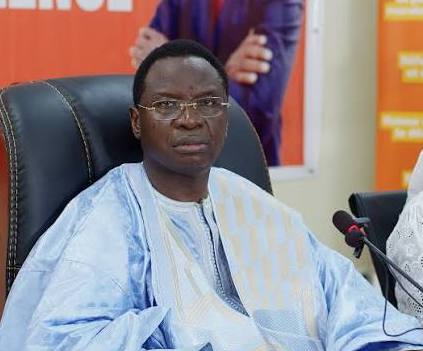
Omar FaFa M’Bai is a legal practitioner, a governance advocate, a parent currently based in Dubai, UAE. He writes regularly on institutional integrity, leadership, and education across Africa, Middle East, and Asia.