This question underpinned the inaugural Karantaa Commons Forum, convened under the African Agenda Series on the theme State of Governance and Development in The Gambia.
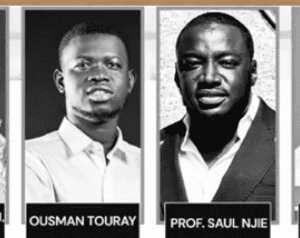
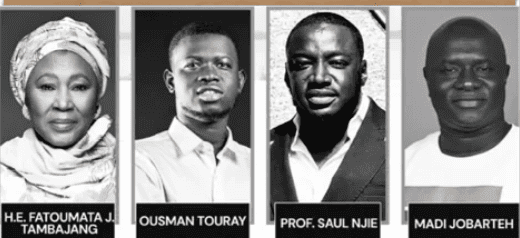
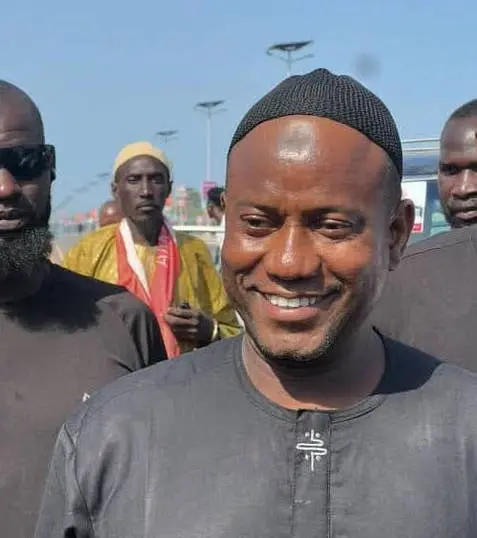
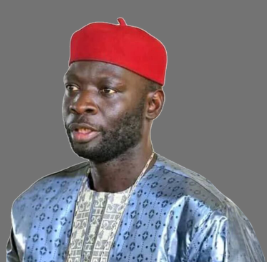
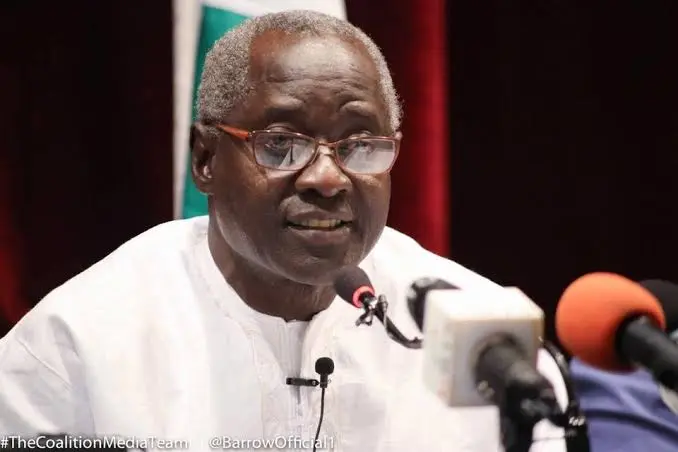
Bringing together former Vice-President Fatoumata Jallow-Tambajang, human rights advocate Madi Jobarteh, political economist Dr Saul Njie and Pan-African educator Ousman Touray, the forum provided a space to interrogate the country’s democratic trajectory and development prospects.
As The Gambia approached another presidential election, the discussion sought to move beyond partisan commentary and examine the country’s governance and development record from different intellectual and practical perspectives. What emerged was a conversation about more than the performance of successive administrations. It raised deeper questions about political power, the institutional foundations of democracy, the political economy of development and the possibilities for a different national future.
The unmet promise of democratic reforms
One of the most striking observations was the distance between the aspirations of the 2016 transition and the institutional and developmental realities that followed. Reflecting on the transition in which she served as Vice-President in the coalition government led by Adama Barrow, Fatoumata Jallow-Tambajang highlighted some of the progress made, particularly the formulation of the National Development Plan (NDP), which sought to reflect the voices and aspirations of Gambians and establish a framework for national development. She also recalled the international donor conferences involving partners such as the World Bank, the European Union, the African Development Bank and the Islamic Development Bank, which culminated in pledges of approximately USD1.4 billion.
However, she questioned the limited follow-through in securing these commitments, suggesting that only about 20 per cent of the pledged resources had materialised. Her intervention also highlighted a tension between government investment priorities and the persistent poverty facing ordinary Gambians. While recognising the importance of infrastructure, she questioned an approach that places considerable emphasis on physical development without sufficiently addressing people’s immediate livelihood needs. As she put it, “people don’t eat infrastructure”. Her broader concern was that development commitments must translate into tangible improvements in people’s everyday lives, rather than remain concentrated on policy ambitions and visible projects.
Alongside these development challenges, she revisited the unfinished reform agenda, which included constitutional and security-sector reform, strengthening the civil service, institutional accountability and addressing the legacies of authoritarian rule. She argued that the opportunity to reconstruct the relationship between the state and its citizens had been undermined by weak leadership, institutional instability and the failure to translate policy commitments into implementation.
This exposes a fundamental distinction between political transition and democratic transformation. Removing an authoritarian leader does not automatically dismantle the institutional practices, political cultures and structures of power inherited from the preceding order. Nor does electoral competition guarantee accountable government. The challenge, therefore, is to confront the unfinished business of the transition and address what it means to democratise a state whose institutions remain weak, reforms are delayed and mechanisms for holding public officeholders accountable are insufficiently effective. The transition should be understood not as a completed historical achievement, but as an ongoing political project.
The unmet promise of accountability
Madi Jobarteh offered a sobering assessment of the country’s accountability record, expressing deep frustration that The Gambia has struggled to govern itself effectively since independence. Drawing a comparison with Singapore, which gained independence during the same period but has since achieved remarkable developmental progress, he questioned why The Gambia continues to struggle with basic development challenges. For Jobarteh, accountability is the missing link in the country’s governance and development efforts. He characterised the post-independence governance system as predatory,
exploitative and autocratic, sustained by a culture of impunity in which political elites face few consequences for the misuse and plunder of public resources. He traced this pattern across successive administrations, from Sir Dawda Kairaba Jawara through Yahya Jammeh to Adama Barrow, arguing that the problem extends beyond individual leaders to the wider political order.
Focusing on the Barrow administration, Jobarteh questioned why documented cases of corruption and mismanagement had not resulted in greater accountability. Drawing on reports from the National Audit Office, parliamentary oversight and commissions of inquiry, he argued that the problem lay less in the absence of oversight institutions or adequate legal provisions than in the lack of political will to enforce accountability. He noted that institutions such as the National Audit Office and the National Human Rights Commission have mandates to investigate, document violations and make recommendations, but their work does not always translate into effective enforcement. He was particularly critical of the National Assembly’s reluctance to exercise its oversight powers, arguing that personal and partisan interests often take precedence over its responsibility to hold the executive to account.
He also reflected on the post-2016 coalition, noting that its memorandum of understanding had been realistic, but that competing political interests and the failure of coalition leaders to honour their commitments undermined its implementation. For Jobarteh, this demonstrated the difficulty of sustaining political commitments when personal and partisan interests take precedence over collective responsibility. The discussion thus moved beyond the conduct of individual leaders to consider how accountability could be embedded in the institutional functioning of the state.
The former Vice-President similarly emphasised the need to move beyond repeatedly establishing commissions towards implementing reforms that are measurable, verifiable and inclusive. These contributions underscored the importance of building effective checks and balances and a political culture in which public authority is understood as a responsibility rather than a privilege.
The unmet promise of economic transformation
The discussion then moved from institutional governance to the political economy of development. Dr Sulayman Njie offered a critical assessment of The Gambia’s economic trajectory since 2016, observing that the economy had changed considerably, but “not because of the government but despite of the government”. In his view, government policy had failed to keep pace with changing economic realities.
A central concern was the informal character of the Gambian economy and the limitations of relying on conventional measures such as GDP growth to assess economic performance.
Where substantial economic activity takes place outside formal structures, aggregate growth figures reveal relatively little about the everyday economic conditions of citizens.
Njie also highlighted the importance of remittances, which he estimated at between 20 and 25 per cent of GDP, questioning why these inflows had not been more effectively channelled into productive investment and domestic industrial development.
He pointed to persistent unemployment and underemployment, limited industrialisation, dependence on imported goods and the constrained productive capacity of agriculture.
His broader concern was that The Gambia had moved towards a consumption- and service-oriented economy without establishing the industrial and productive foundations needed for broad-based transformation. He therefore challenged the assumption that the state should simply wait for the private sector to generate employment, arguing instead for a more ambitious developmental role for government, working alongside businesses to expand productive activity and employment. He also called for stronger local governance, with greater powers and resources for local authorities.
Njie also connected the country’s economic and governance challenges to the historical relationship between political power and access to economic opportunities. He argued that, since the establishment of the independent state, government has often served as a principal route through which people escape poverty, making proximity to political power an important source of access and opportunity. In his view, this has reinforced dependence on the state rather than enabled the emergence of a sufficiently broad and independent economy in which citizens can pursue opportunities without relying on political connections.
He expressed particular concern that the current administration appeared not to appreciate the changing expectations of young Gambians. Unlike previous generations, young people now have unprecedented access to information and global developments through digital technology. They can readily observe how other countries are governed and compare those experiences with conditions at home. Njie warned that the state must recognise that it is dealing with a generation less willing to accept the political and economic limitations that previous generations may have endured. At the same time, he placed responsibility on young people themselves to move beyond expressing dissatisfaction and begin claiming a greater role in political leadership, including by contesting for public office and demanding accountability from the state.
Youth, migration and development futures
Ousman Touray began by questioning how The Gambia could finance and deliver its development ambitions. He noted that the National Development Plan had a financing gap of almost USD2 billion, highlighting two interconnected challenges: mobilising the resources required to finance the country’s development priorities and ensuring that available resources were channelled into productive and viable sectors. He stressed that resource mobilisation alone was insufficient; the allocation and deployment of those resources had to address pressing national challenges, particularly in education, healthcare and other essential areas of development.
He also drew attention to the potential of the diaspora in addressing these financing challenges, citing remittance inflows of approximately USD800 million in 2025. He proposed exploring ways of directing even a modest proportion of these resources towards productive national investment. This would require transparent arrangements capable of giving citizens confidence in how their contributions were managed. His intervention thus extended the understanding of the diaspora beyond its role as a source of household remittances, towards recognising it as a potential constituency for productive investment and national development.
These questions of resource mobilisation and productive investment also provided a broader context for his reflections on youth and migration. Against the backdrop of increasing youth departures to Europe through irregular migration routes, Touray challenged the tendency to interpret migration primarily through individual ambition or a lack of skills.
Many young Gambians leaving the country, he argued, possess qualifications and professional expertise, including in fields such as engineering and nursing, that could contribute meaningfully to national development. When young people cannot find meaningful opportunities to apply their skills, their departure represents not only a loss of individual talent but also raises questions about the state’s capacity to retain, mobilise and productively engage its human resources.
Touray further emphasised that preparing young people for economic participation requires more than educational qualifications. It means equipping them with relevant skills, connecting them to meaningful opportunities and supporting entrepreneurs with the financing and infrastructure needed to access wider markets. Recalling an international exhibition in Istanbul, he observed that many Gambian products on display were inadequately packaged and not ready to compete effectively in international markets. This example highlighted the need to look beyond promoting enterprise participation towards addressing product quality, packaging, standards and market access. He also called for
stronger connections between African entrepreneurs and markets across the continent, enabling them to participate more effectively in regional and continental value chains.
Beyond the Ballot: Reclaiming the promise of a new Gambia
The two-hour discussion brought into focus a central tension in The Gambia’s post-2016 trajectory, namely the distance between the democratic aspirations of the transition and the realities of governance, accountability and economic transformation. Although the discussants approached these questions from different perspectives, their contributions converged on the need to move beyond electoral change and headline development achievements towards a more coherent vision of national development, grounded in accountable institutions, productive investment and improvements in people’s everyday lives.
A recurring concern was the absence of a coherent economic framework to guide government priorities and coordinate development across different levels of the state. The former Vice-President argued for a framework that connects macro-, meso- and microlevel interventions, supported by a national decentralisation framework that devolves powers and responsibilities for governance and development to local authorities. She questioned why councils such as Kanifing and Brikama remained so dependent on central government, arguing that local authorities needed greater autonomy and capacity to design and deliver development programmes. Equally important was the need to involve citizens in identifying local priorities, developing programmes and mobilising resources.
Such an approach, she suggested, should be informed by robust qualitative and quantitative evidence, drawing on institutional models such as Rwanda’s development commission to strengthen national planning and avoid fragmented policies and misplaced priorities.
Dr Sulayman Njie brought the political economy of development into sharper focus, questioning whether economic growth and the expansion of services were translating into meaningful structural transformation. His contribution highlighted the limitations of an economy characterised by informality, import dependence and a weak productive base, while drawing attention to the underutilised potential of remittances and domestic resources. He also challenged the state to assume a more purposeful role in supporting productive activity, industrialisation and employment creation, rather than relying on the private sector alone to address these challenges. Importantly, his reflections on the changing expectations of young Gambians underscored the need for a political and economic settlement that recognises their aspirations and creates meaningful opportunities for their participation in national development.
These concerns also brought into question the assumption that infrastructure investment necessarily translates into development. Madi Jobarteh highlighted the corruption and poor value for money associated with infrastructure projects, arguing that investments intended to serve as national assets had too often become liabilities. Referring to roads constructed under the Jammeh administration and the Banjul International Airport, which he noted had reportedly required USD11 million in renovation after an initial construction cost of USD10 million, he questioned the quality, durability and economic value of such projects. He extended this criticism to the Barrow administration, raising concerns about the scale of borrowing for roads and public utilities, including electricity infrastructure. The central issue, as he argued, was not whether The Gambia needed infrastructure, but whether projects were strategically planned, properly executed and capable of generating lasting economic and social benefits. Otherwise, the country risks accumulating debt for infrastructure that requires further expenditure without delivering commensurate developmental returns.
Ousman Touray similarly questioned the sustainability of a development model increasingly dependent on external borrowing and financial institutions. As he put it, a country cannot develop by moving from one debt obligation to another. He argued for exploring alternative approaches to domestic resource mobilisation, including diaspora investment, while identifying political accountability as one reason governments may be reluctant to pursue such arrangements. When citizens invest directly in national projects, they also acquire a legitimate interest in how resources are used and what those investments deliver.
His intervention pointed to the possibility of mobilising resources beyond conventional development finance, while strengthening public accountability. In this regard, his observation that The Gambia’s most significant export is not its minerals but the intellectual and professional capabilities of its migrant population offered a powerful reminder of the country’s underutilised human resources.
These contributions suggest that the challenge facing The Gambia is not simply a shortage of resources, infrastructure or policy frameworks. It is also a question of how the state sets priorities, exercises authority, mobilises resources and distributes opportunities. Meaningful development requires a more accountable and capable state, stronger local institutions, evidence-informed planning and a productive economy that creates opportunities for its citizens. It also requires recognising young people and the diaspora not merely as beneficiaries or sources of finance, but as active participants in shaping the country’s future.
The unfinished business of democratic transformation cannot, however, be left to political leaders alone. It requires informed and active citizens, independent institutions, a vibrant civil society and meaningful participation by young people and women in shaping national priorities. This conviction underpins the Karantaa Commons Forum and the broader African Agenda Series, which seek to create spaces where research, policy and public experience can inform critical conversations about Africa’s political and developmental futures. Nearly a decade after the 2016 transition, the challenge is not simply to move beyond the ballot, but to reclaim its promise through more accountable institutions, inclusive politics and transformative development.