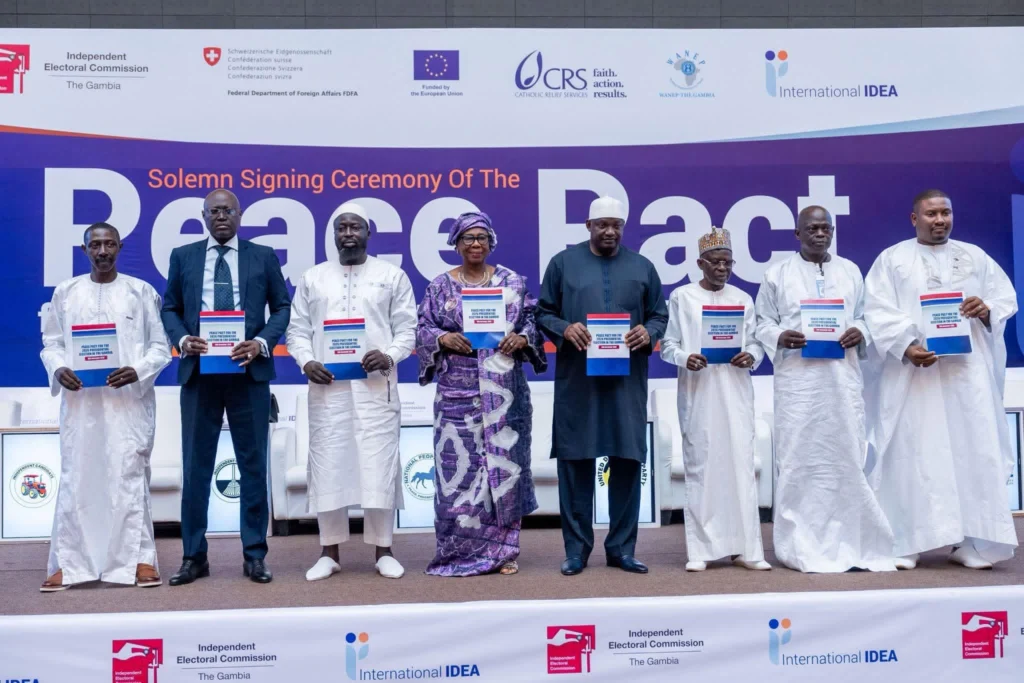
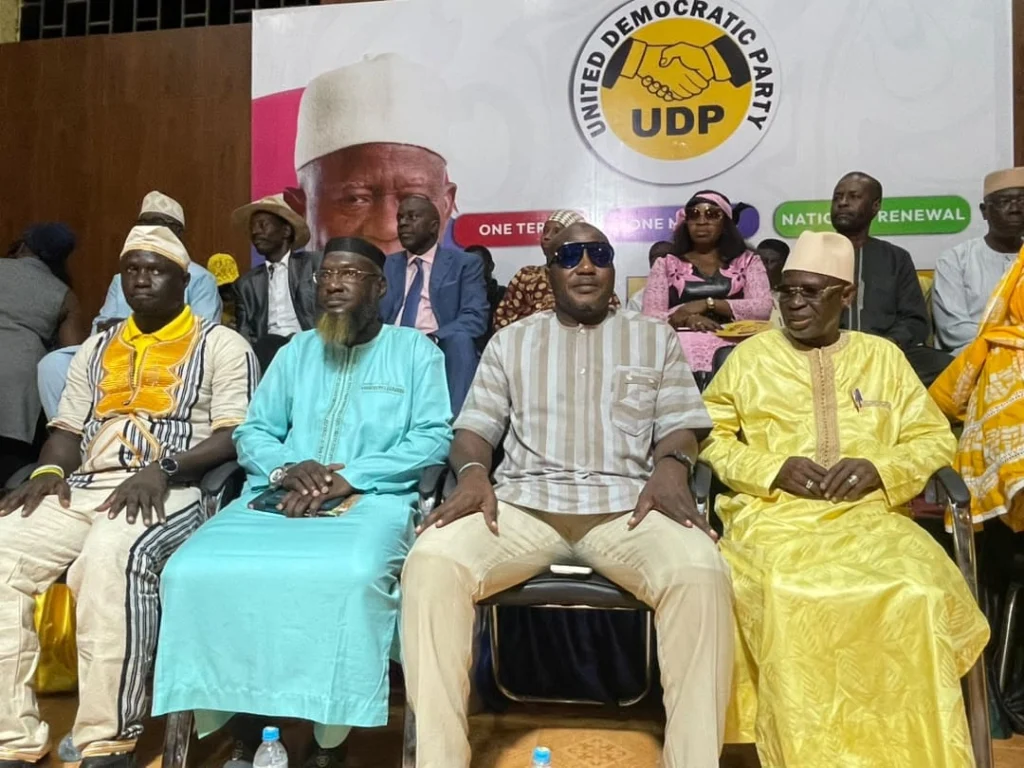
Eight presidential candidates walked into the Kairaba Jawara International Conference Centre yesterday morning and signed a peace pact. They smiled for the cameras, shook hands, and promised to protect The Gambia’s stability and campaign peacefully ahead of the 5th December presidential election.
It was a necessary moment. It was also a worrying one. As UDP leader Ousainu Darboe rightly asked, why do Gambian politicians now need a formal agreement to do what previous generations did naturally? Our parents and grandparents campaigned, disagreed, and voted without signing peace pacts. They did it because community bonds, mutual respect, and basic decency made violence unthinkable. That we now need paper to remind us not to harm each other says much about how toxic our politics has become.
President Adama Barrow was equally honest. Signing, speeches, ceremonies, he said, are all theory. The real test is practice. He is right. The Gambia has seen pledges before. What matters is what happens when a crowd gets angry, when a supporter posts a lie online, when a result is disputed, when a candidate feels cheated. That is why the most important words on Monday did not come from the text of the pact itself, but from the candidates who warned that peace cannot be used as a slogan.
Talib Bensouda said it clearly: peace does not mean surrendering democratic rights, abandoning accountability, or remaining silent in the face of injustice. Lamin Sima added that peace without justice is fragile. Almameh Gibba warned against using state institutions to target opponents. Isatou Touray reminded us that elections should be a competition of ideas, not a source of division.
These are not contradictions but conditiosn to peace. A peace that demands silence from the opposition, that protects institutions from scrutiny, that treats criticism as incitement, is not peace. It is control. True stability comes when citizens trust that the process is fair, that institutions are impartial, that losers can challenge results through law, and that winners will govern for all.
Dr Mohamed Ibn Chambas, in his keynote address, put it bluntly: the pact does not replace the law, and it does not enforce itself. Only the Independent Electoral Commission can declare results. Only lawful channels can resolve disputes. The candidates must discipline their supporters, reject disinformation, and campaign on policies, not insults.
That message must travel beyond the conference centre. Peace pacts are signed by leaders, but peace is kept or broken in compounds, markets, WhatsApp groups, radio call-in shows, and polling stations. A single reckless statement by a surrogate, a single viral video designed to inflame, can undo months of calm.
The eight candidates have now made a public promise: Adama Barrow, Ousainu Darboe, Lamin J Darbo, Ebrima Tabora Manneh, Lamin Sima, Isatou Touray, Talib Bensouda, and Almameh Gibba. Gambians should hold them to it, not just on election day, but every day until then and after. Gambia is small, as Ebrima Tabora Manneh reminded us. We cannot afford fratricide. We know each other. We marry each other. We worship together. We share the same streets. The signature of the pact was the easy part. The hard part is living it.