Dear Editor,
At times, a single sentence spoken casually by a public official reveals a deeper crisis of judgment in a nation’s democratic life. The recent statement by National Human Rights Commissioner Njundu Drammeh, published in The Standard on October 15, 2026, is one such moment.
His declaration that “elections are too serious a matter to leave to the IEC alone” is not merely a rhetorical flourish. It is a dangerous distortion, historically misplaced, politically reckless, and institutionally corrosive. To understand the gravity of this misstep, we must begin with the quote he invoked.
Commissioner Drammeh borrowed a line from William Tecumseh Sherman, the American Civil War general who famously said, “War is too serious a matter to leave to soldiers.” Sherman was speaking about civilian oversight of military power, warning against the dangers of militarism, not commenting on elections.
His words stemmed from fear of generals wielding unchecked authority, not from the administration of democratic processes. Sherman was addressing war, not ballots. Generals, not electoral commissioners. Militarism, not democracy.
To transplant Sherman’s quote into the Gambian context, and apply it to the Independent Electoral Commission, is to misuse history, mislead the public, and misinform the nation. It is an intellectual error with political consequences. Those consequences matter because Commissioner Drammeh’s statement arrives at a moment when populist rhetoric is already poisoning our civic space.
For months, Ousainu Darboe has insisted he “never lost an election,” despite the historical record showing he conceded defeat, even congratulating Yahya Jammeh in earlier presidential contests. His own party acknowledged those losses. Today, he rewrites history with the confidence of someone who assumes Gambians have forgotten.
Likewise, Lamin Manneh has made it his mission to repeat, in every media appearance, that the 2021 presidential election was rigged, despite the Supreme Court dismissing the UDP petition for lack of evidence. His rhetoric mirrors the global populist playbook: attack courts, attack judges, attack electoral bodies, and declare oneself incapable of losing.
This is the same script Donald Trump used in the United States, Jair Bolsonaro in Brazil, and Ousmane Sonko in Senegal—leaders who weaponized distrust to destabilize institutions far stronger than ours. Into this volatile climate walks Commissioner Drammeh with a statement that echoes the same dangerous logic:
that the IEC is not enough, that elections require “other actors,” that the constitutional body entrusted with safeguarding our democracy is somehow inadequate. But if the IEC is inadequate, then what explains 2016?
What explains Yahya Jammeh’s peaceful defeat, a man who controlled the state, the army, the intelligence services, and the electoral machinery for 22 years? What explains the victory of the opposition coalition led by Adama Barrow, a victory universally hailed as free, fair, and credible? If the IEC is questionable, how did the UDP win all urban mayors, all rural chairpersons, and many National Assembly seats?
How did they celebrate those victories without questioning the IEC? How did they swear in their elected officials? How did they accept the legitimacy of the very institution they now attack? You cannot accept the IEC when it delivers your victories and reject it when it delivers your defeats.
Democracy does not work on selective legitimacy. This is why Commissioner Drammeh’s statement is so troubling. It is not simply wrong; it is irresponsible. It is not simply careless; it is dangerous. It is not simply rhetorical; it is political.
The National Human Rights Commission has a mandate to protect rights, not politicise them; strengthen institutions, not weaken them; promote trust, not sow doubt. Commissioner Drammeh’s comment violates that mandate.
Commissioner Drammeh was not part of the pro‑democracy struggle against Yahya Jammeh.
He did not stand with the journalists, activists, and civil society leaders who risked their lives to defend the sanctity of elections. Yet today, he casually casts doubt on the institution that delivered the most important democratic transition in Gambian history.
Democracy is too fragile for careless metaphors. Too young for partisan insinuations. Too precious for institutional sabotage. If Commissioner Drammeh wants to improve electoral processes, he should advocate for capacity‑building, civic education, and institutional reform, not reckless statements that mimic the language of global populists who have destabilized democracies far stronger than ours. The IEC deserves critique when it fails. But it also deserves protection when it is unfairly maligned.
Elections are indeed serious. That is precisely why they must be left to the institution constitutionally empowered to run them, supported by stakeholders, yes, but never overshadowed, undermined, or second‑guessed by those who should know better.
The Gambia’s democracy requires vigilance, not only against politicians, but against commissioners who speak without regard for the consequences. Democracy is not strengthened by doubt. It is strengthened by truth, responsibility, and respect for institutions.
Alagi Yorro Jallow
USA
Ismaila Ceesay and the UTG protesters
Dear Editor,
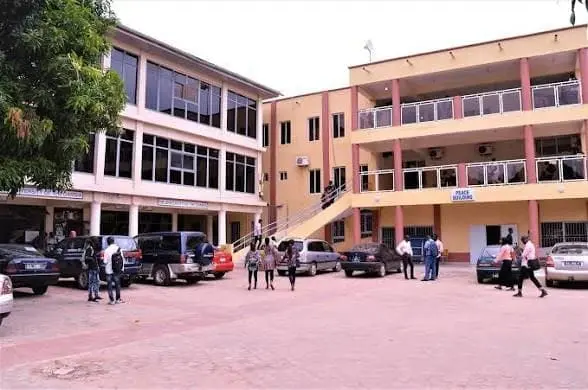
Let me start out by saying that I felt sorry for Ismaila Ceesay. Watching him being protected and escorted from the UTG was as sad as it was humiliating. If I could, I’d have the students take the time to hear him out. But that’s the emotional side of me. The rational side of me recalled how, during the April 10/11 massacre of protesting students, Yahya Jammeh’s officials took it upon themselves to go and placate the protesters. These officials were all too eager to “solve the problem of the students” to appease Oga. In the end, no one knew who was in charge, and Isatou Njie Saidy claims that she even called for a meeting in her office, but no one showed up! Where did many of them go? To end the protests! The comparison is not between the scale of those events and these UTG protests; it just brings to mind the familiar assumption that proximity to power qualifies someone to manage public anger. Allow me to quote myself in The Dictator Is Us:
Lacking any coherent plan on how to deal with such situations, and motivated by a desire to impress the tyrant, senior security officers took it upon themselves to handle the demonstrations without bothering to coordinate the activities of their various security services.
This time, it was not the soldiers going to solve the problem; it was politicians like Prof Gomez and Ismaila Ceesay. Because Ismaila was a lecturer, and apparently a popular one at that, he thought he could go and solve the students’ problem. He forgot that it may be the same UTG, but he’s not the same Ismaila Ceesay. Self-awareness is critical. Self-reflection is perhaps even more critical. Imagine me going to an APRC demonstration led by Almameh Gibba, trying to appease them!!! Self-reflection should have told Ismaila that, over the past few years, many who once admired him can’t stand him anymore. But where self-reflection fails, common sense should prevail.
You cannot walk into a simmering volcano and not expect to be burned. You see, people do not protest because they are happy. They protest because they are angry about something. That anger is often abstract and diffused, because it is against the “system.” But the system is not a person; it is faceless; it is abstract. So when an official who represents that system comes into the crowd, they stop being an individual; they become an embodiment of that system. They become the face of the system. That is why, if you study civil disturbance (I did), government officials are often discouraged from trying to appease protesters. Prof. Gomez and Ismaila Ceesay should have done a bit of homework before trying to play heroes. Interestingly, I heard they promised the students that they would meet their demands. Ndeysan, that was the classic “appeasement trap.” Appeasement is never a resolution. But what do I know?
To those condemning the students, I only wish your passionate condemnation matched your empathy for the suffering students. But alas, this is Gambia: Too often, our outrage follows familiarity rather than principle. We recognise the humiliation of someone we know, yet overlook the humiliation of people whose names mean nothing to us. If we condemn harassment or abuse, we must condemn it when Ismaila defends the harassment and abuse of fellow citizens. If we demand that students listen to Ismaila and Professor Gomez, we must also demand that they too listen to the students’ suffering and stop running after Adama Barow politicking, and calling it “dialogue with the people.”
So yes, I felt sorry for Ismaila, yet I cannot help but wonder if those in government cared to listen to the students in the first place. You do not have to be a lecturer at the UTG to know what our university students go through. So if you insist on dialogue, start with the government officials who knew about these challenges long before the protests. If not, your quest for dialogue is nothing but a defense of what we all know: Mungne len, ali sabarry! Those in power do as they please while the aggrieved are judged by their silence. A people deserve what they accept!
Alagie Saidy Barrow
US