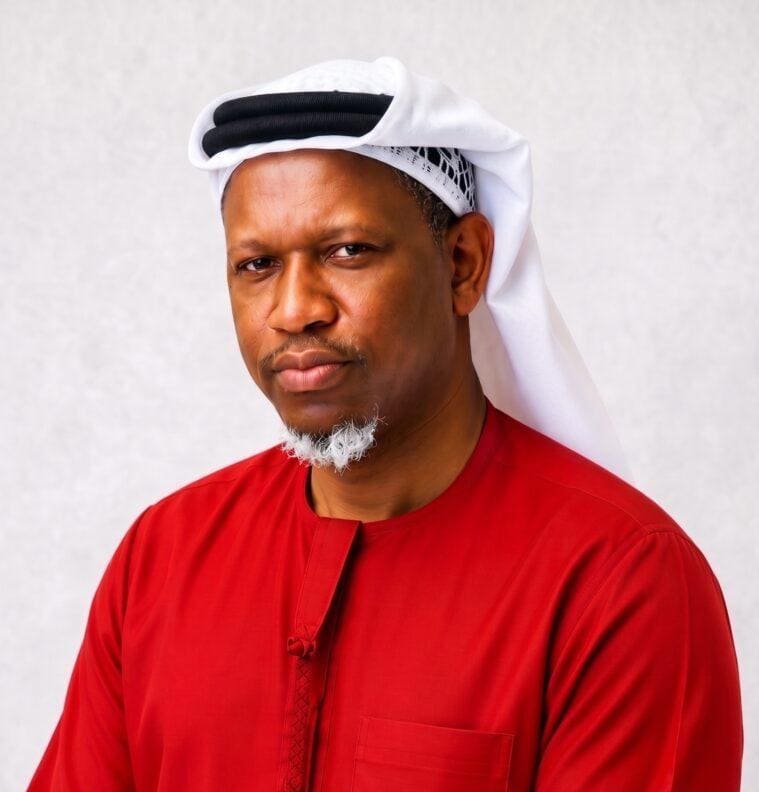
The controversy surrounding Mr Essa Mbye Faal’s decision to enter into a political alliance with President Adama Barrow should be understood through two truths that must not be separated.
First, the decision is a legitimate subject of political accountability: citizens are entitled to question whether it is consistent with Mr. Faal’s previous commitments, whether proper procedures were followed, and whether the public has received a credible explanation.
Second, the intensity and character of our reactions should prompt self-examination, because moral criticism can become distorted by political loyalty, disappointment, projection, or the assumption that we ourselves are incapable of similar compromises. The alliance between APP-Sobeyaa and the governing National People’s Party was publicly announced in September 2026 and formalised on 27 September.
Some APP Sobeyaa figures have challenged the decision, while party leadership maintains that the appropriate internal authority approved it. Mr. Faal has described the arrangement as a means of advancing reforms rather than obtaining positions or rewards. These competing claims deserve careful and fair scrutiny.
The central argument of this reflection is not that criticism of Mr. Faal is psychologically suspect, nor that political leaders should be shielded from scrutiny. It is that responsible judgment requires both accountability and humility: we must examine the facts, procedures, and consequences of a political decision while also examining the assumptions, emotions, and moral vulnerabilities that shape our response to it. The Politician as a Mirror Recently, I encountered an intriguing observation from an individual who made no secret of his personal dislike of Mr Faal. Nevertheless, he suggested that the extraordinary hostility directed towards the politician might, in some instances, reflect something deeper than political disagreement. He described Mr Faal as a mirror in which some detractors might be confronted with an uncomfortable reflection of themselves. His argument was that the conduct for which a person condemns another may sometimes resemble tendencies that exist, consciously or unconsciously, within the person doing the condemning.
What makes such an encounter disturbing is the possibility that, under sufficiently compelling circumstances, we too might behave in ways that contradict our professed principles. This observation deserves examination, not because it necessarily explains the reactions of Mr Faal’s critics, but because it raises an important question about human nature.
Are we always as familiar with our own moral capacities as we imagine ourselves to be?
The unexamined dimensions of human character
Human beings generally construct an image of themselves around certain values and convictions. We believe ourselves to be honest, loyal, principled, courageous, and resistant to corruption.
These convictions may be entirely sincere. Nevertheless, sincerity of conviction does not necessarily constitute complete knowledge of character. There is a fundamental distinction between believing that one would never compromise a principle and actually demonstrating that commitment when confronted with circumstances that make compromise personally advantageous.
The Swiss psychiatrist Carl Gustav Jung developed the concept of the shadow to describe aspects of human personality that remain unacknowledged or insufficiently integrated into conscious self-understanding. In certain circumstances, qualities that we strongly condemn in others may provoke an unusually intense response because they confront us with possibilities we would prefer not to recognise within ourselves. Psychology describes one possible mechanism as projection, whereby individuals attribute to others feelings, impulses, or characteristics they have difficulty acknowledging in themselves.
However, it would be a serious error to conclude that every expression of moral indignation is an instance of projection. People can condemn dishonesty because they genuinely value honesty. They can oppose political inconsistency because they sincerely believe in accountability.
They can express disappointment without secretly possessing the very tendencies they criticise. The psychological mirror is therefore a possibility to be investigated, not a verdict to be imposed.
Political disappointment and the experience of betrayal
Political loyalty is rarely founded upon policy considerations alone. Citizens often invest emotional confidence, personal sacrifice, hope, and a sense of collective identity in political leaders and movements.
When a leader changes political direction, supporters may experience the decision not simply as a strategic adjustment but as a rupture in a relationship of trust. Such disappointment deserves recognition. A political leader is entitled to explain why changing circumstances require a reassessment of previous positions. Equally, supporters are entitled to question whether that reassessment is consistent with the commitments upon which their confidence was originally secured. The crucial distinction is between demanding accountability and presuming to possess complete knowledge of another person’s motives. An alliance may be politically defensible or indefensible. It may be consistent or inconsistent with previous commitments. Its procedures may be legitimate or open to challenge. These questions require evidence, reasoned argument, and careful examination. They cannot be satisfactorily resolved through insults, speculation, or the mere repetition of accusations.
The difference between moral potentiality and moral action
The possibility that a human being might commit an act under certain circumstances does not mean that the person has committed it, intends to commit it, or is morally equivalent to someone who has. Human beings possess capacities that may never become actions. A person may experience the temptation to compromise a principle and nevertheless refuse to do so. Indeed, moral integrity becomes particularly meaningful when principles are maintained despite temptation. Acknowledging our potential vulnerability to moral compromise should not lead us to excuse wrongdoing or abandon the distinction between right and wrong. Rather, it should encourage humility in the manner in which we judge others. We can hold people accountable without assuming that we ourselves are incapable of similar failures. A lesson in moral self-examination within the Islamic intellectual and spiritual tradition, the examination of one’s own intentions occupies an important place in the purification of the self, commonly known as tazkiyat al-nafs. The Qur’an cautions: “So do not claim yourselves to be pure; He is most knowing of who fears Him.” (Qur’an 53:32) This teaching does not discourage the condemnation of injustice. Rather, it cautions against the presumption of personal moral perfection. It reminds us that the ability to recognise a fault in another person does not automatically establish our freedom from that fault. The same principle possesses significance beyond religious boundaries. It speaks to the universal human need for self-awareness, intellectual humility, and responsible judgment.
The mature moral consciousness must be capable of two things simultaneously: recognising wrongdoing wherever it occurs and acknowledging the limitations of its own self-knowledge.
Political accountability must not be abandoned
There is, however, an important danger in interpreting political criticism exclusively through psychology. If every disappointed supporter is accused of projecting personal weaknesses onto a political leader, legitimate grievances may be dismissed without proper examination. That would be neither psychologically sound nor democratically responsible. Political leaders must remain answerable for their decisions, especially when those decisions involve changes in alliances, public commitments, or the political direction of organizations entrusted to their leadership. Citizens have every right to ask whether proper consultations occurred, whether party procedures were respected, whether previous commitments have been honoured, and whether explanations offered to the public withstand scrutiny. In the present controversy, the disagreement over the authority and procedures through which the alliance was approved is a matter deserving factual clarification. No amount of psychological interpretation can substitute for that responsibility. At the same time, criticism becomes more constructive when it addresses verifiable actions and their consequences rather than relying upon personal degradation.
The mirror faces both ways
Perhaps the most important implication of the mirror metaphor is that it cannot legitimately be directed at only one side. Those who condemn Mr Faal may benefit from examining the assumptions, expectations, and emotions that shape their responses. Those who defend him may equally benefit from asking whether political loyalty is preventing them from recognising legitimate concerns. And Mr. Faal himself, like every political leader, remains subject to the obligation of examining the relationship between personal conviction, political judgment, public commitment, and the trust of those who have supported him. The mirror, therefore, faces in every direction. It is not an instrument for humiliating political opponents. It is an invitation to examine the moral and psychological foundations of our own judgments.
Beyond political hostility
As The Gambia approaches its presidential election on 5 December 2026, political disagreement will inevitably intensify. Such disagreement is neither unusual nor inherently undesirable. Indeed, the freedom to question political leaders and contest their decisions is indispensable to democratic life. But disagreement need not become hostility, and accountability need not become personal humiliation.
A political community becomes more capable of reasoned judgment when its citizens distinguish facts from assumptions, criticism from insult, and legitimate disappointment from unexamined hostility. Whether one supports or opposes Mr. Faal’s political decision, the underlying questions deserve serious consideration. What do we expect from political leaders?
What constitutes a genuine betrayal of public trust? When is political compromise legitimate? How do we distinguish moral conviction from emotional attachment? And how much do we really know about ourselves when we pronounce judgment upon others? Ultimately, the purpose of the mirror is not to absolve the politician or accuse the electorate.
It is to remind us that responsible political judgment requires both outward scrutiny and inward reflection. For the most difficult reflection is not always the one that reveals the shortcomings of another person. Sometimes it is the one that confronts us with the limits of our own self-knowledge.