The message to “The Mafia” is therefore simple:
Do not wait for The Gambia to choose and then choose the winner.
Choose what you genuinely believe is right for The Gambia while your choice can still help determine the outcome.
That is citizenship.
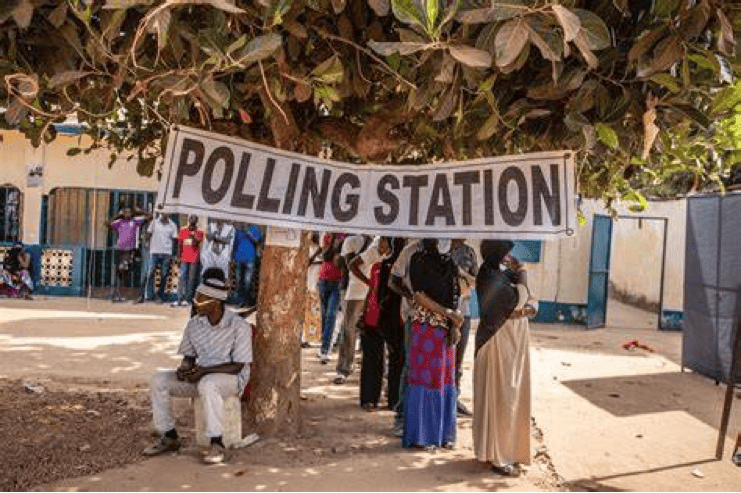
The message to “The Mafia” is therefore simple:
Do not wait for The Gambia to choose and then choose the winner.
Choose what you genuinely believe is right for The Gambia while your choice can still help determine the outcome.
That is citizenship.
That is participation.
And that is what gives the vote its meaning.
For my part, when I cast my vote, I will do so because I have made a considered judgment.
I will vote for the candidate in whose vision and direction for The Gambia I have confidence, whose commitment to the country and its people I believe in, whose developmental ideas I consider capable of advancing our nation and whose approach to healthcare, education, security, infrastructure, youth development, employment, women’s economic empowerment and broader socioeconomic development aligns most closely with the future I wish to see for The Gambia.
Others may reach a different conclusion.
That is democracy.
Democracy does not require us to agree.
It requires us to think.
It requires us to participate.
And it requires us to respect the lawful choice of the people.
This is particularly important for Gambians in the diaspora.
The diaspora occupies an extraordinary place in our national life. Every month, Gambians abroad send money home to support parents, children, siblings and extended families. Diaspora remittances help pay school fees, medical bills, rent, food expenses, construction costs and countless other necessities.
In many households, these remittances are not supplementary income.
They are survival.
Yet the relationship between the diaspora and The Gambia should not be measured only by money.
Citizenship is more than remittance.
A citizen who contributes economically naturally has an interest in whether the economy is properly managed, whether institutions function, whether investment is protected, whether public resources are responsibly administered and whether future generations inherit a stable and prosperous country.
Not every Gambian abroad is legally eligible to vote, and not every eligible citizen can reasonably afford to travel home solely for an election. Those realities must be acknowledged.
This also raises a broader question that The Gambia should increasingly be prepared to confront: how do we make meaningful electoral participation possible for eligible Gambian citizens living abroad? The contribution of the diaspora to our national life is immense, but that relationship should not be viewed solely through the prism of remittances. Gambians abroad remain deeply connected to the country. They support families, invest in property and businesses, contribute to education and healthcare, support community development and, in many cases, retain a profound interest in the political, economic and institutional direction of the country.
For those who remain Gambian citizens and are otherwise constitutionally entitled to vote, geographical distance should not indefinitely render that right practically inaccessible. Not every Gambian in London, New York, Berlin, Dubai, Stockholm or elsewhere can purchase an airline ticket, secure leave from work and travel thousands of kilometres simply to cast a ballot. The financial and practical burden may effectively place the exercise of the franchise beyond the reach of many citizens who would otherwise wish to participate.
The question of diaspora voting therefore deserves serious national attention. Appropriate mechanisms, whether voting at designated diplomatic missions, consular arrangements, or another secure system considered suitable within our constitutional and electoral framework, should be carefully examined. Any such system would, of course, require strong safeguards for voter registration, identity verification, secrecy of the ballot, electoral integrity and public confidence. Those are legitimate challenges, but they should encourage careful institutional design rather than close the discussion altogether.
There is also an important principle at stake. If a citizen remains legally entitled to vote, the practical ability to exercise that right should, as far as reasonably possible, not depend upon whether he or she can afford an international airline ticket.
I have chosen, In sha Allah, to travel home to cast my vote because of the importance I personally attach to exercising that constitutional right. But I am conscious that many equally patriotic Gambians abroad may wish to participate and simply cannot make that journey. Our democracy should ultimately aspire to bring the ballot within reasonable reach of the eligible citizen, rather than requiring the eligible citizen to cross continents to reach the ballot.
The diaspora should therefore be recognised not merely as a source of remittances, but as part of the continuing civic life of our country. If we value their economic contribution to The Gambia, we should equally be prepared to have a serious conversation about facilitating their democratic participation where they remain constitutionally entitled to it.
But for those of us who are eligible and able, we should seriously consider whether participation in determining the future of our country deserves the same priority we routinely give to holidays, weddings, celebrations and social engagements.
Every December, many Gambians abroad spend considerable sums travelling home for holidays.
There is nothing wrong with that.
Come home.
Celebrate.
See your family.
Enjoy the warmth, humour and incomparable hospitality of our people.
But if circumstances permit, why should the democratic future of our country rank below our holiday calendar?
If we can plan a journey home for Christmas, New Year, Tobaski, Koriteh, weddings and other celebrations, surely, we can consider planning around the day our country chooses its President.
There is also a deeper point about those who say: “I do not trust any of the candidates, so I will not vote.”
That feeling deserves respect.
No citizen should be compelled to admire a candidate.
No election will always offer every voter a candidate who perfectly reflects every belief and expectation.
But democracy rarely asks us to choose perfection.
It asks us to exercise judgment.
Study the candidates.
Read their programmes.
Examine their records.
Listen critically.
Separate evidence from propaganda.
Compare competence.
Assess character.
Interrogate promises.
Then make the most informed choice available to you.
Refusing to participate because no candidate is perfect does not remove the imperfections of politics.
It merely means that others will make the decision without you.
There are, of course, legitimate criticisms of elections and electoral politics. Elections can become divisive. Campaigns can encourage unrealistic promises. Money can distort political competition. Misinformation can manipulate voters. Identity politics can overwhelm reason.
But these are not arguments against voting.
They are arguments for better voting.
More informed voting.
More independent voting.
More issue-based voting.
More citizens asking difficult questions.
More young people demanding credible policies rather than slogans.
More voters refusing to sell their judgment for temporary inducements.
The answer to imperfect democracy is not democratic abandonment.
It is deeper democratic engagement.
And we must remember something else.
The ballot is secret.
Inside that voting space, nobody owns your conscience.
Not your family.
Not your employer.
Not your political party.
Not your tribe.
Not your community.
Not your friends.
Not social media.
You stand alone with your judgment.
That is one of the quiet miracles of democracy.
A citizen enters carrying all the pressures of society and emerges having made a decision known, unless voluntarily disclosed, only to himself or herself.
Use that freedom wisely.
To the young Gambian who thinks politics has nothing to do with you:
It has everything to do with you.
It determines the environment in which your ambitions will either flourish or struggle.
To the elderly Gambian who finds the process difficult, your lifetime of experience gives your judgment a value that the nation should never take for granted, and electoral authorities, political actors, communities and families should do everything reasonably possible to make participation accessible and dignified.
To the Gambian who says one vote cannot matter:
Every election result is ultimately the arithmetic of individual votes.
There is no mysterious thing called “the electorate” separate from us.
We are the electorate.
The national result begins with individual decisions.
One citizen.
One conscience.
One vote.
To the Gambian who says the queue is too long:
Remember those who once stood in queues because, after generations of exclusion, history had finally recognised them as political equals.
Remember South Africa in 1994.
Remember that rights neglected can gradually lose their meaning, even when they remain written beautifully in constitutions.
And to every Gambian eligible to vote on 5TH December 2026:
Do not vote because I tell you to.
Do not vote because a politician tells you to.
Do not vote because your family tells you whom to choose.
Do not vote because of tribe, friendship, anger, fear, gossip, propaganda or blind loyalty.
Vote because you have thought.
Vote because you have examined the choices before you.
Vote because you understand that citizenship carries responsibility alongside rights.
Vote for competence.
Vote for integrity.
Vote for credible ideas.
Vote for accountable leadership.
Vote for peace and stability.
Vote for strong institutions.
Vote for opportunities for our youth.
Vote for quality education.
Vote for accessible healthcare.
Vote for economic progress.
Vote for the dignity and advancement of women and children.
Vote for justice and the rule of law.
Vote for a country in which every Gambian, irrespective of background, can aspire, work and succeed.
Above all, vote according to your conscience and your considered judgment of what is best for The Gambia.
I will travel home to cast mine.
Not because my single vote alone will determine the future of our nation.
But because I refuse to surrender my share of responsibility for determining it.
When future generations ask what we did when we were given the opportunity to shape the direction of our country, our answer should not be that the queue was too long.
It should not be that we were on holiday.
It should not be that politics did not interest us.
It should not be that we assumed someone else would decide.
Democracy gives every eligible citizen something extraordinarily simple and extraordinarily powerful:
“A VOICE.”
On 5th December 2026, use it.
Stand in the queue if you must.
Wait patiently if you must.
Travel if you are able.
Think carefully.
Choose independently.
And vote.
Because governments will come and governments will go. Candidates will rise and candidates will fall. Political parties will win and lose.
But The Gambia belongs to all of us.
And ultimately, the future of our country should never be something we merely watch others decide.
Your vote is your voice.
Your choice is your responsibility.
And your country is worth showing up for.
By Omar F M’Bai
The author is a Legal Practitioner, a governance advocate, and a parent based in Dubai, UAE. He writes regularly on institutional integrity, leadership, and education across Africa, Middle East, and Asia.
End
Enjoyed this story?
Applaud it for the newsroom — one clap per reader, per story.
First published on standard.gm — 4 November 2026
1 Min Read

1 Min Read
1 Min Read

1 Min Read

1 Min Read
1 Min Read
1 Min Read

1 Min Read

1 Min Read