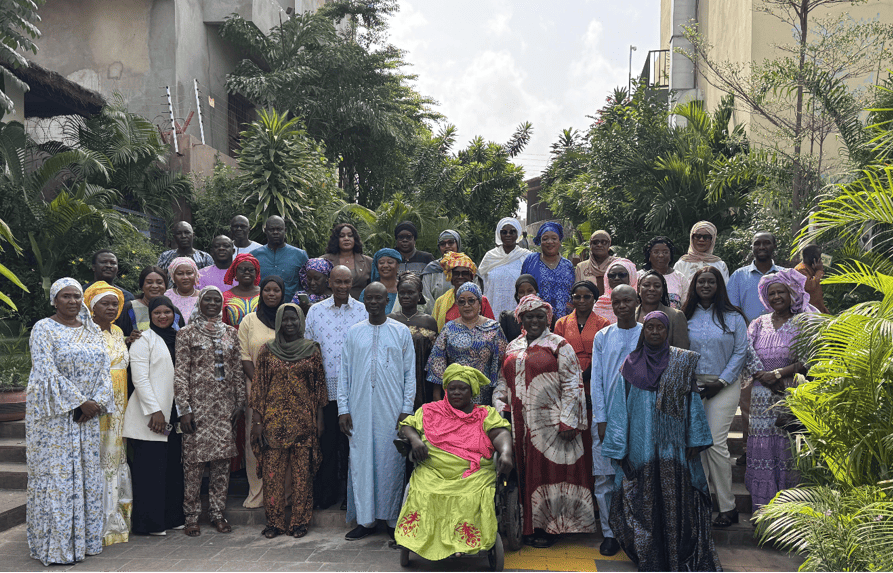
The Women Business Advisory Group (WBAG) has demanded 15% of all government contracts be reserved for women-led businesses.
The call was made at a multi-stakeholder policy advocacy forum organised by WBAG in partnership with the International Trade Centre (ITC), bringing together government officials, financial institutions, development partners and women entrepreneurs.
Fatoumatta Jawara, CEO of MAA Foundation and Chairperson of WBAG, said the focus must now shift from advocacy to implementation.
“But today, we must move beyond advocacy alone. The objective before us now is implementation,” she said.
She said women entrepreneurs need easier access to supplier registration, government tender information and financing to compete for public contracts. She also stressed timely payment for businesses that complete government contracts.
Speaking on behalf of the ITC Country Representative, Fatou Menga Jallow, Senior Adviser for SheTrades West Africa, said access to finance remains a major barrier for women-owned businesses.
“We must come up with more responsive products and schemes, including tailored business support services for our MSMEs, particularly women,” she said.
She disclosed that ITC is supporting 556 micro, small and medium-sized enterprises, with women accounting for 61% of beneficiaries.
Permanent Secretary at the Ministry of Gender, Children and Social Welfare Habib Jarra said government has submitted The Gambia’s first gender-responsive public procurement policy to Cabinet for approval.
“An allocation target alone will not guarantee results,” he said, calling for clear eligibility criteria, effective monitoring and defined institutional responsibilities.
He said women-led businesses also need affordable financing, simpler registration procedures and better access to procurement information.
The forum focused on the proposed 15% procurement allocation, supplier registration, a verified database of women-led businesses, timely supplier payments and improved access to finance.
The forum aims to develop an action plan with measurable targets, responsible institutions and timelines to increase women’s participation in public procurement.