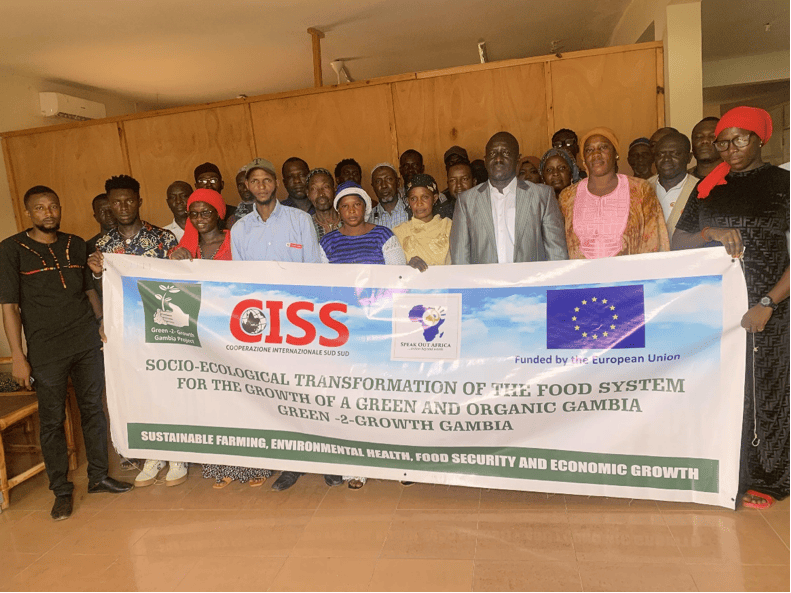
Cooperasione Internasionale Sud Sud (CISS), an Italian international non-governmental organisation, has trained 50 regional and local authorities in the Lower River Region on benefits of organic fertiliser to promote sustainable agriculture and environmental protection in The Gambia.
The day-long training, held Thursday, brought together regional authorities and stakeholders to sensitise them on importance of organic fertiliser production and use, and their role in mobilising communities to embrace sustainable farming.
Landing Gibba, Project Assistant at CISS, said the organisation, founded in Italy in 1985, is committed to promoting human rights, social justice and sustainable development.
He said CISS, which operates in Europe, Africa and Asia, established its office in The Gambia in February 2024 to implement the Green New Growth Project, funded by the European Union, in collaboration with civil society organisations and farmers.
Gibba said engagement with regional authorities was necessary because development requires collective responsibility.
“Today we are here to sensitise regional authorities because CISS feels it alone cannot do all development work. It has to be a concerted effort. Once you get commitment and support of regional authorities, we are sure of having community support towards production and use of organic fertilisers,” he said.
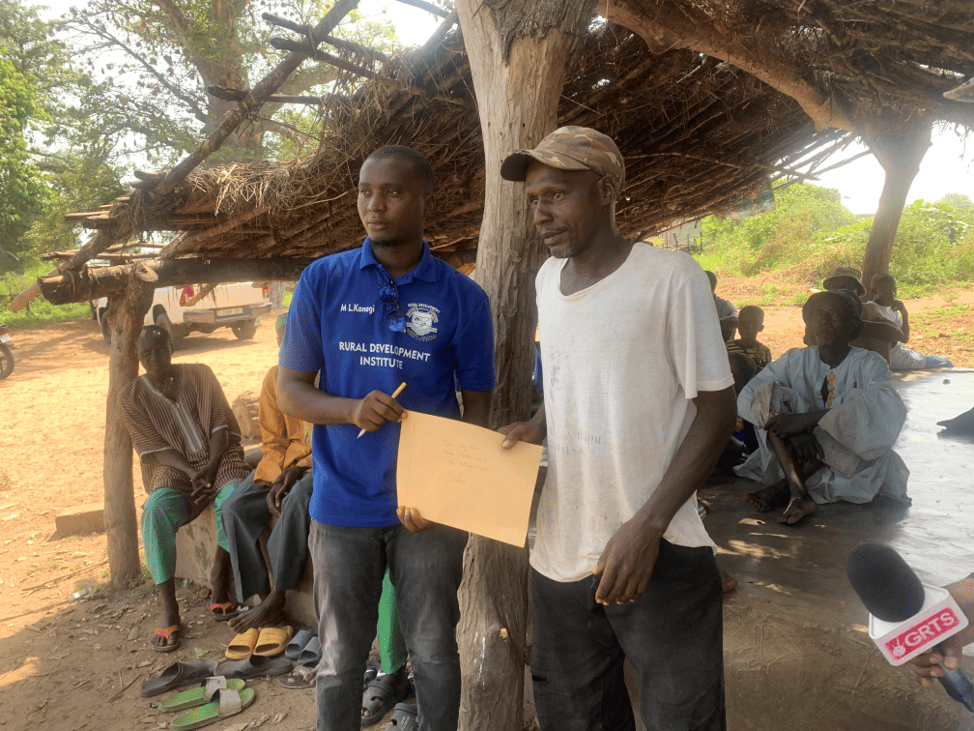
He disclosed CISS had already trained 525 farmers on importance of organic fertiliser and supported production through construction of compost chambers in different regions.
In Lower River Region, a compost chamber has been established in Jattaba, where women and young people were trained in organic fertiliser production.
Gibba revealed CISS had developed a model bill on organic fertiliser and engaged 25 National Assembly Members, the Ministry of Agriculture and other stakeholders to discuss need for legal framework regulating production and use of organic fertiliser.
He noted government had made efforts to support farmers, including provision of 10,000 metric tonnes of organic fertiliser this year, but legislation is still needed to strengthen the sector.
On role of local authorities, he called on area councils to support waste collection and transportation to farming communities and gardens, and to provide separate waste bins to facilitate sorting of biodegradable and non-biodegradable materials.
He urged the Office of the Governor to sensitise farmers, National Agricultural Research Institute (NARI) to provide technical guidance and test locally produced organic fertiliser, and Ministry of Agriculture to offer technical support to farmers and gardeners.
Landing B Sanneh, Chairman of Mansakonko Area Council, welcomed the initiative, describing training as important opportunity for the region.
He said organic fertiliser promotes healthy living and contributes to increased agricultural production and productivity.
Sanneh cautioned farmers against improper use of chemical fertilisers, noting misuse could pose serious health risks.
“Maybe using chemical fertiliser, if you don’t use it in the right way, can cause harm to your health. I don’t say all chemical fertilisers are harmful to human beings, but people need to be very careful,” he said.
He urged participants to share knowledge gained with communities to encourage wider adoption.
Fatou SM Ceesay, representative of the Governor of Lower River Region, highlighted the importance of organic fertiliser in improving soil health, enhancing productivity and promoting sustainable farming.
She said organic fertiliser improves soil structure, helps retain moisture and contributes to long-term soil fertility, unlike excessive use of chemical fertilisers, which can negatively affect the environment.
“We must recognise the importance of adopting our own farming practices that protect our soil, preserve our environment and improve lives and livelihoods of our beloved communities,” she said.
Dr Alieu Saidy, Regional Agricultural Director for Lower River Region, said organic fertiliser is particularly important given the region’s low soil organic matter.
He disclosed his research showed organic matter content was below 10%, affecting soil’s ability to retain water and support crop the production.
According to him, organic fertiliser can also contribute to climate change mitigation through carbon sequestration and improve soil moisture retention, particularly in upland rice fields.
Dr Saidy encouraged farmers to work with area councils to separate household waste into biodegradable and non-biodegradable materials to make waste collection and compost production easier.
He said the initiative came at an appropriate time, as farmers continue to face declining soil fertility and water retention.