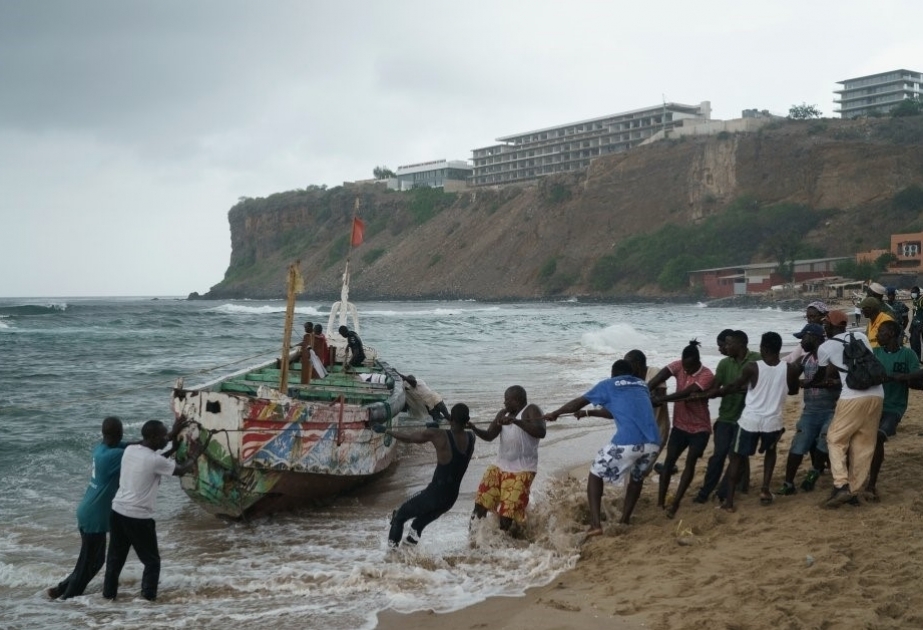
Day-in, day-out, the headlines on newspapers and online portals in The Gambia, Senegal, Spain and Italy, report a literal deluge of boat departures and arrivals from mainly The Gambia and Senegal Atlantic coasts heading to the Mediterranean Sea for the Spanish Canary Islands. In just one day last week, the Spanish authorities recorded rescuing 50 wooden pirogues with nearly 2000 migrants arriving.
While several thousands make it, hundreds go missing and thousands are intercepted by Gambian or Senegalese coast guards. This is not a new story. It is an old wound that has opened again. The surge in boats from principally The Gambia and Senegal this year is a cry of desperation, and we must hear it for what it is. Let us be honest about the journey. This is not migration. This is a gamble with death.
The route to the Canaries is one of the deadliest in the world. More than 1,000 kilometres of open ocean. No navigation lights. No rescue guarantee. Boats built for fishing, not for carrying 100, 150, 200 people. Food runs out. Water runs out. Fuel runs out. Engines fail. Storms come in the night. People fall overboard. People die of dehydration, of hypothermia, of panic.
When a boat capsizes, there is no list of names. There is only a mother in Serekunda who will spend months asking if anyone saw her son. A father in Kaolack who will borrow money to go from port to port, showing a photo, hoping for news that will not come. A village that will hold a funeral without a body. We cannot keep counting bodies and calling it a tragedy as if it were an accident. It is a policy failure. Why do they leave? It is not because they do not love The Gambia or Senegal. It is because they feel The Gambia and Senegal do not love them back.
Ask a 22-year-old in Brikama or Thiès what his future looks like. He finished school, but there is no job. He learned a trade, but there is no capital to start a business. He wants to farm, but land is expensive, fertiliser is expensive, and the rains are unreliable. He sees politicians in big cars, sees contracts going to the connected, sees his friends who left and now send money home to build houses. What conclusion is he supposed to draw?
The push factors are not a mystery. Unemployment. Underemployment. Hopelessness. A sense that to stay is to stagnate, and to leave is the only way to become a man, to provide, to be respected. If governments in Banjul and Dakar are serious about stopping the boats, they must be serious about investing in the youth who are boarding them. That means more than speeches and more than small, one-off empowerment projects that benefit ten people and are photographed for social media.
It means real investment: vocational training that actually leads to jobs, not certificates that gather dust. Affordable loans for young entrepreneurs, without political connections. Support for fisheries, so that local fishermen are not pushed out by foreign trawlers stealing the fish that should feed our families. Support for agriculture, for tech, for creative industries, for tourism that employs Gambians and Senegalese, not just foreigners. It means fixing the basics: electricity that does not cut out, Internet that is affordable, roads that connect rural youth to markets, schools that teach skills for this century, not the last one.
And it means telling the truth about Europe. The dream sold by smugglers is a lie. Many who arrive face detention, exploitation, racism, and years without papers. Many are deported. Many wish they had never left. Governments, religious leaders, artists, and returnees must join together to show the real cost, not just the remittance photos of new houses. But preaching alone will not work if there is nothing to stay for. Young people do not need lectures. They need opportunity.
The boats will not stop because we patrol the sea harder, although cooperation and rescue are essential. They will stop when a young man in The Gambia or Senegal can look at his life and see a future worth staying for. Until then, the Atlantic will keep taking our sons and daughters, and we will keep burying empty coffins. We cannot afford to lose another generation to the sea.