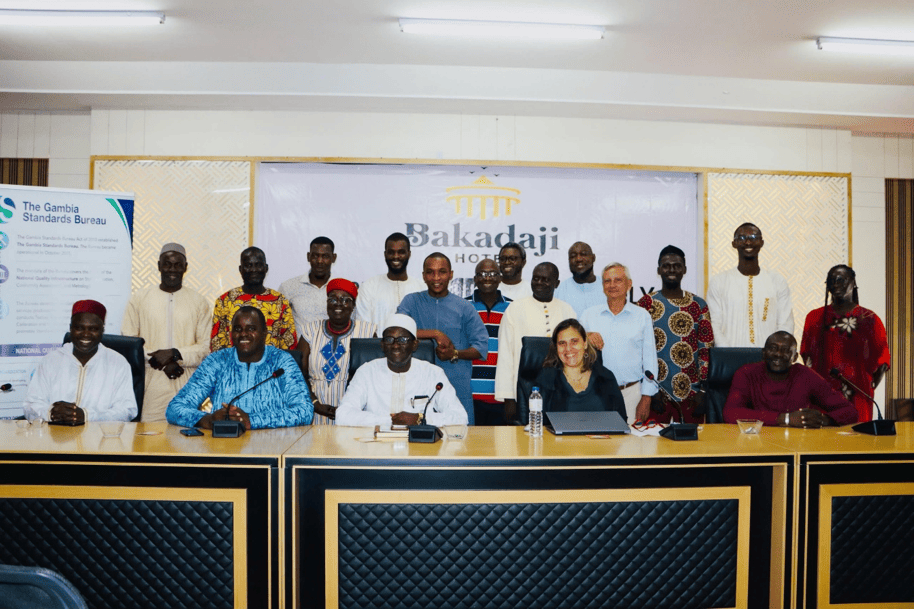
The Gambia Standards Bureau (TGSB) has validated the committee draft national standard for organic fertilisers as part of efforts to promote sustainable agriculture, improve soil health, and strengthen the production and utilisation of organic fertilisers in The Gambia.
The validation meeting, held on Friday at the Bakadaji Hotel in Kololi, forms part of TGSB’s collaboration with the Mbolo Association, CISS, and WasteAid under a service agreement aimed at developing national standards for organic fertilisers.
The initiative seeks to establish standards that will guide the production of quality-assured organic fertilisers from organic waste, while strengthening waste-to-fertiliser processes and promoting environmentally sustainable agricultural practices.
Supported by the European Union-funded Civil Society Green Advocacy for Organic Fertilisers programme, the Scale-up Organic Fertiliser Project is designed to encourage the conversion of organic waste into useful agricultural inputs.
The project also aims to improve soil fertility, support sustainable farming practices, and enhance the livelihoods of smallholder farmers across the country.
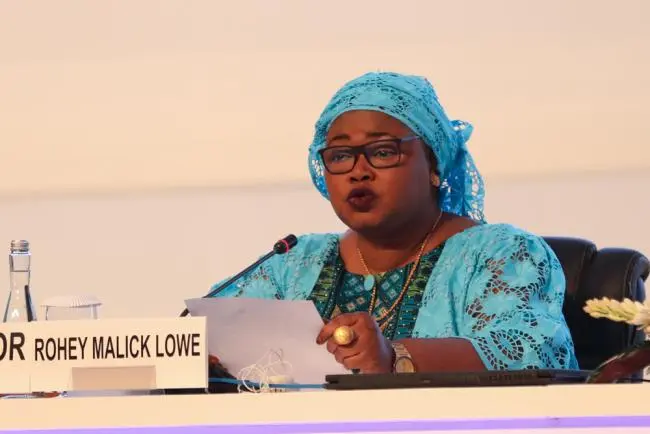
In his opening remarks, Nasiru Janneh, the Deputy Director General, highlighted the importance of organic fertiliser standards in The Gambia. “The validation of this draft standard represents a critical step towards establishing harmonised benchmarks that will guide the production, quality assessment and market acceptance of organic fertilisers in The Gambia.”
He said that the development and application of organic fertilisers are central to advancing sustainable agriculture, improving soil health, and thereby ensuring food security. However, these cannot be attainable without clear, validated standards. Without them, the quality, safety, and effectiveness of these products will remain inconsistent, posing risks to farmers, consumers, and the larger environment.
He added that today’s deliberations will mark a critical step in establishing harmonised benchmarks that will guide productivity, certification and market acceptance. “By validating these standards, we aim to provide transparency, safeguard public health, and encourage innovation in the organic fertiliser sector.”
He also urged all participants to contribute their expertise and perspectives so that the standards they adopt are scientifically sound, practically applicable, and aligned with international best practice.
“You will agree with me that over the years, there has been a tremendous shift towards organic fertiliser application on agricultural products. Failure to comply has hindered access to European markets. This session, therefore, is a step in the right direction towards meeting targets and the overall government blueprint.”
DDG Janneh reaffirmed the bureau’s commitment to developing standards that are in line with national priorities.
He also thanked the technical committee members and all those who contributed towards the development of this standard, noting that he is confident it will meet the expectations of users. “This whole process would not have been possible without your expert inputs, and we value them. Your guidance during the entire process of developing these valuable standards has been crucial.”