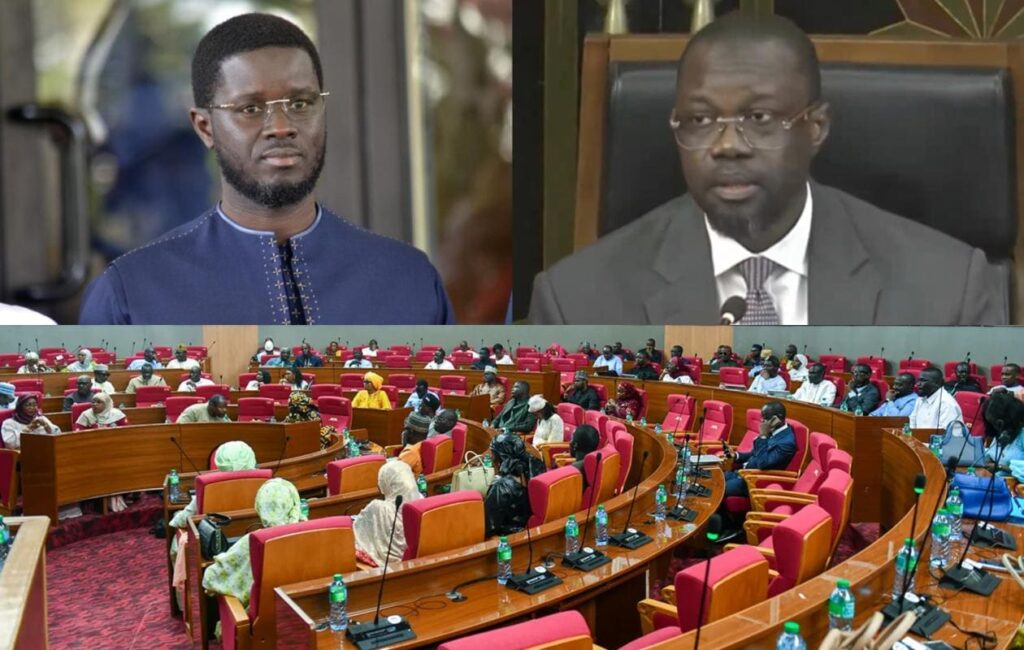
The dissolution of the National Assembly has now openly entered the political debate. The president’s party, Kiiraay, is calling for it, raising the prospect of snap legislative elections in Senegal.
Under Article 87 of the Constitution, this option could be exercised as early as 2nd December, 2026. Should it occur on that date, the election would need to be held between 30th January and 1st March, 2027. Given that the Electoral Code requires voting to take place on a Sunday, there are five possible dates: 31st January, and 7th, 14th, 21st, and 28th February, 2027. Which timeline should be chosen? Which electoral roll should be used? And how can a transparent and inclusive election be guaranteed?
Speaking to L’Observateur newspaper, electoral expert Mamadou Seck and political scientist Djibril Diop examine the implications of such a decision. Mamadou Seck noted that the opinions of the Prime Minister and the President of the National Assembly are “advisory and not binding on the President of the Republic.” Once the decree is issued, the Assembly ceases its operations, and any legislative texts currently under review become void.
From an organisational standpoint, both experts expressed their belief that Senegal possesses the necessary experience to conduct snap elections, as demonstrated by the vote on 17th November, 2024. As Djibril Diop puts it, “To govern is to foresee.” The real challenge lies more in adhering to established procedures and ensuring the credibility of the electoral process.
The primary point of contention, however, concerns the electoral roll. Mamadou Seck suggests that Article L.37 of the Electoral Code allows for the use of the voter registry from the most recent regular revision—the one conducted in 2025—in cases where time is insufficient. However, this approach could potentially exclude young people who have turned 18 since that revision, as well as voters who have changed their place of residence.
Djibril Diop, by contrast, advocated for an exceptional revision to ensure that these citizens—particularly first-time voters—are able to participate in the election. “It is democracy itself that is at stake,” he insisted in the pages of L’Observateur. In his view, administrative constraints must not become a source of electoral exclusion.
Finally, both analysts underscored the importance of transparency and political inclusion. Djibril Diop warned against the exclusion of certain parties, the possibility of an opposition boycott, or the challenging of election results.
“The Electoral Code must remain the cornerstone of any election,” he reminded.
Seneweb