The University of The Gambia (UTG) has laid bare critical gaps in adolescent health education, presenting baseline findings from 32 schools in the West Coast and Upper River regions that expose serious barriers to young people’s access to accurate health information and services.
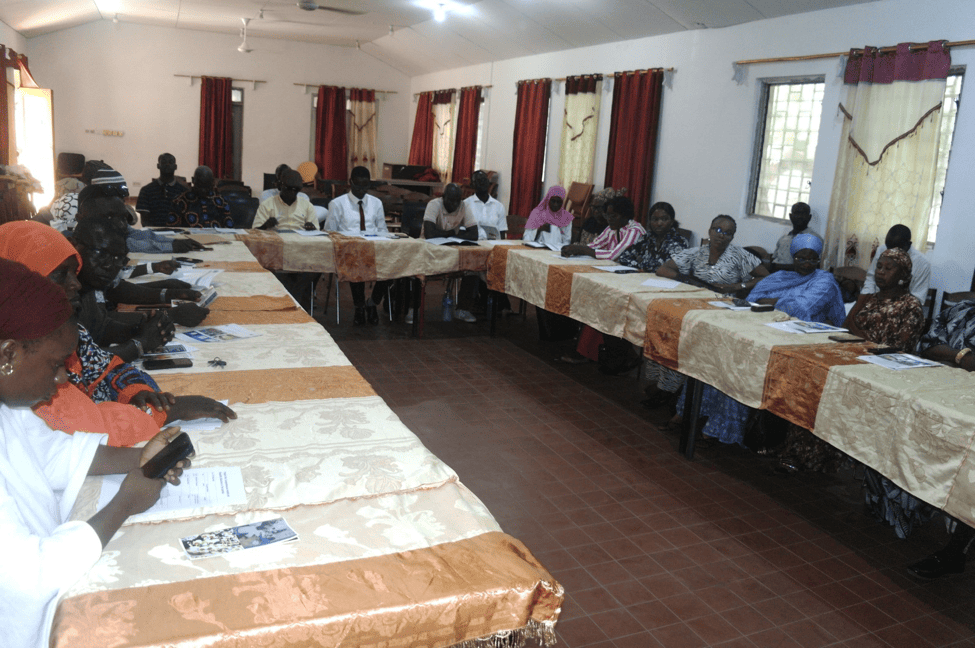
The findings were unveiled on Monday at a high-level dissemination forum organised by UTG’s Comprehensive Health and Sexuality Education (CHSE) Project in collaboration with CRAWAH at the Regional Education Directorate Hall in Brikama. The forum convened education officials, school heads, teachers and key stakeholders to confront the findings and drive urgent reforms in schools and communities.
The study interrogates adolescents’ knowledge, attitudes and behaviours on sexual and reproductive health, their access to information and services, and the decisive roles parents, schools and communities must play in protecting young people.
Speaking at the forum, Phebian Ina Grant-Sagnia, Co-Investigator of the project, said the research builds on a four-year pilot study conducted between 2020 and 2024 in Region One, covering 43 Upper Basic and Senior Secondary Schools.
She said the earlier study, undertaken with the Ministry of Basic and Secondary Education and other stakeholders, laid the foundation for the expansion to Regions Two and Six, targeting both schools and surrounding communities.
Under the current phase, researchers covered 20 schools and 10 communities in the West Coast Region, and 12 schools and six communities in the Upper River Region.
The research engaged a broad spectrum of respondents in-school and out-of-school adolescents, teachers, principals, parents, guardians, health workers, civil society organisations, and regional education and health authorities.
Grant-Sagnia said the four-year implementation research project, funded by the International Development Research Centre of Canada, is designed to deliver evidence-based solutions for adolescent health education.
She stressed that the dissemination forum was deliberate to compel stakeholders who shaped the research to scrutinise the findings and propose practical, youth-centred interventions.
The study tackles sensitive but critical issues including menstruation, unintended pregnancy, sexually transmitted infections, contraceptives, communication, gender-based violence and life skills. It also exposes systemic barriers to health education, entrenched social norms, and the inadequate support available to adolescents with special needs.
Grant-Sagnia made a strong call for accurate, age-appropriate and culturally sensitive health information be made accessible to all young people, both inside and outside school.
She warned that improving adolescent health cannot be left to schools alone. “It demands decisive cooperation among schools, families, communities and state institutions, and health education must reflect the real experiences and challenges young people face daily.”
The programme builds on the country’s Population and Family Life Education framework, while adopting a broader and more assertive approach to adolescent health and wellbeing.
Buba Manneh, Principal Education Officer, speaking on behalf of the Regional Education Directorate in Region Two, welcomed the research team and commended it for returning to share the evidence with stakeholders.
He said hard evidence from research must guide education authorities and school administrators to confront existing challenges and take informed, decisive action.
Manneh urged participants to critically interrogate the findings and ensure the research translates into tangible improvements in schools and communities not just reports on shelves.
Ogis Jatta, an education officer at the Ministry of Basic and Secondary Education, said the Ministry fully backs the initiative alongside other stakeholders.
She said the findings must now inform the education sector’s response to adolescent health needs, particularly in guaranteeing that girls and all young people are safe, informed and supported in their learning environments.
Jatta reaffirmed the Ministry’s commitment to the initiative and thanked researchers and participating schools for their cooperation.
Presenting the methodology, Associate Professor Jainaba Sey-Sawo, a CHSE Investigator, detailed the study’s baseline assessment, methodology and ethical safeguards.
She said the team deployed both quantitative and qualitative methods to obtain first-hand information from adolescents, teachers, healthcare workers, parents and community representatives.
The assessment also rigorously examined educators’ capacity to deliver the programme, parental and community support, safeguarding mechanisms, gender-based violence, consent, and referral pathways for adolescents in need of assistance.