Whose unity? The Barrow-Faal alliance and the politics of convenience
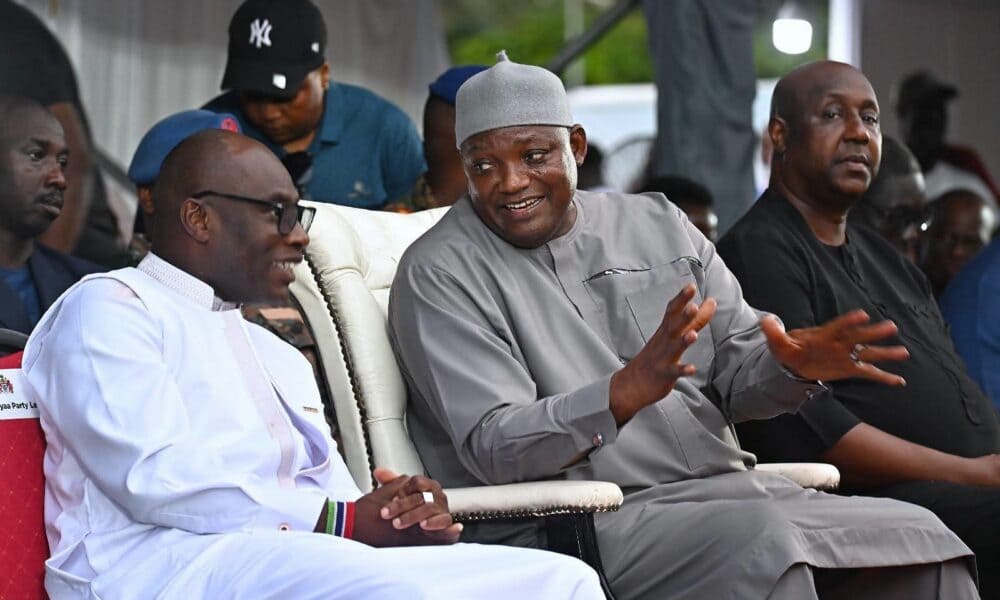
The Memorandum of Political Understanding for National Unity and Reform signed on 27th September 2026 between the ruling National People’s Party (NPP) and the APP-Sobeyaa led by Essa Mbye Faal has raised more questions than it has answered.
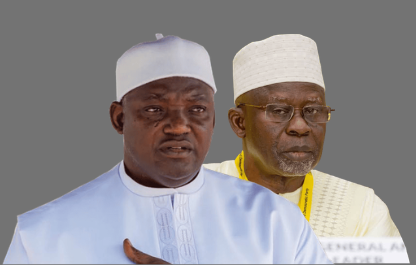
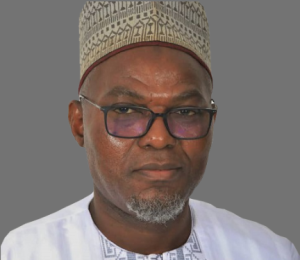
The most telling response came not from the opposition, but from within the APP itself. Veteran educationist and founding father of the All People’s Party, Dr Gumbo Touray, has publicly insisted that the APP does not endorse the alliance and that Essa Faal’s Sobeyaa group does not speak for the party he founded.
That disavowal strikes at the heart of the matter: Who exactly is in alliance with whom, and to whose benefit?
“From foes to friends” describes the transition of hostile or adversarial relationships into peaceful, cooperative partnerships.
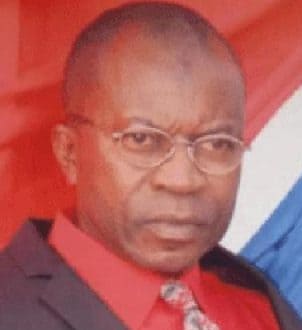
The political optics are hard to ignore. For years, President Adama Barrow and Essa Faal have been fierce public critics of each other. Faal, as lead counsel of the Truth, Reconcialtion & Reparations Commission and later as a 2021 presidential candidate, built his political brand on anti-corruption, rule of law and a sharp critique of the Barrow administration’s governance record. President Barrow, for his part, has at various times dismissed Faal as inexperienced and unfit to govern.
Their sudden embrace under the banner of “National Unity and Reform” therefore looks less like a convergence of principles and more like a convergence of interests.
Gambian politics has a long tradition of such eleventh-hour memoranda. With a presidential election due in December 2026, the calendar itself explains much.
What does Barrow gain? For President Barrow and the NPP, the benefit is immediate and strategic.
First, it fragments the opposition. Absorbing a vocal critic like Essa Faal neutralises a potent voice that could have mobilized the urban, youth, and diaspora vote. It feeds the NPP narrative that the opposition has no alternative agenda beyond opposing President Barrow, and that even its leaders eventually see the wisdom of joining him.
Second, it rebrands the ruling party. By attaching the word “Reform” to an alliance with a former TRRC architect, the NPP seeks to borrow reformist credibility at a time when it faces mounting criticism over the delayed Local Government Commission Whitepaper, cost of living pressures, and corruption allegations.
On the other hand, what does Essa Faal gain? For Essa Faal, the calculation is equally pragmatic, but riskier.
Since the 2021 election, where he finished a distant fourth, Faal’s APP-Sobeyaa has struggled to maintain national visibility and structure. Unlike other opposition parties with deep grassroots bases, Sobeyaa has remained largely a vehicle built around its leader.
An alliance with the ruling party guarantees political relevance, access to state platforms, and a potential share of power — whether ministerial, diplomatic, or in the form of future considerations. It is a classic small-party survival tactic: if you cannot beat the ruling party, negotiate your way inside.
But the cost is high. Faal built his support on being an outsider, a principled alternative. Joining the very government he vowed to reform undermines that moral capital and opens him to accusations of opportunism.
What About APP and Dr Touray? Dr Gumbo Touray’s intervention is critical. It exposes the long-standing confusion around the APP name.
The original All People’s Party (APP) of Dr Touray is a historic party with its own structures and legacy. The APP-Sobeyaa led by Faal emerged as a separate political project that adopted the APP name with the suffix Sobeyaa. Touray’s statement reminds Gambians that the alliance was not endorsed by the founding APP hierarchy, and raises legitimate questions about legitimacy and political branding.
If a party’s own founding father disowns its biggest decision, whose unity is being discussed?
The bigger question now arises, in whose interest is the alliance? This is where the memorandum’s lofty title — “National Unity and Reform” — rings hollow.
National unity is not achieved by two political leaders signing a document in Banjul. It is built through transparent governance, timely release of inquiry reports, respect for Parliament, and inclusive economic reform. None of those are addressed by this alliance.
What we have witnessed is not national unity, but elite accommodation. It serves the short-term interests of two political actors: President Barrow gets to weaken and divide the opposition ahead of 2026, and Essa Faal gets a lifeline back to the centre of power.
It does not, however, appear to serve the interest of the APP as an institution, which now appears divided, nor does it serve the interest of voters who were looking for a clear, credible alternative to the status quo.
In Gambian politics, alliances that are not anchored in shared ideology or grassroots consultation rarely endure beyond the next election cycle. They collapse under the weight of their own contradictions.
The Barrow-Faal memorandum may well be remembered not as a moment of national unity, but as a case study in the politics of convenience.
By Mam Sait Ceesay
Enjoyed this story?
Applaud it for the newsroom — one clap per reader, per story.