


By Tabora Bojang
The Women’s Association for Women and Victims’ Empowerment (WAVE) supported by the African Transitional Justice Legacy Fund and the National Endowment for Democracy has supported the establishment of a Community Peace Structure to spearhead peace and reconciliation efforts in Kerr Mot Ali.
The committee will among others work on eventual return and reintegration of the exiled Ndigal community members who have been seeking refuge in Senegal since the reign of former president Jammeh.
The Ndigal were displaced following attacks by the Gambian security forces in 2009. Despite a high court judgement and a TRRC recommendation ordering for their return, they remain exiled in Senegal living in makeshift settlements with little or no access to basic amenities like water, health care and education.
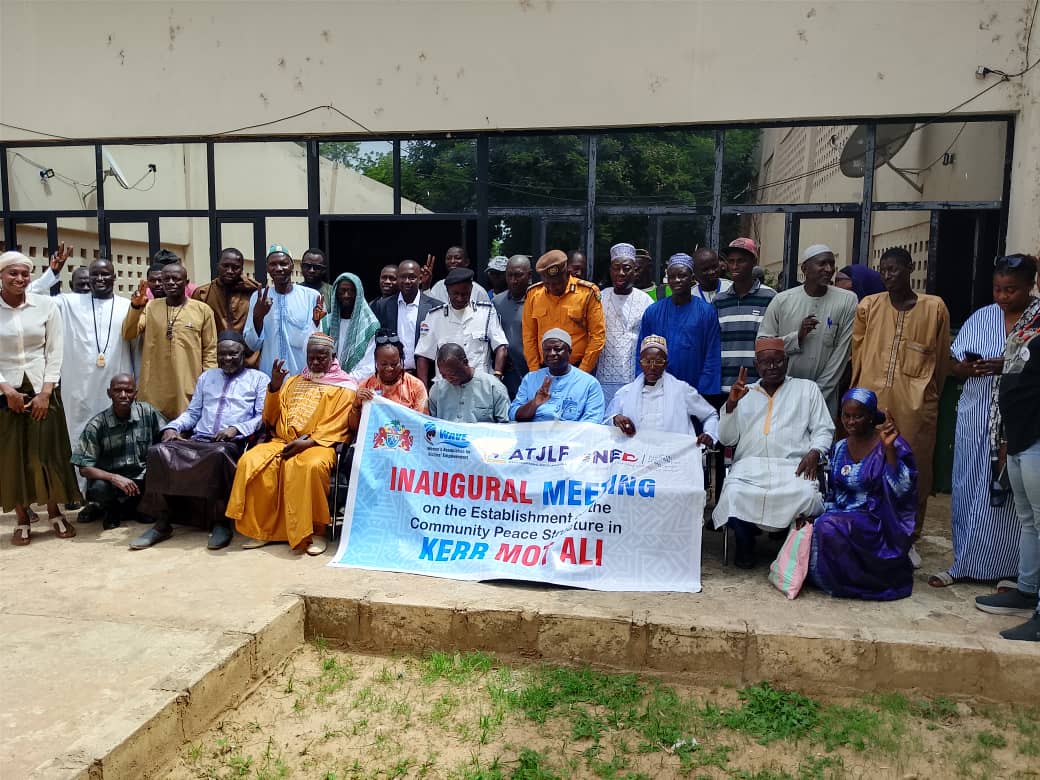
The Committee was unveiled at an inaugural meeting held in Janjangbureh Central River Region (CRR). The event was graced by the deputy Governor Sainey Mbye, Janjangbureh Chairman Sulayman Sawaneh, deputy executive director of the Alternative Dispute Alternative Resolution (ADRS) Bakary Camara, the executive secretary of the National Human Rights Commission (NHRC) Dr Saikou Kawsu Gassama, the director of Governance at the Ministry of Lands and Regional Government Mr David Gomez, Chief of Upper Saloum Demba Sey, Regional Commissioner of Police Dembo Sanneh, National Assembly member for Lower Fulladu West Gibbi Mballow, members of the civil society and traditional leaders.
The event forms part of the Wave’s annual human rights and cultural festival which honours victims of the former regime and celebrates their resilience.
The inauguration of the Committee was preceded by a peace and reconciliation meeting between exiled members of the Ndigal sect and their Gambian compatriots held in Panchang. It featured panel discussions, conversations around ongoing implementation of TRRC report, free health care screenings and traditional performances aimed at fostering peace and unity among them.
The Community Peace Committee will be led by Sheikh Secka from Koffa village and deputised by Alhagie Morr Ceesay of Njau Sawolo. Other members are; Mam Sait Ceesay, Ebrima Ceesay, Alkalo of Batti-Ndarr, Alhagie Modou Secka, Alkalo of Mbolgoh, Muhammed Ceesay, Alkalo of Bantanto Demba, Kassum Ceesay, Alkalo of Panchang, Basirou Mboge, Alkalo of Mbogen, Alhagie Essa Njie, Mot Ida Sallah and Layin Ceesay.
Speaking at the Committee’s inaugural meeting, Wave co-founder and senior technical adviser Priscilla Yagu Ciesay, expressed profound appreciation to the Governor of CRR, Area Council head, community leaders and other government authorities for collaborating with Wave in addressing the longstanding divisions that have affected the community of Kerr Mot Ali for many years. She said the peace committee comprises members who have historical knowledge about the problem and expressed confidence in their ability to carry out their mandate in a professional and impartial manner. Madam Ciesay explained that the initiative is part of Wave’s contribution towards the implementation of the TRRC recommendations and the Government’s White paper which recommends for the establishment of a localised structured peace committee.
Wave’s programme coordinator Mariam J Ceesay said, peace and reconciliation between the exiled members of Kerr Mot Ali and the current residents is essential because it is the foundation for restoring trust and promoting peaceful coexistence. A peaceful Kerr Mot Ali, she added, will enable community members to safely access their homes, farmland, and other public services without fear or restriction and also strengthen social cohesion, foster mutual respect for religious and cultural diversity, and improve collaboration. Ceesay expressed optimism that the Community Peace Structure will help build trust, strengthen relationships and create the conditions needed for lasting peace and the restoration of rights, and sustainable development in Kerr Mot Ali.
ADRS deputy executive secretary, Pateh Camara provided a capacity briefing for the members of the Committee on conflict resolution, mediation and community peace building. He reminded them the job ahead requires openness, trust, equality, mutual respect and participation as essentials in finding practical solutions to the issue.
Imran Darboe, transitional justice expert, called on the government to demonstrate full political will on the implementation of the high court judgement, TRRC recommendations and white paper all of which calls for the return of the Ndigal community.
Janjanbureh Chairman Sulayman Sawaneh described the peace building initiative as a national endeavour that calls for the participation of all stakeholders urging the members of the committee to approach it with open-mindedness.
Other speakers include Chief Demba Ceesay of Upper Saloum, former Chief Malick Mbye, Modou Ceesay from Kerr Mot Ali Gambia and Kebba Secka, a member of the Ndigal community. They all pledged to do their utmost to ensure the committee achieves its goal.
Deputy governor, Sainey Mbaye said the government’s position is that exiled members of the Ndigal sect should be allowed safe return but added it process requires diligence, mutual understanding and for both parties to be ready to make concessions and amend their previous positions.