Home Blog

IEC SETS CONDITIONS FOR PRESIDENTIAL CANDIDATES

0
Arret 13

By Arret Jatta

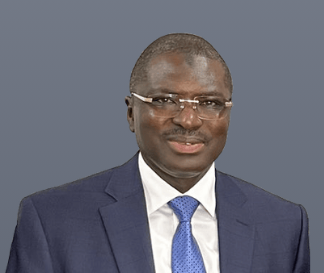
The Independent Electoral Commission (IEC) has outlined a range of requirements that presidential aspirants must meet to contest elections in The Gambia.

According to IEC Chief Executive Officer Sambujang Njie, a candidate must be a Gambian citizen and must have attained the minimum age of 30 years.

The candidate must also have completed senior secondary education and secured nomination from not less than 5,000 registered voters, and at least 200 of the voters nominating the candidate must be drawn from each administrative area.

Njie said aspirants are also required to submit a declaration of assets and a tax clearance certificate as part of the nomination process.

Candidates must further pay a deposit of D1 million and submit their representative symbol, campaign colour and a digital photograph.

He explained that a person qualified to be registered as a voter under the Constitution and the Electoral Act could contest an election as an independent candidate.

The requirements also apply to political parties and their candidates, who are expected to comply with the Code of Election Campaign Ethics prepared by the commission.

The code is intended to guide candidates and political parties in their conduct during the election campaign.

Njie also said candidates are required to submit a manifesto that encourages tolerance and multiculturalism.

The manifesto requirement comes as political parties and aspiring candidates prepare for the 2026 presidential election.

The requirements outlined by Njie mean presidential aspirants must meet both legal and administrative conditions before they can formally enter the race.

IEC sets November 3–14 for presidential nominations

0
Arret 14

By Arret Jatta

The Independent Electoral Commission (IEC) has announced that presidential candidates will be nominated from 3rd to 14th November 2026, ahead of the 5th December  presidential election.

IEC Chairman Joseph Colley made the announcement at the commission’s stakeholders forum yesterday, where he also confirmed that nomination forms will be issued to aspiring candidates from 21st September.

Colley said the nomination period will run for 12 days, with both the opening and closing dates included. The announcement gives aspiring candidates and political parties a clear timeline to prepare for the nomination process.

The announcement comes as the commission continues preparations for the election, including the ongoing revising court hearings on objections to the voters list.

Colley said he hoped all revising courts would conclude their sittings within the 60 days provided by law. He said this would allow the commission to finalise the voters’ roll.

He also stressed that the courts are independent and that the IEC would not interfere in their deliberations.

The chairman said the commission had started rolling out capacity-building activities for election stakeholders and training on electoral operations and results management is scheduled from 21st to 26th September.

The training will bring together stakeholders including the Inter-Party Committee, civil society organisations, the media, the Gambia Police Force and the Gambia Federation of the Disabled.

Colley said the training will help stakeholders understand the electoral process and support peaceful, inclusive and transparent elections.

He also announced that the process of observer and media accreditation has started. Organisations and media houses wishing to deploy election observers or reporters must apply for accreditation by 20th November. Chairman Colley said the commission’s goal is to deliver a free, fair, transparent and inclusive election in December.

US moves to transfer funds from sale of Jammeh’s $3.5M mansion in US

0
Tabora 10

By Tabora Bojang

The minister of justice has informed lawmakers that the United States government is preparing to transfer to The Gambia government funds generated from the sale of former president Yahya Jammeh’s US$3.5 million mansion located in Maryland, USA.

“We are signing off on the agreement to transfer the funds. I believe before the end of the week or next week. So once it is signed, the funds will be transferred,” Dawda Jallow said during the ministerial question and answer session at the parliament on Wednesday.

He said once the funds reach The Gambia, they will be transferred to the Reparations Commission, the body established to pay reparations to victims of the Jammeh-era crimes for disbursement. 

The US Department of Justice secured the forfeiture of the multi-million dollar mansion in Potomac, Maryland following a court judgement in 2022. The Justice Department stated that Jammeh “corruptly” bought the mansion by “conspiring with his family members and close associates to utilise a host of shell companies and overseas trusts to launder his alleged corrupt proceeds” throughout the world.

The US government has recommended to The Gambia government to use the proceeds from the sale of the forfeited property for the benefit of people harmed by Jammeh’s acts of corruption and abuse of office.

Minister Jallow disclosed that the Truth, Reconciliation and Reparations Commission (TRRC) recommended payment of compensation to a total of 1,009 victims adding that as of 7 September 2026, a total of 112 victims or their families received their full compensation payment. He further revealed that 879 victims from the original TRRC list are yet to be paid their balances.

Jallow pointed out that more victims may be identified because the commission is still registering victims not interviewed or recognised by the truth commission.

The minister said he is “not too sure if the money from the proceeds of Jammeh’s Potomac mansion will be able to settle payment of all the victims.

“This is why we gave the reparations commission a five-year mandate and allocated D20 million per annum because we are not too sure whether they would be able to pay every victim at one go,” he stated.

Bulock youth leader rejects minister’s claim that demolished barracks fence was in Senegal

0
Omar Bah 12

By Omar Bah

The chairman of the Bulock Youth Development Association, Sarjo Jarju, has strongly rejected claims by the Minister of Local Government and Lands, Hamat Bah, that the land where the Bulock military barracks fence was erected belongs to Senegal, insisting the territory is Gambian and backed by colonial boundary pillars.

In a statement shared with The Standard yesterday, Jarju said the minister’s statement at the National Assembly was “completely unacceptable to the people of Bulock”.

Jarju said Bulock’s claim was on “physical evidence” that has been in place for generations.

“The land is in Gambian territory, and the people of Bulock have lived, farmed and depended on this land for generations,” he stated.

“We have the colonial boundary pillars. These pillars have been there since many of us were children. We know where they are, and our community has lived with them for generations.”

He questioned the reliance on new technology to override history.

“How can newly identified coordinates suddenly override physical colonial boundary pillars that have existed for generations?”

According to Jarju, when the border commission visited Bulock, the community cooperated fully.

“Our community border taskforce accompanied the commission and showed them the existing colonial pillars on the ground.”

He said one of those pillars provides “critical evidence concerning the location of the historical boundary,” and that the people of Bulock believe Senegalese security forces entered Gambian territory and demolished the military camp at Bulock.

He also raised concerns about a second pillar “newly constructed and positioned near the Kafuta Forest” that looked different from older colonial markers.

“If the commission itself observed irregularities surrounding that pillar, then the people of Bulock deserve a clear and transparent explanation,” Jarju said.

“We cannot simply accept the use of a newly constructed pillar as the definitive basis for determining the historical border without a transparent explanation of when, by whom, under what authority, and using what historical records that pillar was established.”

The youth chairman said the dispute is about survival, not politics.

“This is not merely about a piece of empty land. This is about people’s homes, farms, cashew orchards, orange orchards, grazing areas and livelihoods,” he said.

“The land supports families. It helps parents pay school fees. It helps families meet hospital bills. It provides food and income. It supports livestock and agriculture. It is part of the economic survival of our community,” he lamented.

He appealed to President Adama Barrow and the National Assembly to ensure transparency on how the conclusion that the land belongs to Senegal was reached, historical evidence and original demarcation records to be made public, proper consultation with affected communities and an independent examination of all colonial boundary pillars and demarcation records.

“We want to know who established this conclusion? What historical documents were examined? Where are the original demarcation records? What happened to the colonial pillars? Why should the people of Bulock accept a determination that appears to contradict the physical evidence they have known all their lives?” Jarju questioned.

He said Bulock does not seek conflict with Senegal.

“We respect our neighbours in Senegal, and we do not seek conflict with anyone. But friendship and peaceful relations between two countries must never come at the expense of the territorial rights and livelihoods of innocent communities,” he averred.

NCCE warns against interpreting revising court objections as criminal indictments

0
Olimatou 10

By Olimatou Coker

The chairman of the National Council for Civic Education (NCCE), Momodou Sise addressed the 1,694 objections reportedly received by the IEC for determination by the revising court, stressing that such objections should not be interpreted as criminal indictments.

Ceesay made the comments during a press briefing at the NCCE offices in Kotu.

“Individuals who have been objected to are not criminals; rather, an objection simply questions eligibility and will be lawfully determined by the courts,” he explained.

The NCCE boss called on citizens and political stakeholders to remain calm, exercise restraint and allow due process to take its course.

Despite what he described as “positive developments” in the electoral process, the NCCE chairman expressed concern over the growing use of inflammatory language, hate speech, ethnic rhetoric, insults and identity-based polarisation in public discourse.

He said the situation was particularly worrying because some of the rhetoric involves political figures, persons in positions of authority and religious leaders who, he noted, should instead be promoting unity and tolerance.

Mr Sise challenged political parties and their leaders to publicly condemn and distance themselves from divisive and inflammatory conduct carried out in their name or defence.

“We must never allow a few extremist elements to tear this country apart,” he warned.

He said such rhetoric could deepen divisions, erode public trust and undermine the peace and social cohesion that The Gambia has worked hard to maintain.

With the election approaching, Chairman Sise urged political actors to focus their campaigns on policies, programmes and national development rather than personal attacks and character assassination.

He appealed to social media users and influencers to verify information before sharing it and to avoid amplifying content that promotes hatred, ethnic division or political hostility.

He encouraged Gambians to place national unity above political affiliations.

“Elections will come and go. Governments will rise and fall. But The Gambia, our peaceful, beautiful, resilient Gambia must remain,” he said.

He urged citizens to ensure that the 2026/2027 electoral cycle is remembered as a period when Gambians chose peace, truth and dialogue over division and conflict.

“The pen is in our hands, the microphone is at our lips, and the choice is ours. Let us choose unity. Let us choose The Gambia,” he exhorted.

Hungarian honorary consulate hands over passports to Gambian Stipendium Hungaricum scholarship recipients

0

The Honorary Consulate of Hungary in The Gambia headed by Farimang Saho, has successfully concluded the handing-over of passports to Gambian recipients of the Stipendium Hungaricum Scholarship Programme, following the processing and approval of their visas to pursue higher education in Hungary.

This marks the second occasion the consulate has supported the passport handover to successful scholarship recipients, bringing the total number of Gambian beneficiaries assisted through its office from last year to date to 20.

The passport handover marks an important milestone for the scholarship recipients, who will shortly travel to Hungary to begin their respective academic programmes.

As part of the visa application process, the students travelled to Ghana during the first week of August in two separate groups to attend their visa appointments at the Embassy of Hungary. The journey was necessary as there is currently no resident Hungarian Embassy in The Gambia.

The process was facilitated by Mr Abubacarr Saho, who supported coordination between the students, the honorary consulate in The Gambia and the Hungarian Embassy in Ghana, helping the recipients navigate the arrangements and requirements for their visa applications.

Despite the logistical challenges involved, the students successfully completed the application process and expressed appreciation for the warm reception and assistance provided by the embassy.

During their visit, the students were briefed on the Stipendium Hungaricum Scholarship Programme, including its benefits, academic expectations, visa procedures and residence permit requirements. They were also given the opportunity to raise questions and seek clarification on matters relating to their studies and stay in Hungary.

The students further appealed for consideration to be given to providing future consular services in The Gambia for subsequent scholarship recipients, which would help reduce the financial and logistical burden associated with travelling abroad for visa processing.

On 4th September 2026, the successful applicants received their passports bearing their Hungarian visas at the Office of the Honorary Consulate of Hungary in The Gambia. The

occasion was met with excitement and appreciation from the students, who described the moment as the culmination of a challenging but rewarding journey.

The recipients commended Honorary Consul Farimang Saho and his office for their guidance, support and commitment to assisting Gambian students. They also expressed appreciation to Mr Abubacarr Saho for his role in facilitating the process and supporting them throughout the preparations.

Speaking collectively, the scholarship recipients said:

“This journey has taught us that with determination, unity and perseverance, challenges can be overcome. We are deeply grateful to the Government of Hungary and to the Hungarian Consulate and its team for their guidance and support. We look forward to making the most of this life-changing opportunity and proudly representing The Gambia in Hungary.”

The Stipendium Hungaricum Scholarship Programme, supported by the Government of Hungary, continues to provide opportunities for international students to pursue higher education in Hungarian universities while strengthening educational and people-to- people relations between Hungary and partner countries.

Honorary Consul Saho said his consulate “remains committed to supporting Gambian students benefiting from the programme and strengthening the longstanding friendship and cooperation between Hungary and The Gambia”.

NPP Student Wing president urges youths to protect Gambia’s peace amid electricity crisis

0

The National People’s Party (NPP) Student Wing President Yusuf Tunkara has urged Gambian youths to safeguard the country’s peace and stability amid growing protests over the electricity crisis, warning that violence will only deepen the hardship families are already facing.

Tunkara’s appeal comes as frustration over prolonged Nawec blackouts boils over in communities across The Gambia. For days, households, businesses, schools and hospitals have struggled with outages lasting up to 12 hours, sparking roadblocks and tyre burnings in parts of the country.

Tunkara said he feels the pain of young people who cannot study at night, tailors who cannot work, and families sweating through the heat without fans. But he drew a firm line between protest and destruction.

“To my fellow youths: I hear you. I am with you. We deserve reliable electricity,” Tunkara said. 

“But let us not answer darkness with fire. Let us not solve a power problem by creating a peace problem. The Gambia we want to inherit tomorrow must not be broken by the anger of today.”

He urged demonstrators to choose dialogue over damage. 

“Burning tyres does not bring back the lights. Vandalising public property does not punish politicians — it punishes your brother, your sister, your mother who will pay for it with taxes. Let us protest with dignity, speak with respect, and demand with unity.”

Tunkara further framed peace as a generational responsibility.

“Peace is not owned by NPP. It is not owned by the opposition. Peace belongs to the student writing exams by candlelight. It belongs to the mother in the market. It belongs to you and me,” he said. 

Tunkara added that governments come and go but The Gambia remains.

“Do not let temporary darkness lead us into permanent damage.”

He called on youths to be “architects of solutions, not agents of destruction.”

“Channel your energy into dialogue. Engage your NAMs, your councillors, your student leaders. Criticise boldly. But build while you criticise,” Tunkara urged. 

“We can demand better electricity and still protect our country. We can disagree politically and still remain brothers and sisters.”

Tunkara added: “I know you are tired. I know you are hot. I know you want answers now. But I also know the strength of Gambian youths. We have carried this nation through difficult times before. Let us carry it again — with calm heads, with clear voices, and with hands that build instead of break.”

Tunkara argued that the current electricity crisis sits on top of a major transformation.

“For 52 years, electricity was scarce. Before 2016, only about 36% of Gambian households had access to the national grid. Entire villages lived in darkness. Markets ran on noisy tiger generators.”

Under President Adama Barrow, Tunkara added, “government rolled out the Universal Access to Electricity programme, rural electrification, and regional integration through OMVG. Today, national access stands at about 90% to 95%, according to government figures.”

He said communities like Yoro Jula, 174km from Banjul, now have streetlights, fridges, and connected homes for the first time.

Report of the coordinators on the Team Gambia 2026 consultative process delivered on Saturday, 29th August, 2026

0

By Coordinators Halifa Sallah and Sidia Jatta

Press release – Approved for dissemination by signatories of consent form 8th September, 2026.

On Saturday 29th August, 2026, representatives of political parties, political movements, civil society organisations and prominent concerned citizens from diverse background assembled at Paradise Suites Hotel to validate a report of the coordinators of a six-month consultative exercise, on coalition building presented as the Team Gambia 2026 initiative.

Participants received the report with keen interest, discussed its content with enthusiasm, frankness and sobriety, deliberated on the way forward with sincerity and called for the implementation of its recommendation with a sense of urgency. It was unanimously accepted that a level ground currently does not exist in The Gambia for holding the free, fair and genuine multi-party contest required in delivering the undiluted choice of the people. It was equally acknowledged that the self-perpetuating rule that Coalition 2016 sought to nip in the bud by limiting the tenure of office of its flag-bearer has been given a new leash of life by the total failure or blatant refusal to undertake the paltriest of constitutional reforms to introduce a term limit for the executive since 2016.

It was therefore duly recognised by the stakeholders that in order for the political system of The Gambia to start on a clean slate after the 2026 presidential elections, all Gambians, at home and abroad, who love their country and people and are committed to serve and save them must become resolute in joining hands, to work as a team, to salvage the country from self- perpetuating rule. They should all strive to put in place an inclusive transitional government that would exist only to render the quality services the public deserve and even the ground for electoral contest based on time bound constitutional and institutional reforms, for the common good. It is in this light and spirit that those assembled to review, validate and adopt the report on the Team Gambia 2026 Consultative Initiative unanimously endorsed the recommendation for the convening of a national conference of willing stakeholders on Saturday, 12th September, 2026 to craft an agreement to establish Team Gambia 2026 as a Coalition under section 155 of the Elections Act and further deliberate and approve a time bound work plan and programme for the electoral cycle beginning in 2026.

Once established, Team Gambia 2026 will break into teams such as Team Gambia 2026 Presidential Forum, Team Gambia 2026 National Assembly Forum, Team Gambia 2026 Mayors’, Mayoress’, Chairpersons’ and Councillors’ Forum, Team Gambia 2026 Expert Bank Forum, Team Gambia 2026 Farmers’ Forum, Team Gambia 2026 Workers’ Forum, Team Gambia 2026 Youth Forum, Team Gambia 2026 Women Forum, Team Gambia 2026 Persons With Disability Forum, Team Gambia 2026 Diaspora Forum and Team Gambia 2026 TRRC Victims’ Forum. Such forums will be commissioned and institutionalised to involve each sector of society to articulate and accentuate its demands and urgencies to inform the manifesto and programmes of the coalition for the coming electoral cycle. These bodies and other committees will serve as oversight to ensure advocacy for and implementation of all agreements, policies and programmes.

It has dawned on all participants that only an organised leadership and people can ensure that a coalition or a government exists for them and not for a few. It is our ardent hope that, as we leave the hall to prepare for September 12, all Gambians at home and the diaspora would be seized by this historic initiative, to try for a second time, to bring about change for the common good. Forward with Team Gambia 2026!

Senegal deploys 618 Ecomig soldiers to Gambia

0

On Wednesday, Senegal deployed a new contingent for The Gambia as part of the Ecowas mission. Comprising 618 personnel, including 14 women, the contingent is under the command of Colonel Balla Moussa Mané. It is primarily composed of a headquarters staff, a command, support, and service company, a mechanised company, and two motorised companies.

“This 10th contingent in The Gambia demonstrates the confidence that the Ecowas authorities and our sister republic of The Gambia have placed in our armed forces,” declared Brigadier General Simon Ndour.

According to the Senegal Army Chief, this mission is particularly significant, as it takes place in a neighbouring, brotherly, and friendly country whose internal security has a direct impact on that of Senegal.

“Your presence in The Gambia will not be merely a military duty. It is above all an act of support for a brotherly and friendly country that is going through a difficult period in its history,” he emphasised. In an era of rampant, sometimes excessive, use of social media, General Simon Ndour urged the military to use it “in a measured, intelligent, and strictly personal manner”.

“Today, military missions are becoming increasingly complex and demanding. This requires strength of character and a delicate balance between rigor in the face of adversity and flexibility in your interactions with state authorities, the local population, and the various stakeholders on the ground,” he stated.

The Chief of Staff exhorted the soldiers to demonstrate self-discipline and to scrupulously respect the rules of conduct and commitment, in accordance with the laws and regulations of the host country. “Be beyond reproach in the field. I urge you to be worthy ambassadors of the Armed Forces,” he added.

At the head of the contingent, Colonel Balla Moussa Mané expressed his gratitude to the military authorities for the trust placed in him. In The Gambia, the mission of the Senegalese military will be to support the ongoing stabilisation process. “We will follow the same approach as previous missions,” assured Colonel Mané.

Le Soleil

Prosecutor orders investigation into Speaker Ousmane Sonko

0

The public prosecutor at the Dakar High Court has ordered an investigation following statements attributed to Speaker Ousmane Sonko concerning Touba. The investigation has been entrusted to the Urban Security Unit of the Dakar Central Police Station.

According to information reported by Seneweb news portal, investigators questioned Serigne Makhtar Bousso, spokesperson for the plaintiffs, on Tuesday. The proceedings follow a complaint filed on 14th July, 2026, by Serigne Modou Maroun Niang and Serigne Mourtalla Bousso.

In their complaint, the plaintiffs accused Sonko of remarks he allegedly made during the inauguration of his party’s headquarters in Mbacké. He reportedly stated that “dirty money has entered the holy city of Touba”.

The plaintiffs said these remarks damaged the dignity and reputation of Touba. They are asking the prosecutor to summon the politician to provide evidence to support his statements or to respond to the accusations against him, particularly those related to defamation.

However, the proceedings could be hampered by Ousmane Sonko’s parliamentary immunity. According to seneweb, the Speaker of the National Assembly could invoke this status if summoned by investigators.

Furthermore, contrary to some reports circulating on social media, the same source indicated that Ousmane Sonko has not been invited for questioning and that no searches have been conducted by the Urban Security Directorate against him.

Wal Fadjri L’Aurore

PM Lo says Senegal will clear its 1,956 trillion CFA francs debt arrears

0

According to Prime Minister Ahmadou Alhaminou Lô, Senegal has accumulated 1.956 trillion CFA francs in payment arrears, a situation which, according to him, constitutes a serious obstacle to the national economy and weighs heavily on business activity.

Faced with this constraint, the head of government intends to make the settlement of the state’s arrears one of the priorities of his government action. He emphasised the need for the public authorities to fulfil their financial commitments, believing that the state’s credibility is also measured by its ability to honour its debts.

The prime minister said the payment of these arrears is therefore not merely an accounting or budgetary requirement; it constitutes an economic and institutional imperative. By gradually clearing its debts, he reasoned, Senegal intends to restore the confidence of economic operators and streamline the financing mechanisms of the economy.

First phase of Senegal-Gambia border densification exercise nears completion

0

By Dr Ebrima Ceesay

The first phase of the ongoing Senegal-Gambia Border Densification Exercise, being undertaken along the shared border between the neighbouring Casamance region of Senegal, is now winding down.

The exercise has so far focused particularly on the Foñi Brefet and Dimbaya areas, where survey teams have been working to identify, verify and strengthen the physical marking of the international boundary.

As part of this first phase, 20 old colonial-era boundary pillars have reportedly been located and identified. The discovery is considered significant because of the historical importance of the original Anglo-French boundary markers in establishing the physical demarcation of the Gambia-Senegal frontier.

According to historical records at the Gambia National Archives and University of Birmingham, the Anglo-French Boundary Commission erected 61 principal colonial boundary pillars in connection with the demarcation of the frontier in the early twentieth century.

These markers followed the boundary arrangements established under the 1889 Anglo-French Convention, with subsequent field demarcation and related boundary work taking place in the years that followed.

The original boundary pillars are understood to have served as the principal physical reference points along the frontier. According to the archival account, the original markers were constructed from cement and stone and did not contain structural iron. Their physical form and documented locations are therefore important in distinguishing them from later survey, geographical, district or other boundary markers that may have been installed subsequently.

It is important, however, that the identification of any particular pillar as an original colonial boundary pillar should be based not merely on its appearance or its location in the bush, but also on historical records, pillar numbers, survey coordinates, boundary maps and other documentary evidence.

The historical demarcation of the Gambia-Senegal boundary was not a one-off exercise. Following the original Anglo-French arrangements, further field surveys and boundary work were undertaken at different periods, including additional demarcation activity in 1911 and 1925. There were also later adjustments and boundary-related work, including the 1976 agreement between the two neighbouring countries concerning parts of the eastern section of the boundary.

This distinction is particularly important when discussing densification. The principal historical boundary monuments establish key reference points along the frontier, while subsequent densification involves the placement or identification of additional markers between, or in relation to, established boundary points to make the boundary more readily identifiable on the ground.

The current exercise is therefore significant not only because of the number of old pillars being rediscovered, but also because it provides an opportunity for the two countries to compare existing physical markers with their historical documentation and to establish a more complete and reliable record of the boundary.

The historical record confirms that the demarcation of the Gambia-Senegal boundary involved joint Anglo-French work, just as the contemporary process is being undertaken through cooperation between The Gambia and Senegal. Historical sources also record subsequent boundary missions and revisions, demonstrating that boundary demarcation and maintenance have continued through successive periods.

The findings from this first phase are expected to be compiled into a report for consideration by the Governments of The Gambia and Senegal. The report is expected to document the pillars and other boundary markers identified during the exercise and provide recommendations for the next stages of the joint demarcation and densification process.

The recovery and verification of the 20 old pillars therefore represents an important development in the ongoing effort to preserve the historical record of the boundary and strengthen the physical identification of the shared international frontier between The Gambia and Senegal.

Diphtheria outbreak in Senegal: 57 confirmed cases and 8 deaths

0

The Ministry of Health and Public Hygiene published its update on the diphtheria outbreak on Tuesday, 8th September. Since the first case was confirmed on 1st August, 2026, Senegal has recorded 57 confirmed cases of diphtheria, including eight deaths. According to the Ministry, “the Kédougou region is the most affected with 27 cases, including 18 in Kédougou, 7 in Saraya, and 2 in Salémata.” This is followed by the Louga region with 8 cases, Dakar with 7 cases (6 in Guédiawaye), and Thiès with 7 cases (6 in Mbour). Diphtheria is an infectious and contagious disease, but preventable through vaccination.” It manifests as a sore throat, fever, difficulty swallowing, and sometimes difficulty breathing.

Internet access: Sonatel blocks Starlink

Sonatel has scored a significant victory in the battle for control of the Internet access market in Senegal. According to Libération, its main competitor, Starlink, has just suffered a major setback: the Supreme Court has suspended the decree authorising the company, owned by Elon Musk’s SpaceX, to sell Internet access in the country. The authorisation was granted under President Macky Sall by the Minister of Communication, Telecommunications, and Digital Affairs, and was to last for five years. “After hearing Sonatel’s request, which initiated the proceedings, the Court considers that the arguments raised by Sonatel are sufficient to create serious doubt as to the legality of the challenged decision,” reports Libération.

Minister-advisor to the president says they are going to expose Sonko’s scandals

Minister-Advisor to the President of the Republic, Aldiouma Sow, has attacked former Prime Minister Ousmane Sonko. In a post published on Facebook, Aldiouma Sow strongly criticised Sonko and his political entourage. The minister-advisor refers to the “Kosmos Affair”, which he links to other cases he describes as “financial scandals.” He also cited the Jaam account of the Casamance Peace Fund and asserts that “other scandals” would be revealed in the coming days and weeks. According to Sow, these affairs demonstrate that the former prime minister and his associates should now “account to the Senegalese people for their two years in office.” He added: “If I were them, I would keep a low profile and stay out of the limelight until 2050.” He concluded with the threat: “The republic will confront them!”

Citizens’ movement ‘Ziguinchor Rek’ joins Diomaye’s party

A citizens’ movement calling itself ‘Ziguinchor Rek’ has issued a statement announcing the decision to join the party of President Bassirou Diomaye Faye.  The movement which is set up in the heartland of Speaker Ousmane Sonko’s base, wrote: We have made a choice. A well-considered, deliberate, and irreversible choice. We, the citizens’ movement “Ziguinchor Rek,” led by Idrissa Benjamin Sané, are joining the Kiiraay Party  founded by the president. We thank Aminata Touré, former prime minister and coordinator of the Diomaye President Coalition, and Yankhoba Diémé, Minister of the Armed Forces, for their unwavering commitment to Casamance and their support for the momentum generated by our movement. As sons and daughters of Casamance, we have always championed the demand for balanced, inclusive, and equitable development of our region. We fully and wholeheartedly endorse President Faye’s vision: that of a sovereign, just, and united Senegal, where every region, without exception, benefits from the same development opportunities.”

APR: Double blow for Macky Sall

The ranks of the APR continue to thin. Former minister Abdoulaye Bibi Baldé and former MP Amy Yaya Diallo have left Macky Sall’s party. According to Les Échos newspaper which broke the news, Baldé will create his own political party, called the Rally for the Ecosystemic Transformation of Senegal (RTES). Meanwhile, Diallo, the newspaper added, has joined Kiiraay. Originally from Bakel and a former member of the now-defunct High Council of Territorial Authorities (HCCT), she switched sides after meeting with President Diomaye Faye.

The border we think we know: Bulock, boundary pillars and the technical meaning of sovereignty

0
Dr Ebrima Ceesay 4

By Dr Ebrima Ceesay

When a fence crosses a border, what does sovereignty really mean?
The recent controversy surrounding the military fence at Bulock has already generated strong emotions and competing narratives about sovereignty, territorial integrity and the relationship between The Gambia and Senegal.

But perhaps the most important lesson from Bulock lies beyond the fence itself. It lies in a much more fundamental question: How does a modern state actually know where its territory begins and ends?

That may sound like a technical question. In reality, it is one of the foundations of sovereignty. A state can have a flag, an army, a constitution and internationally recognised borders. But sovereignty also requires something less visible and considerably less dramatic: the institutional ability to identify, document, survey, map and administer those borders with precision.

The Bulock episode has therefore presented The Gambia with an opportunity to think beyond the immediate controversy and examine something deeper – the relationship between territorial sovereignty and technical state capacity.

A fence is not a border. The recent admission by Lands Minister Hamat Bah has introduced an important distinction into the public discussion. According to reports from the National Assembly, the Minister said that the location where the Bulock military fence was constructed had been confirmed to be on Senegalese territory.

Minister Hamat Bah emphasised that this did not mean that The Gambia was surrendering territory, but rather that the location of the structure had been established in relation to the existing boundary. This distinction matters enormously.

A fence is a physical structure. A military installation is a physical structure. A road is a physical structure. A farm is a physical activity. None of these, by themselves, determines where an international boundary legally lies. That boundary derives from the historical, legal and technical instruments through which the two states recognise their respective territories.

This is why the language of “taking land” can sometimes obscure the real issue. If a structure has been constructed on the wrong side of an established boundary, correcting the location of that structure does not necessarily mean that one country has lost territory to another.

It may simply mean that the physical reality has been brought back into conformity with the recognised boundary. That appears to be the logic behind the Lands Minister’s statement. And this is precisely why the Bulock episode should lead us toward a more sophisticated conversation about borders.

The border is not simply a line on a map. Most citizens encounter an international border as an abstract line. On a map, it may appear as a thin stroke separating two countries. On the ground, however, a border is something much more complicated.

It has coordinates. It has historical agreements. It has maps. It has boundary descriptions. It has survey records. It has monuments and pillars. It has geographical reference points. It has administrative consequences. And, perhaps most importantly, it requires institutions capable of maintaining and interpreting all of these things.

Historical records held in British archives demonstrate the extent to which technical work was involved in establishing the Gambia-Senegal frontier more than a century ago. The British Library, for example, holds 1904 and 1905 maps relating to the Anglo-French boundary, including a 1904 tracing explicitly described as showing the frontier line being re-cut and new pillars erected by the Anglo-French Commission.

Another 1904-1905 map identifies the boundary between the British and French possessions and records the work of the commissioners involved. In other words, the border was never simply a matter of somebody drawing a line and walking away. It required technical work. It required joint work. It required documentation. And it required physical markers on the ground.

But not every pillar in the bush is a boundary pillar. This is an important point that deserves much greater public attention. When people see concrete pillars in border areas, there can be a tendency to assume that every one of them represents an international boundary. That is not necessarily the case.

Border areas can contain different types of monuments and survey markers, including historical boundary pillars, geodetic pillars and district boundary pillars established for different administrative or surveying purposes. The distinction is critical.

According to archival material concerning the original boundary work, the colonial boundary monuments were part of a specific Anglo-French boundary exercise. This means that identifying an original boundary pillar is itself a technical and historical exercise.

It is not enough to find a concrete structure in the bush and declare: “This is the border”. One must establish what the monument is, when it was erected, under what authority it was established, where it was recorded, how it relates to the boundary documentation, and whether its present position corresponds with the recognised boundary. That is the work of a state that takes territorial administration seriously.

The forgotten work of the Anglo-French Boundary Commission
There is another lesson here. The original demarcation of the Gambia-Senegal boundary was not simply a unilateral British exercise or a unilateral French exercise. It involved cooperation between the two colonial powers.

The surviving archival record illustrates this technical character of the process. Maps from 1904-1905 identify the work of the Anglo-French Boundary Commission, while archival descriptions refer specifically to the frontier being re-cut and new pillars being erected by the joint commission.

A historical annual report for the Gambia also records the replacement of earlier boundary marks with masonry pillars during this period, illustrating the scale of the physical marking exercise. This historical fact has a contemporary lesson.

Boundary demarcation is fundamentally a collective exercise. Two states sharing a border cannot permanently manage that border through unilateral assumptions. They need joint technical mechanisms. They need common records. They need agreed coordinates. They need procedures for resolving discrepancies.

And they need the political maturity to recognise that technical cooperation on a boundary is not a surrender of sovereignty. Quite the opposite. It is an expression of sovereignty.

Demarcation and densification are not the same thing
This distinction is particularly important in understanding the current work along the Gambia-Senegal boundary. Demarcation establishes and identifies the boundary on the ground. Densification is a subsequent process of making that boundary easier to identify by adding additional markers between existing reference points.

The purpose is not necessarily to redraw the international boundary. It is to make the boundary more visible and more practical. Imagine a long road with only a handful of signs. The absence of signs between those points does not mean that the road disappears. But it makes navigation more difficult.

The same principle can apply to an international boundary. If historical boundary pillars are widely spaced, damaged, missing or difficult to locate, communities, farmers, security personnel, surveyors and administrators may encounter uncertainty about the precise location of the line.

Additional markers can reduce that uncertainty. This is why the present process of boundary densification should not automatically be interpreted through the political language of territorial concession. It is better understood as an effort to improve the physical identification of an already recognised boundary.

The tragedy of imprecision
For people living far from the border, a disagreement over a few metres of land can seem insignificant. For communities living along the frontier, it can be anything but insignificant. A few metres can determine whether a farm lies in one jurisdiction or another.

It can affect where a road can be built. It can determine which authority has responsibility for a particular location. It can affect security installations. It can create disputes between farmers. And when the issue involves military facilities, a relatively small geographical uncertainty can acquire an entirely different strategic significance. That is why precision matters.

A border that is legally established but poorly marked on the ground creates opportunities for misunderstanding. A border that is well documented, accurately surveyed and clearly marked reduces those opportunities.

The objective, therefore, should not simply be to have a border. The objective should be to have a knowable border. This is where sovereignty becomes technical.

There is a tendency to understand sovereignty primarily in political and military terms. A sovereign state must defend its territory. It must protect its citizens. It must resist external interference. All of that is true.

But sovereignty also has a technical dimension. Can the state produce the map? Can it identify the coordinates? Can it locate the boundary monuments? Can it retrieve the historical documentation? Can its surveyors reproduce the boundary on the ground? Can its land administration system distinguish an international boundary pillar from a geodetic or district monument? Can its military planners establish whether a proposed installation sits inside or outside national territory? Can its institutions communicate the same geographical information consistently to the army, the Lands Ministry, local authorities and communities?

These are not secondary questions. They are part of sovereignty itself. This brings us back to an idea I have previously described as the Cartographer’s State.

The strongest state is not necessarily the state with the loudest rhetoric about sovereignty. It is the state that possesses the knowledge and institutional capacity to make sovereignty operational.

That requires maps. It requires archives. It requires land registries. It requires surveyors. It requires geospatial technology. It requires reliable coordinates. It requires historical documentation. It requires trained personnel. And it requires institutions that can work across ministries and across borders.

A modern state cannot afford to discover the precise location of its international boundary only after a dispute has emerged. It should know before the dispute. It should know where every important boundary monument is. It should know which monuments are original, which are later survey markers and which have disappeared.

It should maintain the historical documentation. It should digitise the information. And it should ensure that new infrastructure and security installations are checked against authoritative boundary data before construction begins. That is not bureaucracy for its own sake. It is territorial security.

Bulock should therefore become a lesson, not a wound The Gambian Government initially described the demolition of part of the Bulock military installation’s perimeter fence by Senegalese forces as profoundly provocative and unacceptable, while simultaneously reaffirming its commitment to resolving the issue through dialogue and established bilateral mechanisms.

Senegal, for its part, said it had previously raised concerns about what it described as encroachments affecting its territorial integrity and called for a durable solution. These competing political narratives are important. But they should not be the end of the conversation.

The more useful question is: What can The Gambia learn from the fact that a military fence could be constructed in a location subsequently acknowledged by its own government to be on the Senegalese side of the boundary?

The answer should not simply be embarrassment. It should be institutional reform. Before major military, administrative or infrastructural projects are undertaken near an international boundary, there should be an authoritative process for confirming the exact location of that boundary.

There should be no ambiguity between what the map says, what the survey says, what the land records say and what the engineer builds. That is how a state learns. That is how institutions mature.

From colonial pillars to modern coordinates
There is also an interesting historical irony here. The border that we are now trying to understand with modern surveying and geospatial technology was physically marked more than a century ago through painstaking joint work by British and French officials. Those colonial boundary pillars were built in an era before satellites, GPS and modern digital mapping.

Yet the principle remains remarkably relevant. The technology has changed. The requirement for precision has not. The old boundary pillar and the modern GPS coordinate are different instruments serving essentially the same strategic purpose: to translate an abstract legal boundary into a physical reality that people can identify.

That is the deeper meaning of densification. It is not simply about pouring concrete. It is about converting legal geography into operational geography.

The border is a national asset. Perhaps we should therefore change the way we think about our borders. A border should not be viewed only as a line that separates The Gambia from Senegal. It should be treated as national infrastructure.

Just as we maintain roads, bridges, ports, power networks and communications systems, we need to maintain the institutional infrastructure of territorial sovereignty. That means maintaining boundary records.

It means preserving archives. It means surveying. It means replacing damaged monuments. It means installing additional markers where necessary. It means maintaining accurate digital maps. It means training a new generation of Gambian surveyors, cartographers, geographers, historians and border-management specialists. And it means ensuring that political leaders understand the technical information upon which territorial decisions depend.

The future of Gambian sovereignty
The lesson of Bulock should therefore be bigger than Bulock. The question is not simply whether one fence was constructed on the wrong side of a boundary. The larger question is whether The Gambia possesses the permanent institutional capacity to know, manage and defend every metre of its territory.

That is a much more important question. Because sovereignty is not merely the ability to say: “This is our land”.

Sovereignty is the ability to demonstrate precisely where that land begins and ends, why the boundary is there, how it is documented, and how the state ensures that its own actions remain consistent with that knowledge.

That is where diplomacy, history, geography, law and technology converge. And perhaps this is the opportunity hidden inside the controversy. Instead of allowing Bulock to become another chapter in a cycle of outrage, accusation and counter-accusation, The Gambia can use it as a catalyst for building a stronger architecture of territorial knowledge.

A country approaching its second century of independence should not merely inherit its maps. It should understand them. It should preserve them. It should continuously verify them. And, above all, it should build the institutional capacity to turn the lines on those maps into a secure, peaceful and well-governed territorial reality. The ultimate lesson of Bulock may therefore be surprisingly simple: A sovereign state must not only defend its borders. It must know them.

Dr Ebrima Ceesay, is a Gambian academic and former editor of the Daily Observer newspaper based in the UK.

The Gambia at a crossroads: time for a new development blueprint Part 2

0
Andrew sylva 2

By Andrew Sylva

Rural development: the forgotten half of the national project
A country cannot develop when development remains concentrated in urban centres. The rural population must become central to the national development agenda.
Rural communities need good roads, electricity, hospitals, schools, agricultural facilities, digital connectivity and employment opportunities.
The neglect of rural areas fuels rural-urban migration and places enormous pressure on urban centres.?
A new Gambian development blueprint must deliberately decentralise development. Every region should have identifiable economic strengths.
Some communities can become agricultural centres. Others can specialise in fisheries, livestock, tourism, processing industries or renewable energy. Development must be geographically balanced. The village must not remain permanently disconnected from the benefits of modernity.

Foreign direct investment and the need for a friendlier business environment
Foreign direct investment remains critical to economic transformation, particularly for a small developing economy.
However, investors require confidence.
They want stable policies, reliable electricity, efficient infrastructure, skilled labour, transparent regulations and predictable institutions.
The Gambia must become more competitive in attracting productive investment.
But foreign investment should not mean surrendering the national economy to foreign interests.
Investment policies must protect national interests while encouraging genuine partnerships.
Priority should be given to investments that create jobs, transfer technology, develop local skills and add value to local resources.
The country should avoid becoming merely a market for foreign companies.
Investment must contribute directly to national transformation.

The question of leadership and national vision
Perhaps the most important challenge is leadership. Development does not happen accidentally.
Every successful nation has benefited from leadership capable of imagining a future beyond the present.
The Gambia needs visionary leadership at every level—not only in the presidency but also in the civil service, local government, business community, educational institutions and civil society.
Visionary leadership is not about making beautiful speeches.
It is about seeing tomorrow and preparing for it today.
The country needs leaders who think beyond the next election and plan for the next generation.
The greatest political gift that any Gambian leader can give the country is not a temporary project but a permanent development structure.

Towards a new Gambia development blueprint
The time has come for The Gambia to adopt a bold, practical and long-term national development blueprint.
This blueprint should not be another document prepared for conferences and abandoned on government shelves.
It must be a living national covenant.
It should be developed through consultations involving government, opposition parties, academics, traditional leaders, civil society, the private sector, women, youth, farmers and Gambians in the diaspora.
The blueprint should cover at least the next twenty-five years and should be insulated, as much as possible, from partisan politics.

The following pillars should form its foundation:
1. A productive economy
The Gambia must deliberately move from consumption to production.
Agriculture, fisheries, manufacturing, agro-processing, technology and small-scale industries should become the backbone of the economy.

2. Energy security
The country should pursue an aggressive renewable energy revolution centred on solar and other sustainable energy sources.
Reliable electricity must become a national development priority.

3. Agricultural transformation and food sovereignty
The objective should not merely be food availability but food self-sufficiency.
Modern agriculture, irrigation, mechanisation and agro-processing must receive massive investment.

4. Human capital revolution
Education must be restructured around skills, innovation, technology and entrepreneurship.
The Gambian child must be prepared not only to seek employment but to create employment.

5. Rural industrialisation
Every region should have an economic development strategy based on its comparative advantage.
Industries should be taken closer to raw materials and rural communities.

6. Tourism diversification
Tourism must move beyond seasonal beach tourism to include eco-tourism, cultural tourism, historical tourism and river tourism.

7. Youth employment and entrepreneurship
Government should establish a national youth enterprise programme that provides skills, finance, mentorship and market access.
Young Gambians must be made stakeholders in the national economy.

8. Diaspora development partnership
The Gambian diaspora possesses skills, capital and international networks.
A structured national programme should encourage diaspora investment in housing, agriculture, technology, education and industry.

9. Good governance and strong institutions
Institutions must become stronger than individuals.
Transparency, accountability, justice and professional public service should remain the foundation of governance.

10. National infrastructure and digital transformation
Roads, bridges, water, sanitation, housing, transportation and digital infrastructure must be developed simultaneously.
The future economy will increasingly be digital, and The Gambia cannot afford to be left behind.

11. Environmental sustainability and climate resilience
Climate change, coastal erosion, flooding and environmental degradation must become central concerns of national planning.
Development that destroys the environment cannot be sustainable.

12. National Development Monitoring Council
A permanent, independent development monitoring mechanism should be established to assess progress and ensure that governments remain committed to agreed national goals.
Development must be measured, monitored and evaluated.

The responsibility of the Gambian people
Government alone cannot build a developed nation.
The citizenry also has responsibilities.
Development requires discipline, productivity, patriotism, innovation and accountability.
Citizens must demand good governance, but they must also reject corruption in their personal and professional lives.
The private sector must invest. Intellectuals must provide ideas. Young people must embrace innovation. Civil society must remain vigilant. The diaspora must participate in national development.
The future of The Gambia cannot be left entirely in the hands of politicians.
Nation-building is a collective responsibility.

A nation at the crossroads
The Gambia is not a hopeless country. Far from it. It is a country with enormous possibilities.
Its small size can even become an advantage. The country is easier to connect, easier to plan and potentially easier to transform than many larger nations.
But potential without purposeful action remains only potential.
The Gambia has reached a crossroads.
It can continue with business as usual — responding to crises as they emerge, recycling old policies and hoping that development will somehow happen.
Or it can choose a new direction.
The country must recognise that the challenges of the twenty-first century cannot be solved entirely with the policies of the past.
The development challenges facing Jawara’s Gambia were not exactly the same as those facing Jammeh’s Gambia, and those confronting Barrow’s Gambia are even more complex in a rapidly changing global environment.
Therefore, applying the same solutions repeatedly to different problems cannot produce different results.
What The Gambia needs now is courage to think differently.
It needs the courage to plan beyond elections.
It needs the courage to confront structural weaknesses.
It needs the courage to invest in people rather than politics.
It needs the courage to build institutions rather than personalities.
Above all, it needs a development blueprint that belongs to every Gambian.
The future must not be postponed.
The young people crossing deserts and seas cannot wait forever. The farmer struggling with poor productivity cannot wait forever. The unemployed graduate cannot wait forever. The business owner operating under difficult conditions cannot wait forever.
The time for another fragmented approach has passed.
The Gambia needs a new national development conversation.
It needs a clear vision.
It needs practical strategies.
It needs disciplined implementation.
And it needs collective commitment.
The Gambia stands today at a crossroads. The choice before the nation is simple but profound: continue managing development challenges or begin deliberately transforming them into opportunities.
The time has come for a New Development Blueprint.
Not for one government. Not for one political party. Not for one generation. But for The Gambia and generations yet unborn.

Ends

Echoes of Fuladu 3: Kornyagi comes to Yerro

0

By the following morning, there was hardly a corner of Farato where the story had not reached.

The alkalo had beaten Kornyagi.

Not merely struck him once or twice in anger, as fathers sometimes did with sons who had disgraced them, but beaten him until even those who believed strongly in the correcting power of the cane whispered that perhaps Baa Bocar had gone too far. Kornyagi had returned from the palm-wine tappers drunk again, staggering into the compound after dark, his clothes dusty, his speech loud and careless. Something he had said — or perhaps the sight of him itself — had finally broken whatever restraint remained in his father.

By sunrise, the story had acquired ten different versions.

Nenneh Dado brought one version from the well. Borogie heard another from a woman passing the compound with firewood balanced on her head. Bubel, who understood almost nothing of the matter, nevertheless announced confidently that Kornyagi had fought “the whole village.” Even Matou, who had only recently returned to Farato and was still reacquainting herself with the complicated web of village relationships, soon understood that this was no ordinary quarrel between father and son.

Kornyagi was the alkalo’s only surviving boy.

That fact sat beneath everything.

Baa Bocar and his wife had buried six children over the years. Each death had taken something from Kornyagi’s mother. By the time Kornyagi survived infancy and began running about the compound on sturdy little legs, she had wrapped all the love she had been unable to give the others around him.

He was her boy.

Her surviving son.

People understood drunken men. They understood bad behaviour. They understood weak discipline and disobedient sons. But the idea that a person could become dependent on alcohol—that repeated drinking could change the relationship between desire and control — was not something people around Kornyagi knew how to name.

So Baa Bocar responded with the tool he understood.

Punishment.

The more Kornyagi drank, the more his father beat him.

And the more he was beaten, humiliated and driven away, the more Kornyagi returned to the place where drinking dulled everything.

It became a cruel circle.

That morning, however, Kornyagi did something unexpected.

He came to Yerro.

Matou was helping Borogie sort vegetables when she saw him entering the compound.

At first she did not recognise him.

He walked slowly, favouring one side. His face was swollen around one eye, and there were marks along his arms. His usual swagger had disappeared. He stopped at the edge of the compound instead of walking directly in, which alone told Borogie that something serious had happened.

“Yerro is there,” Borogie said, pointing towards the shade.

Kornyagi nodded.

Matou watched him cross the compound.

“Don’t stare,” Borogie murmured.

“I wasn’t staring.”

“You were looking with both eyes and all your questions.”

Matou lowered her gaze, although not her curiosity.

Yerro was repairing a wooden handle when Kornyagi approached.

“Koto Yerro.”

Yerro looked up.

For a moment neither spoke.

Yerro had known Kornyagi from the time he first came to Farato, but theirs was more than an ordinary village friendship. Yerro was the older man, and in many ways Kornyagi had grown to regard him as an elder brother. The bond had begun through the Alkali himself. From the time Yerro arrived in Farato, Baa Bocar had taken a particular liking to him and had helped him establish himself in the village, facilitating much of what a newcomer needed in order to settle, farm, build a home and become accepted among the people. Through that closeness, Yerro became almost an extension of the alkalo’s household.

Kornyagi had therefore known Yerro for much of his life. When he was younger, he had followed him about, sought his company and listened to him in a way he did not always listen to others. The difference in their ages made the relationship closer to brotherhood than friendship. Yerro could tease him, reprimand him or advise him without Kornyagi immediately taking offence, and Baa Bocar trusted Yerro enough to allow that familiarity. In better years, before palm wine and belligerence began to define Kornyagi in the eyes of the village, there had been genuine affection between the two men.

That history was precisely why Kornyagi’s mother had thought of Yerro after the terrible beating. She knew her husband respected Yerro, but she also knew that Kornyagi still regarded him as an older brother. If there was anyone who could stand between father and son without appearing to take sides against either of them, it was perhaps Yerro.

And for Yerro, there was an obligation that went even deeper. He had never forgotten what Baa Bocar had done for him when he first came to Farato. The alkalo had helped make the village a home for him when he was still finding his footing there. Now the same man’s household was coming apart around his only surviving son. Yerro could hardly turn away and declare it none of his concern.

Whatever the village now said about Kornyagi — the drunkenness, the quarrels, the embarrassing scenes and the endless trouble—Yerro remembered the boy before the gossip swallowed him. He remembered a younger Kornyagi trailing after him, asking questions, laughing easily and looking to him with the uncomplicated admiration of a younger brother. It was that Kornyagi whom Yerro still saw somewhere beneath the bruised, troubled man who came limping into his compound the morning after his father’s beating.

“Sit,” Yerro said.

Kornyagi lowered himself painfully onto the wooden stool.

Yerro looked at his injuries.

“So?”

Kornyagi stared at the ground.

“My mother sent me.”

That surprised Yerro.

“Your mother?”

“She said I should come to you.”

“And what does she expect me to do?”

Kornyagi rubbed his palms together. “Talk to him.”

Yerro understood immediately.

“No.”

Kornyagi looked up.

“No?”

“I will not go to the alkalo and tell him that his son should be allowed to drink himself senseless.”

“I didn’t say that.”

“Then what are you asking?”

Kornyagi’s face tightened. “I am asking you to tell him not to kill me.”

That silenced Yerro.

Across the compound, Matou could no longer hear every word, but she saw the change in her father’s posture.

Kornyagi’s mother had indeed sent him. She had spent much of the previous night angry with her son and frightened for him at the same time. She had scolded him while tending his wounds, asking how long he intended to shame them, asking whether the six graves behind their family history meant nothing to him, whether he wanted her to bury the last son God had left her.

But when Kornyagi groaned during the night, anger became pity.

A mother’s heart did not obey logic.

She was furious with him.

She was also terrified his father might kill him one day.

“Go to Yerro,” she had told him. “Your father listens to him differently.”

Kornyagi had laughed bitterly. “My father listens to nobody.”

“Go.”

So he came.

Yerro studied him carefully.

“Why do you keep going there?”

Kornyagi shrugged.

“That is not an answer.”

“I don’t know.”

“You know.”

“No, Yerro. I don’t.”

The answer was so immediate that Yerro stopped.

Kornyagi looked towards the road. “Sometimes I tell myself I will not go. I wake up and say today I will stay here. Then afternoon comes.”

“And?”

“I start thinking about it.”

“About drinking?”

“About going there.”

There was an important difference, though neither man fully understood it.

“And when you go?”

“I drink.”

“And when you drink too much?”

Kornyagi gave a humourless little laugh. “Then I become the alkalo’s disgrace.”

Yerro said nothing.

“You think I don’t know what they say?” Kornyagi continued. “When I pass, people stop talking. Children run and tell their mothers. Women at the well know what time I came home. Even people who have their own problems leave them and discuss me.”

“You give them plenty to discuss.”

“I know.”

That admission surprised Yerro more than anything else.

For years Kornyagi had behaved as though wrongdoing belonged exclusively to other people. But sitting there bruised and swollen, something of the arrogant boy had fallen away.

“My father hates me,” he said.

“No.”

“He does.”

“He hates what you are doing.”

“What difference does it make when the beating feels the same?”

Yerro rested the wooden handle across his knees.

“That man buried six children.”

Kornyagi’s jaw hardened. “I know.”

“Do you?”

“Yes, I know! Everybody tells me. Six children. Six graves. I am the surviving boy. I am supposed to be everything.”

His voice had risen.

Yerro watched him.

Then Kornyagi said more quietly, “What if I cannot be everything?”

That stayed with Yerro.

Later, when Matou remembered her holiday in Farato, she would remember that question.

What if I cannot be everything?

It seemed to contain the whole tragedy of Kornyagi’s family.

Baa Bocar had not merely wanted a son. After so much loss, he had wanted restoration. His surviving boy had become the vessel into which grief, pride, lineage and expectation were poured. Kornyagi’s mother had protected him because death had taught her that children could disappear. Baa Bocar had indulged him because survival itself had seemed miraculous.

Then the cherished child had become the source of their greatest humiliation.

For Baa Bocar, the gossip was almost unbearable.

He was the alkalo.

People brought disputes to him. He settled quarrels between husbands and wives. He reprimanded young men for disrespecting elders. He advised fathers whose sons were becoming unruly.

And now his own son staggered home drunk.

Men lowered their voices when Baa Bocar passed, but he knew.

That was what pained him most: knowing that the village was discussing him behind closed doors.

How could a man straighten another man’s household when his own was bending before everybody’s eyes?

That afternoon, Yerro went to see him.

He did not go as an accuser. He went as a younger man who respected the alkalo but owed something to Kornyagi too.

Living Tawakkul: The Prophet’s (sa) Way

0

‘The Holy Prophet’s (sa) Perfect Example for All of Humanity’
After reciting Tashahhud, Ta’awwuz and Surah al-Fatihah, His Holiness Hazrat Mirza Masroor Ahmad(aba) said that having sent the Holy Prophet(sa) as the perfect example for all of humanity, God established within him every moral quality and developed it to perfection. Then, God exhorted all of humanity, saying that if it wished to establish the best morals within itself, then it must follow the Holy Prophet(sa).

His Holiness(aba) said that as he’s been highlighting various aspects of the moral character of the Holy Prophet(sa), today he would speak about the Holy Prophet’s (sa) trust in God; how he practised it, enjoined it, and set his own example.

Trust in God Removes All Fears
His Holiness(aba) said that God taught the Holy Prophet(sa) about trusting Allah at various instances. For example, God says in the Holy Qur’an:

‘O Prophet, truly We have sent thee as a Witness, and Bearer of glad tidings, and a Warner, and as a Summoner unto Allah by His command, and as a Lamp that gives bright light. And announce to the believers the glad tidings that they will have great bounty from Allah. And follow not the disbelievers and the hypocrites, and leave alone their annoyance, and put thy trust in Allah; for Allah is sufficient as a Guardian.’ (The Holy Qur’an, 33:46-49)

At another instance, God says in the Holy Qur’an:
‘Allah! there is no God but He; so in Allah let the believers put their trust.’ (The Holy Qur’an, 64:14)

His Holiness(aba) quoted the Promised Messiah(as), ‘It is very clear when we study the life of Hazrat Khatamul-Anbiya’ [the Seal of the Prophets], may the peace and blessings of Allah be upon him, that he possessed the highest level of uprightness and integrity. He was ever willing to sacrifice his life for God. He was entirely free from fear or hope from the people and placed his trust only in his Lord. So complete was his submission and devotion to the will of God that he preached His oneness without fear of the calamities that would befall him and the pain and suffering that he would have to endure at the hands of idolaters. In carrying out his Lord’s command, he embraced every tribulation, hardship and affliction.

Undaunted by threats, he fulfilled all the requirements of spiritual exercise, preaching and exhortation. I tell you truly that throughout the history of all other prophets there is not one who showed such trust in God, preached His oneness, forbade idolatry in the face of so much danger, and remained ever-steadfast and firm while facing so many enemies.’ (Barahin-e-Ahmadiyya – Part II, English Translation, pp. 130-131)

The Precondition to Becoming Wholly Devoted to God Almighty
His Holiness(aba) further quoted the Promised Messiah(as), who wrote:
‘It is the Messenger of Allah, our Prophet, who is the true example of complete devotion towards God, excluding all others. The Holy Prophet(sa) neither cared for anyone’s praise nor for their reproach. He was faced with countless hardships, but he did not care in the least. No greed or desire could obstruct the Holy Prophet(sa) from the work of God that he had come to accomplish. Until a person is able to see this state within themselves and passes their test, they should never become free from care.

Moreover, it should also be borne in mind that only when a person becomes completely devoted to God can they nurture trust in Him. That is to say, in order to become a person who trusts God, it is a precondition that one must first become wholly devoted to Him. For while one maintains a relationship of trust and dependency on others, how can one purely trust Allah alone? When a person severs all their ties for the sake of God, they detach themselves from the world and forge a bond with God, and this occurs when they develop absolute trust in God. Just as our Noble Messenger, peace and blessings of Allah be upon him, was a man perfectly and wholly devoted to God, so too he possessed absolute trust in God. This is precisely the reason that he was not awed at all by powerful chieftains who commanded large peoples and tribes, and he was not even the least affected by their opposition. The Holy Prophet(sa) possessed an extraordinary belief in the being of God Almighty. This is how he undertook the magnificent burden that was placed on him and opposed the whole world, without considering the people to have any power whatsoever. This is a formidable example of trust in God, which is unparalleled the world over, because in this a person gives precedence to God and the world becomes their opponent.

However, this state does not develop within a person until they have, as if, seen God, and until they believe that after this, another door will surely open for them. When a person develops this belief and certainty, they are happy to bear the enmity of even their own relatives for the sake of God. For such people know that Allah will give them new friends. They will even give up their property because they know that they will be given something that is better.

In summary, to be wholly devoted to God, excluding all else, is to give precedence to the pleasure of God. In truth, complete devotion to God and trust in God are twins, as it were. The secret that underpins complete devotion to God is trust in God, and the precondition for trust in God is complete devotion to God. This is my belief on the subject.’ (Malfuzat, English Translation, Vol. 4, pp. 27-28)

His Holiness(aba) continued quoting the Promised Messiah(as) who writes:
‘Think not that Allah Almighty is weak. Indeed, He is the possessor of immense power. When you put your trust in Him for support in any matter, He shall come to your aid.

“And he who puts his trust in Allah – He is sufficient for him.”

However, those who were first addressed in these verses were people of faith. All of their thoughts revolved around religion and they left their worldly affairs to God. This is why Allah the Exalted reassured them and told them that He was their support. And so, one of the blessings of righteousness is that Allah the Exalted grants security to a pious person from the afflictions that impinge upon his religious affairs. Despite being unlettered, the Holy Prophet(sa) was to confront the entire world, which included the People of the Book, philosophers, the highly intellectual, scholars and the learned. However, the Holy Prophet(sa) was so amply blessed with spiritual provision that he prevailed over them all and rectified their errors. This spiritual provision is unparalleled. (Malfuzat, English Translation, Vol. 1, p. 11)

God Almighty Continues to Provide for Those Who Trust in Him
His Holiness(aba) said that once, the Holy Prophet(sa) said that if one places their trust in God, then they will certainly be granted provisions, just like a bird. In the morning, a bird leaves its nest with an empty stomach, and returns to its nest in the evening having eaten to its fill. On another occasion, the Holy Prophet(sa) said that heedlessness in the world is not to deem impermissible that which has been made lawful. Instead, heedlessness in the world is to place more trust in that which lies in your hands, more so than that which lies in the hands of God. Therefore, true trust in God means to place one’s complete trust in God, even when they have the means to fulfil an objective in their possession.

His Holiness(aba) said that on another occasion, the Holy Prophet(sa) said that if a person’s primary concern is regarding their spiritual state, then Allah the Almighty tends to all of their other worldly concerns.

His Holiness(aba) said that placing his trust in God was a part of the Holy Prophet’s (sa) everyday life. Whenever he left the home, he would pray, ‘In the name of Allah, having placed my trust in Him; O Allah, we seek Your protection from faltering or from going astray, or from committing excesses or having excesses committed against us, or to adopt arrogance or to be treated in a manner of arrogance.’

His Holiness(aba) said that upon entering into the home, the Holy Prophet(sa) prayed, ‘O Allah, I seek good upon entering my home and good upon exiting my home. We enter in the name of Allah and leave in the name of Allah, and we place our trust in Allah, our Lord.’ The Holy Prophet(sa) said that one should greet those inside the home after reciting this prayer.

His Holiness(aba) quoted the Promised Messiah(as), who writes:
‘There can be progress in man’s faith only when he follows the directives of God Almighty and establishes his trust in God. Once the Noble Messenger, may peace and blessings of Allah be upon him, saw Bilal ra gathering dates. He asked Bilal(ra) why he was doing so. Bilal(ra) said that he was collecting them for the next day. The Messenger (sa) asked him, ‘Do you not believe in the God of tawakkul [trusting in Him]?’ But he said this only to Bilal(ra); he didn’t say it to everyone. Everyone is advised and instructed according to what they can bear.’ (Malfuzat, English Translation, Vol. 9, 323)

Trusting in God Does Not Mean to Abandon Precaution
His Holiness(aba) said that placing one’s trust in God does not mean that they should abandon all care and precaution. It is recorded that someone once asked the Holy Prophet(sa) whether they should leave their camel untied and place their trust in God, or tie their camel and then place their trust in God. The Holy Prophet(sa) said that one should tie their camel and then place their trust in God. Thus, true trust in Allah denotes that one utilises the means and faculties provided by God, and after doing so, they should then place their trust in God. Once, a person went to meet the Holy Prophet(sa) and left his camel untied outside the mosque. When he went back out, his camel was nowhere to be found. He went and told the Holy Prophet(sa) that he had placed his trust in God, yet his camel had run off. The Holy Prophet(sa) said that it would have been better if he had first tied his camel and then placed his trust in God.

His Holiness(aba) said that the Holy Prophet(sa) did not rely on the world and its means; rather, his sights were always set on the heavens, and he would always place his trust in Allah for all matters. Once, Musailimah Kazzab went to the Holy Prophet(sa) with an army, saying that if the Holy Prophet(sa) appointed him as his successor, then he and his army would accept Islam. The state of Islam was weak, and from a worldly lens, having more numbers would have been in its favour. Yet, the Holy Prophet(sa) did not care for the worldly lens and rejected Musailimah’s proposal. The Holy Prophet(sa) said that even if Musailimah had asked for the branch in his hand, he would not have granted it to him. Musailmah’s lot would be no more than

what had been decreed for him by God, and if Musailimah turned away, then the Holy Prophet(sa) said that God Himself would hamstring him. The Holy Prophet(sa) said that he had seen a dream about Musailimah, in which he saw himself wearing two bangles, and this displeased him. It was revealed in the dream to the Holy Prophet(sa) that he should blow on the bangles. When he did, the bangles disappeared. The Holy Prophet(sa) understood this to mean that there would be two false claimants after him, namely Aswad Ansi and the other Musailma Kazzab. This shows the depths of the Holy Prophet’s (sa) trust and belief in God.

Funeral Prayers
His Holiness(aba) said that he would lead the funeral prayer in absentia of the following:

Mirza Safdar Mahmud of Pakistan. He was martyred on 2nd September by an unknown assailant who opened fire on him from behind and then fled the scene. On the day of this incident, Mirza Safdar Mahmud was headed to the mosque when the attack took place. He was a mechanic by profession and adopted transparency and truth in all his dealings. He would always help the poor, and no beggar would leave his shop empty-handed. His wife attests that he possessed excellent moral qualities, was regular in offering worship and always made financial contributions and sacrifices on a regular basis. No matter how busy he would get in his work, he would also give precedence to events of the Community. He served the local chapter of the Community in various capacities. He would be the one to open the mosque for prayers. He is survived by his wife and two sons. His Holiness(aba) prayed that may Allah grant the deceased martyr forgiveness and mercy and grant him a lofty station in Paradise. May Allah grant his family patience and protect them.

Amatul Aziz who recently passed away after a long illness. She was the granddaughter of Hazrat Mirza Bashiruddin Mahmud Ahmad(ra). She was His Holiness'(aba) cousin and the younger sister of His Holiness'(aba) respected wife. She had two sons, Mahmud Iftikhar and Hashir Ahmad. Both sons served their mother to the fullest extent. Although she faced many difficult circumstances in life, she endured them with great patience. His Holiness(aba) said that he has seldom seen people as patient as she was. She served her parents a great deal. She loved Khilafat a great deal, and she raised her children in an excellent manner. She never said or bore hearing anything negative about anyone. Even when people falsely accused her or spoke ill of her, she always avoided conflict at all costs. She was always kind to others and could not bear to see them in discomfort. She had a great deal of trust in Allah. She enjoined her children to love Khilafat and be loyal to the

system of the Community. She cared more for others than herself. Her husband had children from his first wife who had passed away, and she always taught her children to live harmoniously together, and this is something which His Holiness(aba) attested to seeing as well. She always practiced what she preached. She would conceal the secrets and faults of others. His Holiness(aba) prayed that may Allah grant her forgiveness and mercy and elevate her station.

Rashid Ahmad Hayat of Pakistan. He is survived by his wife, two daughters and four sons. His son is a missionary and serving as vice principal of Jamiatul Mubashireen in Ghana. Due to being in the field of service he was unable to attend his father’s funeral. He was devoted to worship, loved Khilafat, and regularly recited the Holy Qur’an. He was regular in offering financial contributions. His Holiness(aba) prayed that may Allah grant him forgiveness and mercy.

Smart ways to play online casinos on mobile devices

0

Mobile casino gamers are practicing smarter ways to play. Setting time limits and managing bankroll reduces stress for a quality gaming experience.

You can explore secure and exciting casino games online. Whether spinning slot reels while waiting for food, placing a few blackjack bets during lunch, or trying roulette before bedtime, mobile gaming offers flexibility and convenience. Players looking to enjoy on a secure and mobile-friendly platform can explore the online casino at Christchurch Casino for games optimised for smartphone and tablet play. Life can take you in multiple directions, but you can command your casino gaming journey. Stay smart with these avenues to play online casino games on mobile devices.

Wise Bankroll Management
Don’t spend your bankroll on one game. Smart bettors spread their bankroll with small bets and careful strategy. They only increase their bet size when they believe the risk is equivalent to the potential reward. However, a win isn’t guaranteed whether you keep your bet size the same or not. Avoid refilling your bankroll once it depletes. Keep to your set entertainment budget to play responsibly.

Practice Responsible Gaming Practices
Casino platforms usually remind bettors to play responsibly. Take breaks every 15 to 30 minutes to stay focused. Set alarms on your smartphone as a cue to start these breaks.

Mobile casino games aren’t guaranteed moneymakers. They offer entertainment between other responsibilities and activities throughout the day. Taking frequent breaks limits stress for more enjoyable gaming.

Play On Mobile-Friendly Casinos
Top-rated online casino regularly optimizes their platforms to support mobile gameplay. Some may require downloading an app to access casino games. Others may not require an app download because you can access the games directly on their mobile website with your chosen web browser.

Not all casino platforms have the same mobile compatibility levels. Most modern sites utilize HTML5 technology for smooth gaming on mobile browsers without additional downloads. Test the site’s mobile compatibility with a few practice rounds before signing up for a casino account.

What Are the Best Casino Titles for Mobile Gameplay?
Some casino games perform better than others on smaller screens. Certain casino games have more complex interfaces than others. Slots and blackjack are prime examples of most playable casino games on mobile-optimized platforms.

These titles feature simple controls and clear graphics for a quality gaming experience.

Choosing mobile-optimized games allows bettors to focus on seamless entertainment more than figuring out frustrating controls. The seamless layouts and larger buttons guide gaming navigation on smaller screens.

Use A Strong Internet Connection
Try not to use public Wi-Fi while casino gaming. It’s difficult to tell the security and viability of the overall connection because so many people are connecting to it daily using their mobile devices. Only use your smartphone’s data network or a trusted home Wi-Fi to have fun gaming and safeguard your banking information.

Take Advantage Of Mobile Casino Bonuses
Some online casinos reward mobile players with specific bonuses. Many of these are otherwise not accessible if they are playing from a desktop computer. Free spins, deposit match bonuses, or exclusive mobile perks could be available.

Read the terms and conditions to correctly claim a casino bonus. Understanding the wagering requirements helps you earn the bonus without any hiccups. These offers can help extend playtime while exploring opportunities to try new casino games you may have never played before.

Regularly Update Your Device
Updating your smartphone’s software and the casino app regularly improves game performance. These updates fix electronic bugs while strengthening security features to safeguard your casino account. Check at least once a week for available updates for your mobile browser or the casino app. Change your settings to allow automatic updates so the weekly checks aren’t necessary.

MEDINA UTD SEEKS TO ELIMINATE VISITORS IN CAF CHAMPIONS LEAGUE SATURDAY

0

Gambian champions Medina United returns to action in the Caf champion’s league preliminaries on Saturday at the newly refurbished Independence stadium. They are up against Star FC of Sierra Leone in the second leg of their tie which started in Bo –Town, last weekend with the two teams settling for a goalless draw. That has embolden the boys from Lamin Town who  are on top  the moon about what they have achieved in faraway Sierra Leone with most  of the players never having ventured out of The Gambia.

On Saturday, the Gambian champions will carry the nation’s hope in this prestigious club competition and are bent on eliminating the visitors for place in the round.

Medina would be lucky and hoping to rely on the support of a mountain of fans as football crazed Gambians longing for an international match troop to see the new look national stadium and cheer the nation’s champions.

With home advantage and a determined crop of young players, Medina can dream of making it to the next round of Caf champion’s league. The match kicks off at 4 PM on Saturday.

The organisers said the new format of the stadium has reduced capacity and tickets are being sold strictly on first come first served basis, in advance of the match as no ticket selling will be done at the stadium.

Wafu A U-17 tournament relocated to Thies

0

The Gambia Under -17 team, The Baby Scorpions, alongside other teams in the ongoing Caf qualifying tournament in Senegal, have been relocated to Thies.

The tournament first started in Dakar at the Aboulaye Wade stadium where Gambia won her first match 4-1 against Sierra Leone The Wafu A secretariat in Banjul confirmed the relocation.