


By Olimatou Coker
The Information Commission, in partnership with the United Nations System in The Gambia, conducted a three-day training for Civil Society Organisations (CSOs) on access to information and personal data protection and privacy.
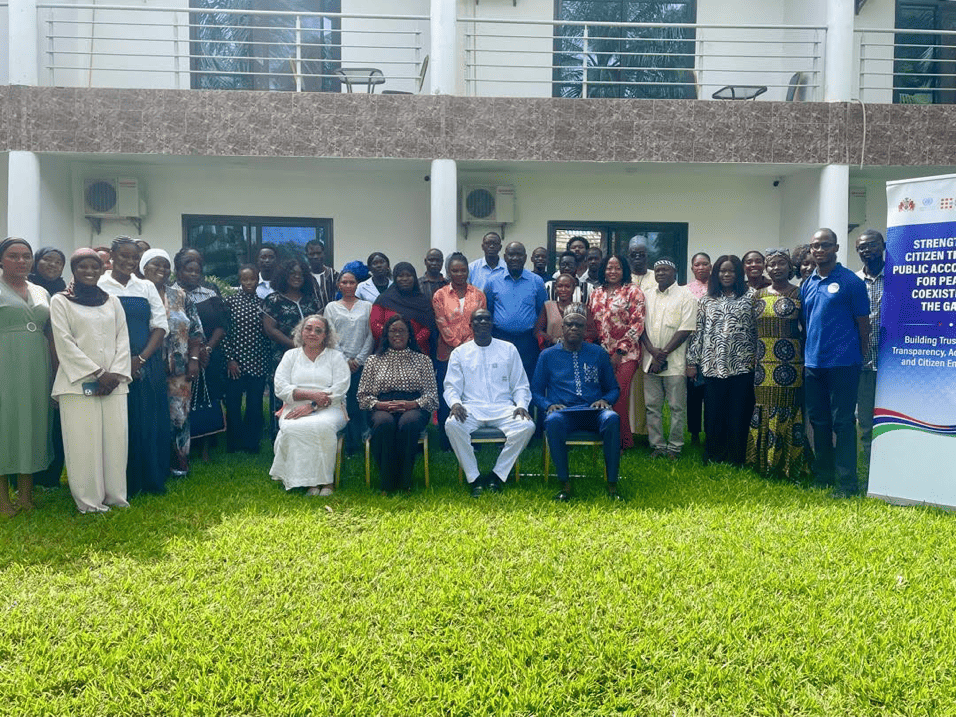
The capacity-building workshop opened on Wednesday at Metzy Hotel and brought together representatives of CSOs, community-based organisations and youth groups.
The training is designed to equip participants with the knowledge and skills to exercise their right to access information, monitor public institutions, promote evidence-based advocacy and accountability, and ensure responsible handling of personal data. It also seeks to deepen understanding of The Gambia’s legal framework governing access to information and data protection.
Speaking at the opening, John Charles Njie, Deputy Chairperson of the Information Commission, said the Commission has expanded its sensitisation efforts beyond the Greater Banjul Area despite severe resource constraints.
“It is no hidden secret that the Commission is struggling with resources and has serious constraints. But we have recently been engaged in three regions, conducting sensitisation at both government and community grassroots levels, with the support of the UN System in The Gambia,” he said.
He commended the UN team for its continued support in promoting awareness of the access to information and data protection laws.
Yadicon Njie-Eribo, Chairperson of the Association of Non-Governmental Organisations (TANGO), said access to information and data protection are central to civil society work.
She noted that CSOs work closely with communities, conduct research, implement development programmes, monitor public services, advocate for policy reforms and hold public institutions accountable.
“To do this effectively, we require access to accurate, timely, reliable and relevant information,” she said.
She stressed that effective advocacy must be evidence-based, requiring CSOs to obtain and verify information from public institutions.
“The right to access information provides CSOs with an important basis for requesting information that can help us understand government policies,” she said.
Ms Njie-Eribo also underscored the responsibility of CSOs to handle personal information obtained in the course of their work with care.
Evelyn Edroma, Deputy Resident Representative for Programmes and Operations at the United Nations Development Programme (UNDP) in The Gambia, said enacting legislation is only the first step, with greater focus now needed on implementation.
“The Access to Information Act of 2021, as well as the Personal Data Protection and Privacy Act of 2025, provide The Gambia with important legal foundations. The task now is to go beyond the law towards implementation, enabling citizens to exercise their right to information while ensuring that personal data, privacy and dignity are protected,” she said.
The three-day training is expected to strengthen participants’ understanding of what information should be accessible in the public interest and what personal information should remain protected.
Stakeholders said improved awareness of the laws will enhance citizen participation, improve accountability, promote responsive public institutions and build public trust.
They also emphasised the need for continued collaboration among the Information Commission, civil society, government institutions and development partners.

