

Voters in Guinea-Bissau have approved a new constitution that significantly expands presidential powers ahead of a general election later this year.
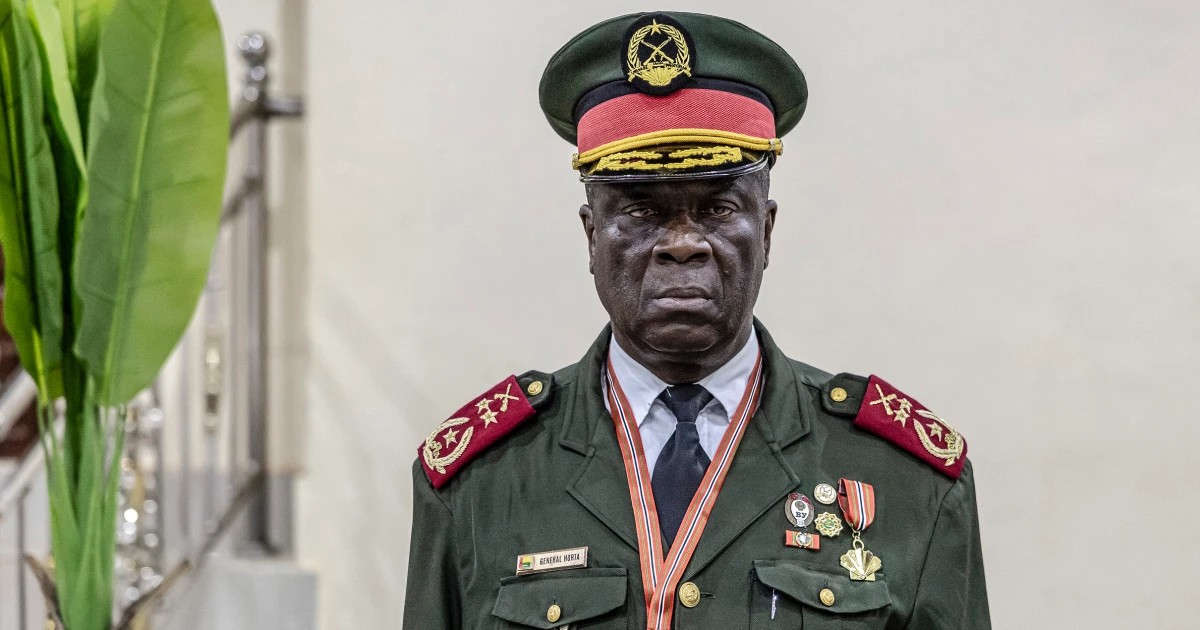
The referendum was organised by the military government that seized power last November following a disputed election.
Voters have agreed to sweeping reforms allowing the president to appoint and dismiss the prime minister and cabinet, create or abolish ministries and dissolve parliament in the event of a grave political crisis.
The main opposition party boycotted the vote, saying the process lacked adequate political and institutional safeguards and threatened the country’s transition back to democracy.
Guinea-Bissau, one of the poorest countries in the world, has experienced at least nine attempted and successful coups since gaining independence from Portugal in 1974.
The UN has dubbed the country a “narco-state” – its coastline has many uninhabited islands, making it ideal for drug traffickers.
Provisional results announced by the country’s electoral commission showed that 70% of voters backed the changes in Sunday’s referendum, while 30% voted against them. Turnout was reported at nearly 60%.
The new constitution strengthens the presidency at the expense of the prime minister, altering the balance of power under Guinea-Bissau’s semi-presidential system.
Previously, Guinea-Bissau’s legislature appointed a prime minister from the parliamentary majority, who then formed a cabinet – an arrangement the ruling military authorities said had contributed to political instability.
The changes now give the president greater authority over the government.
However, the five-year presidential term and two-term limit have been retained.
The military authorities have argued that the changes are necessary to end repeated disputes between presidents and prime ministers.
The new constitution also reduces the number of seats in parliament from 102 to 65 and cuts the number of electoral constituencies from 29 to 12.
It introduces new eligibility requirements for presidential candidates, including a provision requiring them to have lived continuously in Guinea-Bissau for the five years before an election.
The changes come ahead of presidential and parliamentary elections scheduled for December, which the military authorities say are intended to return the country to civilian rule.
But the referendum was strongly opposed by the country’s main opposition party, the African Party for the Independence of Guinea and Cape Verde (PAIGC), which urged its supporters to boycott the vote.
It warned that the changes risked concentrating too much power in the presidency.