

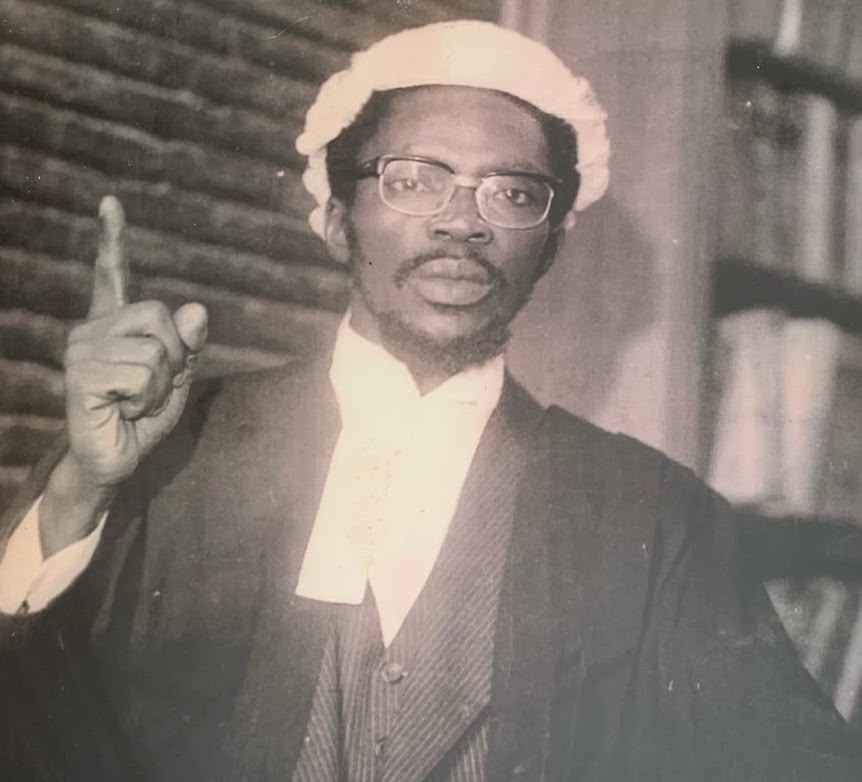
The dreams he dreamt for The Gambia and Africa
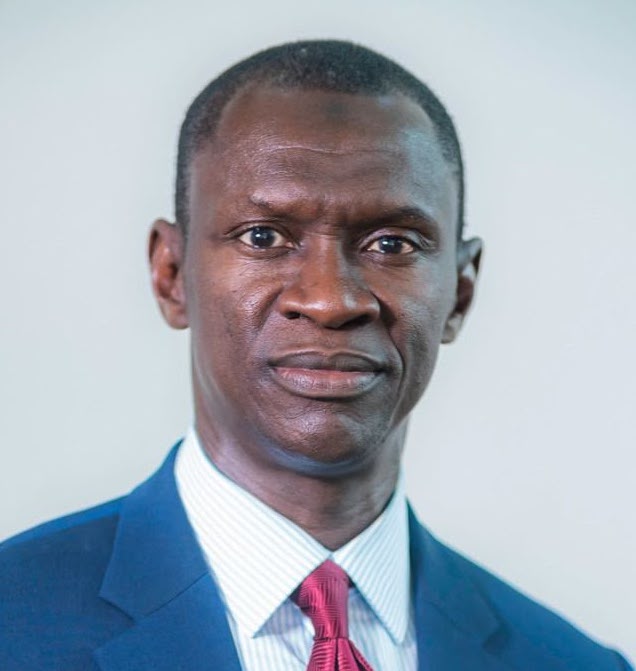
By Omar FaFa M’Bai
As we remember the birthday of our late father, Alhaji FaFa Edrissa M’Bai (may his soul rest in peace) today 18th September 2026, our thoughts return not so much to the controversies that sometimes surrounded his long public life, nor even to the battles he fought and survived, but to something deeper: the ideas that sustained him, the convictions for which he lived, and the dreams he carried for The Gambia and for Africa. He would have turned 84 years old today.
When I wrote the first part of The Dogs Have Barked, But The Caravan Has Crossed The Desert, I reflected upon the extraordinary storms through which he travelled. He served governments and was betrayed by governments. He was praised by colleagues and abandoned by some colleagues. He was accused of being the intellectual architect of some of the most controversial aspects of The Gambia’s constitutional history. His work in public accountability attracted powerful enemies, The Mafia. He appeared before the Truth, Reconciliation and Reparations Commission at a time when some appeared to anticipate his humiliation. He endured accusations that would have broken lesser men.
Yet by Ya Allah SWT’s grace, he survived them all.
The dogs barked. The caravan continued. And ultimately, by the decree of Ya Allah SWT, the caravan crossed the desert. Alhamdullillah !!! But there is another question that perhaps deserves to be asked now. What was the caravan carrying?
For beyond the lawyer, advocate, former Attorney General and Minister of Justice, author, scholar, public intellectual and sometimes controversial national figure was a man possessed by ideas. He thought deeply about law, justice, leadership, education, Africa and the responsibilities imposed upon those fortunate enough to acquire knowledge.
Across decades of speeches, writings, lectures, courtroom advocacy and public service, one encounters a remarkably persistent philosophy that knowledge creates responsibility, law must serve humanity, leadership is an obligation rather than an ornament, justice must remain greater than the individuals temporarily entrusted with administering it and Africamust eventually acquire the intellectual confidence to shape institutions responsive to the history, circumstances and aspirations of its own people.
He spoke these convictions to governments. He spoke them to judges. He spoke them to lawyers. He spoke them to students. And he spoke them to his children.
He belonged to a generation of Africans for whom independence was not merely a political event but also an intellectual challenge. The lowering of one flag and the raising of another could never, by itself, complete the liberation of a people. Political independence had to be followed by intellectual confidence, institutional development, economic advancement and, critically for him, the development of law as an instrument of justice and social progress.
His own intellectual journey reflected that preoccupation. After studying law and political science in the United Kingdom, he returned to The Gambia in 1976 and served first within the public legal system before entering private practice. His academic work had already engaged the great question of African integration, particularly the relationship between The Gambia and Senegal, a subject that would ultimately find expression in A Senegambian Insight.
Even then, therefore, his intellectual horizon extended beyond the immediate demands of legal practice.
He was thinking about Africa. He was thinking about integration. He was thinking about institutions. He was thinking about the future. That concern would accompany him throughout his life.
Public service eventually called. He served as Attorney General and Minister of Justice during the First Republic from 1982 to 1984 and returned to that office following the political upheaval of 1994, thereby becoming one of the relatively few Gambians if not the only Gambian, to have occupied that high constitutional office under two fundamentally different political dispensations. Contemporary and later accounts record his service as Attorney General and Minister of Justice in both the First and Second Republic eras.
That experience matters when trying to understand his philosophy.
He did not contemplate law exclusively from the comfort of a library. He encountered it as a magistrate, practitioner, prosecutor, public officer, Minister, advocate and citizen. He saw the possibilities of institutions and their weaknesses. He understood the enormous power entrusted to those who administer justice, but also the dangers that arise when institutions become dependent upon personalities.
An address he delivered in December 1983, while serving as Attorney General and Minister of Justice, provides a revealing window into his thinking. Speaking about the administration of justice under then Chief Justice Emanuel Olayinka Ayoola, he stressed the importance of Magistrates’ Courts as courts of first instance and the practical need to strengthen the machinery of justice. His remarks referred not merely to lofty constitutional ideals but to the tangible infrastructure of justice, qualified magistrates, functioning provincial courts, vehicles enabling magistrates to discharge their responsibilities, improved Supreme Court facilities and the establishment of a Law Reporting Committee.
There was an important philosophy beneath those apparently administrative matters.
Justice cannot survive on rhetoric alone.
A Constitution may promise justice. A Minister may speak eloquently about justice. A judge may proclaim justice from the Bench. But unless the ordinary citizen can reach a functioning court, unless the magistrate is properly equipped, unless judgments are recorded and accessible, unless lawyers are competent, and unless institutions possess the resources and independence necessary to perform their responsibilities, justice remains an aspiration rather than a lived reality.
That understanding remained with him.
It is perhaps why his writings were never confined to technical exposition of law. He was fascinated by the relationship between law and society and by what law could accomplish when placed in the hands of men and women conscious of their responsibilities.
And nowhere did he express that conviction more memorably than in his celebrated address to the Gambia Bar Association Conference at the Kairaba Beach Hotel on Friday, 29th January 2010.
He called it:
“We Are Called To Leadership: The Enduring Responsibilities of Lawyers.”
The title itself contains almost the entirety of his philosophy of the profession.
To him, a lawyer was not merely someone possessing a certificate permitting him or her to appear before a court. Legal education conferred something much heavier….. responsibility.
He told his colleagues that the law was intertwined with everyday existence and that lawyers, through advocacy and the application of law, possessed the ability to give meaning to people’s lives. He spoke about the anxious client waiting for his lawyer to act, about children and families whose lives are affected by legal decisions and about the lawyer’s role in preventing society from descending into disorder.
From those observations he reached his central conclusion stating:
“I come to the conclusion that we are called to leadership.”
Those words deserve to be read again today.
Leadership, as he used the term, did not necessarily mean political office. Indeed, he expressly explained that he was not speaking simply about governance. He was speaking about responsibility. The lawyer as counsellor, advocate, opinion-former, guardian of institutions and participant in the continuing development of society.
That distinction has perhaps become even more important today. A lawyer may never become Attorney General. A lawyer may never sit in Cabinet. A lawyer may never become a judge. A lawyer may never hold elected office. Yet every lawyer exercises power.
The advice we give can protect or destroy. The documents we draft can distribute rights and obligations. The arguments we advance can influence jurisprudence. The positions we take can strengthen institutions or weaken them. And sometimes our silence can be as consequential as our speech.
That was the leadership of which he spoke.
Towards the end of that 2010 address, he reduced the lawyer’s mission to a beautifully simple formulation. Lawyers, he said, were “ministers for the law, for fair treatment, for truth, and for justice anywhere, everywhere.” He reminded the profession that honour carries burdens as well as privileges and ended where he began that lawyers possess an enduring responsibility because “We Are Called to Leadership.”
Those were not the words of a man approaching law as a business.
They were the words of a man approaching law as a vocation.
Three years later, another generation stood before him.
On Friday, 18th January 2013, at the historic first Call to the Bar ceremony, he delivered a keynote address to young men and women entering the profession. There is something profoundly symbolic about that moment. The man who had entered the law decades earlier, who had served in government, practised at the Bar, written about law, witnessed political upheaval and experienced both the honour and hostility that public life can bring, was now standing before a new generation.
It was no longer simply about his journey.
The baton was being passed.
And perhaps that is the most enduring purpose of education: not merely that one generation acquires knowledge, but that it hands that knowledge, enlarged by experience, to the generation coming behind it.
He believed passionately in education because he understood knowledge as both liberation and protection.
I saw this philosophy not only in his public life but within our own family.
He fortified his children with education.
I remember one particular occasion when that preparation took a form that has remained with me ever since. In an email exchange outside the courtroom, a Court of Appeal judge, without any provocation that I could discern, referred to me as a “delinquent son.” I was deeply offended. My instinct as a lawyer and perhaps even more strongly as a son conscious of the dignity of my family was to respond in kind. I wanted my reply to carry the same force and sharpness with which I felt I had been attacked.
Before doing so, I spoke to my father.
What followed was not really a lecture on law. It was a conversation between a father and his son about something considerably more difficult, exercising restraint when one believes oneself entitled to retaliate.
He listened to me and, in his characteristically measured way, reminded me that the freedom to respond and the wisdom to respond are two very different things. His advice was, in substance “As a lawyer, your responsibilities will sometimes pull you in different directions. A colleague may choose to be disrespectful to you, but your profession may require restraint. You must decide whether you are responding merely as the person who has been offended, or as the lawyer you have been trained to become.”
That distinction stayed with me.
He was not asking me to accept disrespect, nor was he suggesting that professional status placed anyone beyond criticism. His point was subtler and, with the benefit of time, much wiser. Another person’s conduct does not determine the standard by which you must govern your own. Provocation may explain another person’s loss of restraint, but it does not oblige you to surrender yours. The greater test of professional character sometimes comes not when we have nothing to say, but when we have every reason and perhaps even every ability to say it, yet consciously choose a response proportionate to our responsibilities.
I saw the value of his counsel and changed the response I had intended to send.
Years later, what I remember most vividly is not the insult. I remember the conversation with my father.
That was how he prepared his children. Education, in his understanding, was never exhausted by degrees, professional qualifications or intellectual accomplishment. Knowledge had to be accompanied by judgment. Strength had to be disciplined by restraint. And a lawyer, particularly when provoked, had to understand that preserving one’s dignity does not always require inflicting an equivalent indignity upon another.
Perhaps that was one of the quietest lessons he ever taught me, you do not demonstrate strength by answering every attack in the language in which it was delivered. Sometimes strength consists in refusing to allow another person’s conduct to choose your conduct for you.
It was a lesson from a lawyer to another lawyer.
But more importantly, it was a lesson from a father to his son.
He understood that wealth could disappear, political favour could change, positions could be taken away, and powerful and influential people could turn against you. But knowledge, discipline, education and the ability to think independently were defences far more difficult for another person to confiscate.
That investment in education with the tireless support of our dear mother, produced very knowledgeable, humble, disciplined, educated and independent children.
Those achievements belong individually to his children, of course, because every child must ultimately walk his or her own road. But the foundation was deliberately laid by a father who understood that the most enduring inheritance he could leave was not merely property or a famous surname. Our dear mother’s support in the laying of that foundation was invaluable.
It was preparation.
He had experienced enough of public life to know that the world could be cunning. He therefore sought to prepare his children intellectually to recognise the strategies of those who might seek to harm, manipulate or diminish them.
His answer was knowledge for knowledge is power!
Read. Write. Learn. Think. Question. Understand. And stand. But his ambitions were never confined to his own family. He wanted an educated Gambia. He wanted an intellectually confident African legal profession. And ultimately, he dreamt of Africa itself.
His writings on the idea of an African Law Commission revealed the breadth of that ambition. The question occupying him was larger than whether a particular statute should be amended. He was asking whether Africa could develop the institutional machinery and intellectual confidence necessary continually to examine, reform and modernise its laws in response to African realities.
That dream should not be misunderstood as rejection of the common-law tradition in which he had been trained. On the contrary, his speeches reveal an enormous admiration for some of its greatest jurists. Lord Denning featured prominently in his intellectual world. So did Lord Brougham and the great reforming traditions of the law.
But admiration need not mean intellectual dependency.
Africa could learn from others without surrendering the responsibility to think for itself.
That distinction remains profoundly relevant.
What should African jurisprudence look like after generations of independence?
How should inherited laws respond to African economic realities?
How do we build legal systems that protect investment while protecting citizens?
How do we strengthen judicial independence while ensuring accountability?
How do we make justice accessible to the poor rather than merely theoretically available?
How do we develop institutions strong enough to survive the individuals temporarily occupying them?
How do we teach young African lawyers not merely to memorise law but to interrogate, develop and improve it?
These are not questions belonging to his generation alone.
They are our questions now.
And that is why his dream for Africa remains unfinished.
He borrowed from Lord Brougham’s celebrated imagery of Augustus finding Rome built of brick and leaving it clothed in marble, but he adapted the spirit of legal reform to the African condition. The ambition was not merely to inherit law but to transform it, to leave behind institutions more accessible, more just and more responsive than those one inherited.
The Africa he imagined was not a continent condemned permanently to explain its present through the injuries of its past.
It was an Africa sufficiently conscious of its history to learn from it, sufficiently confident to reform itself, sufficiently educated to compete, and sufficiently institutionally mature to place law above personalities.
He dreamt of what he described, in substance, as a mighty continent capable of rising and participating in the rewriting of its own history.
That dream matters.
Because Africa’s greatest struggle in the twenty-first century is perhaps no longer simply liberation from colonial government. It is liberation from weak institutions, corruption, poverty, intellectual dependency, constitutional manipulation, poor governance and the dangerous tendency to build nations around individuals rather than institutions.
Political independence was an achievement.
Institutional independence remains a continuing project.
And lawyers have a particular responsibility within that project.
We are called to leadership.
The phrase returns. Again and again.
That is why his message to young lawyers remains relevant long after the applause that greeted his speeches has faded.
He was asking the African lawyer to become more than a successful professional. He was asking the lawyer to become a custodian. A custodian of justice. A custodian of institutional memory. A custodian of constitutionalism. A custodian of fairness. A custodian of the proposition that power itself must remain subject to law. This also explains his fascination with legal writing.
A nation without accessible legal literature risks losing part of its institutional memory. Judgments forgotten cannot easily educate. Experiences undocumented cannot easily instruct. Mistakes unrecorded are more readily repeated.
His books, articles, speeches and lectures were therefore not incidental to his legal career.
They were part of it.
In the Service of My Beliefs preserved decades of his speeches and reflections. A Senegambian Insight addressed questions of regional integration that remain alive today. His lectures explored law, lawyers, leadership and justice. Even towards the end of his life, the Justice Law Magazine project reflected the same conviction that had animated him for decades, that, society should understand its laws and participate intelligently in the institutions governing it.
Following his passing on 26th March 2025, Gambia Radio and Television Services reported the presentation and launch of that magazine at State House. His son Ousman explained that our father’s vision rested upon the belief that an informed society supported by a strong legal framework is an essential pillar of democracy, and that the magazine was intended to encourage legal discourse, transparency and accountability.
There is something deeply moving about that. The voice stopped. But the words continued travelling. The writer departed. But the pages remained. The teacher left the classroom. But the lesson did not end.
And beneath the lawyer, Minister, writer and intellectual stood another foundation without which I do not believe the rest of the man can properly be understood.
His faith.
His belief in Ya Allah SWT was deep-rooted. So too was his love for the Prophet Muhammad (peace and blessings be upon him).
Those who saw only the formidable advocate, the intellectual combatant or the public figure did not necessarily see the complete man.
His faith gave meaning to both achievement and adversity.
For a believer understands that reputation in the eyes of men is temporary. Office is temporary. Applause is temporary. Condemnation is temporary. Governments come and go. Professional titles disappear. Wealth changes hands. Even history may judge a person differently from one generation to another.
But ultimately, every caravan has a final destination. His came during Ramadan. During its final ten nights.
For those of us who loved him, the timing carried a profound spiritual meaning. We received it not as proof of what only Ya Allah SWT can determine, but as a source of comfort and hope. For Muslims, the final nights of Ramadan are nights of extraordinary devotion, during which believers seek Laylatul Qadr, the Night of Decree, described in the Qur’an as better than a thousand months.
And so, the man who had spent a lifetime arguing, writing, teaching, defending, enduring and believing finally became silent.
The earthly briefs were closed. The speeches ended. The books were written. The public offices had long been surrendered. The battles ceased. And the caravan crossed the desert. But perhaps a caravan never truly disappears when it leaves tracks behind. His tracks remain in the law. They remain in his books. They remain in his speeches. They remain in the lawyers he influenced. They remain in the institutions he helped build. They remain in the debates in which he participated. They remain in the children he raised and educated. They remain in the students he challenged. And they remain in an idea of Africa that still waits to be fully realised.
This, therefore, is not another attempt to argue every controversy associated with our father Alhaji FaFa Edrissa M’Bai.
History will continue that conversation.
Nor should love require a son to claim that his father was incapable of error. Great lives do not require sanitisation to remain great. Those who participate meaningfully in the affairs of their countries will inevitably leave decisions to be debated, positions to be questioned and judgments upon which reasonable people may disagree.
The more enduring question is whether there was a purpose running through the life.
In his case, I believe there was.
Law. Justice. Education. Leadership. Africa. Faith.
And responsibility. Always responsibility.
That is the thread connecting the young African student thinking about Senegambian integration to the Attorney General concerned about the practical administration of justice, the Minister to the private practitioner, the author to the advocate, the father educating his children to the elder lawyer standing before younger colleagues reminding them that their profession required leadership.
The young man saw visions. The old man dreamt dreams. Now those dreams belong to us. And this is where commemoration must become responsibility. If we celebrate our elders only by praising them, we have understood inheritance poorly. The better tribute is to examine what they were trying to build and ask whether we are prepared to continue building it. Can we build a Gambia in which institutions are stronger than personalities? Can we nurture a legal profession in which disagreement does not become enmity? Can we build courts in which citizens, irrespective of status, genuinely believe they will receive justice? Can we produce lawyers who understand that professional success without professional conscience is an impoverished form of achievement? Can we create African institutions that learn confidently from the world without assuming that wisdom must always be imported? Can we educate our children not simply to acquire qualifications but to acquire character, intellectual independence and a sense of obligation to society? Can Africa finally transform its enormous human and natural wealth into institutions worthy of its people?
These were, in different forms and at different stages of his life, among the questions that occupied our father. They remain unanswered. Perhaps that is why his birthday should not merely be an occasion for nostalgia. It should be an occasion for interrogation. What have we done with the dreams of those who came before us?
Our father lived long enough to see enormous changes in The Gambia and Africa. He witnessed colonialism and independence, the First Republic and military rule, the Second Republic and another democratic transition. He saw governments rise and fall. He saw constitutions written and contested. He saw colleagues become Ministers, judges, opponents and statesmen. He saw the legal profession expand dramatically from the small fraternity he had joined into the profession we know today.
Through it all, he remained fascinated by the law. He remained fascinated by Africa. And he remained convinced that education and leadership mattered. So today we remember not simply Alhaji FaFa Edrissa M’Bai, our father. We remember the dreamer. We remember the teacher. We remember the African. We remember the Muslim who placed his ultimate trust not in the applause of men but in Ya Allah SWT alone. We remember the lawyer who told his profession that it was called to leadership.
And we remember a father who understood that one day he would no longer be present to protect his children and therefore sought to equip them with something stronger than his physical presence: knowledge.
Part I was about the desert. Part II is about the destination and about the precious cargo carried through that desert. The dogs barked because the caravan was moving. Some barked from disagreement. Some from political difference. Some perhaps from genuine grievance. Some from professional rivalry. Others simply because public life inevitably attracts judgment. But history does not ultimately ask how loudly the dogs barked. History asks whether the caravan moved. It did. And now, perhaps, another caravan must begin.
It belongs to those he left behind, to his children, his grandchildren, his professional descendants, the younger lawyers he addressed, the institutions he served and the generations of Gambians and Africans who must decide what kind of continent they wish to inherit and, more importantly, what kind they intend to leave behind.
For if our father, Alhaji FaFa Edrissa M’Bai’s dream meant anything, it was surely this:
Africa must never stop becoming. Its laws must develop. Its institutions must mature. Its lawyers must lead. Its children must learn. Its leaders must understand that public office is a trust. Its citizens must demand accountability while respecting institutions. And its intellectuals must possess the courage to imagine an Africa greater than the Africa they inherited. The man has gone. The dream has not. The advocate has rested. The argument continues. The teacher is silent. The lesson remains. The caravan has crossed the desert. But the footprints are still there.
And on this commemoration of his 84th birthday, I find myself looking not only backwards at the extraordinary distance he travelled, but forward, towards that Africa of which he wrote, spoke and dreamt.
Perhaps the greatest honour we can now accord his memory is not merely to say:
“Alhaji FaFa Edrissa M’Bai was here.”
It is for another generation, many years from now, to look upon the institutions we strengthened, the justice we defended, the young people we educated, the integrity with which we exercised leadership and the Africa we helped build and say:
“His dreams did not die with him.”
May Ya Allah SWT forgive his shortcomings, multiply the rewards of his good deeds, accept the knowledge he left behind as continuing charity, illuminate his grave and grant our father, Alhaji FaFa Edrissa M’Bai and our dear mother Ajaratou Fatmatta Camara the highest station in Jannatul Firdaus.
Ameen.
About the Author
Omar FaFa M’Bai is a legal practitioner, a governance advocate, and a parent based in Dubai, UAE. He writes regularly on institutional integrity, leadership, and education across Africa, Middle East, and Asia.