TSBy The Standard Newspaper 11 min read 11 min read
Beyond accountability: Lessons from The Gambia’s commissions of inquiry on financial governance and institutional integrity Part 4
stewardship, institutional excellence and the future of financial governance
By Omar F M’Bai
If transparency provides governance with visibility and institutional culture provides it with character, stewardship gives governance to its moral purpose.
Every system of financial governance ultimately rests upon a simple but profound principle: those entrusted with the management of resources do not own those resources.
They hold them in trust.
This distinction lies at the very heart of responsible governance.
Public officials are not owners of public funds.
They are custodians acting on behalf of citizens.
Directors are not owners of corporate assets.
They are fiduciaries acting on behalf of shareholders.
Trustees safeguard assets for beneficiaries.
Executives exercise authority on behalf of institutions rather than for personal advantage.
Every holder of public or corporate office therefore assumes responsibilities that are fiduciary in nature.
Authority is accompanied by accountability.
Power is accompanied by responsibility.
Leadership is accompanied by stewardship.
When stewardship is forgotten, institutions begin to decline.
When stewardship is embraced, institutions flourish.
Perhaps no area illustrates this more clearly than public procurement.
Across the world, procurement represents one of the largest areas of public expenditure and one of the most significant tests of institutional integrity.
Infrastructure projects.
Public services.
Healthcare.
Education.
Technology.
National security.
Virtually every function of modern government depends upon procurement decisions.
Consequently, procurement is not merely an administrative process.
It is one of the most visible expressions of financial governance.
Every procurement decision should therefore satisfy three fundamental tests.
Was the process lawful?
Was the decision fair?
Did it represent the best long-term value for the public?
These questions are far more important than whether the lowest price was obtained.
Value for money is not synonymous with the cheapest quotation.
True value considers quality
Sustainability
Efficiency.
Transparency.
Competition.
Risk management.
Lifecycle costs.
Long-term public benefit.
Sound procurement therefore protects both financial resources and institutional credibility.
Equally important, every procurement decision should be capable of withstanding independent scrutiny.
A useful governance question is this: Would decision-makers be entirely comfortable explaining and defending this decision before Parliament, auditors, regulators, journalists, citizens or a future Commission of Inquiry?
If hesitation exists, further examination is almost certainly warranted.
This simple question represents one of the most practical governance tests available to any institution.
Strong procurement systems therefore require far more than compliance with statutory procedures.
They require transparent evaluation criteria.
Robust documentation.
Independent oversight.
Effective segregation of duties.
Comprehensive conflict-of-interest management.
Clear accountability.
Professional competence.
Above all, they require integrity.
The same philosophy extends beyond procurement to every profession entrusted with institutional stewardship.
One of the most important lessons emerging from commissions of inquiry is that governance is tested most severely during periods of financial distress.
Prosperity rarely reveals the true strength of governance systems.
Adversity does.
Few examples illustrate this principle more clearly than Receivership proceedings.
A Receiver is ordinarily appointed at a time of financial uncertainty, institutional distress and heightened stakeholder concern.
Creditors seek recovery.
Employees seek reassurance.
Investors seek transparency.
Regulators expect compliance.
The public seeks confidence that the process will be conducted fairly, independently and professionally.
It is during such moments that governance principles are placed under their greatest test.
The Receiver therefore occupies an office of exceptional fiduciary responsibility.
The role requires far more than technical competence.
It requires honesty.
Integrity.
Transparency.
Objectivity.
Independence.
Decency.
Fairness.
And sound professional judgment.
The powers exercised by a Receiver may affect livelihoods, businesses, contractual relationships, shareholder interests and creditor recoveries.
Such authority must therefore be exercised with the highest standards of professionalism and ethical conduct.
Stakeholders may disagree with commercial decisions made during a Receivership.
They should never have cause to question the integrity of the process itself.
The legitimacy of any Receivership depends not solely upon outcomes but upon public confidence that the process has been conducted fairly, independently and transparently.
Asset disposals must be transparent.
Records must be maintained accurately.
Conflicts of interest must be identified, disclosed and appropriately managed.
Professional judgment must be exercised independently and without fear or favour.
The principles governing Receivership are, in truth, the same principles that underpin all positions of fiduciary responsibility.
Whether one serves as a Minister, Permanent Secretary, Procurement Officer, Board Chairman or Director, Chief Financial Officer, Company Secretary, Auditor, Receiver, Liquidator, Trustee, Regulator, Compliance Officer or Lawyer, the underlying obligation remains unchanged.
Authority is never an entitlement.
It is a fiduciary trust.
Those entrusted with public resources, corporate assets or the affairs of others are not owners.
They are custodians.
They are stewards.
They are trustees acting in the best interests of those whom they serve.
Professional competence is essential.
Professional independence is indispensable.
Professional integrity is non-negotiable.
Ultimately, every fiduciary office carries the same enduring responsibility: to leave stakeholders confident not only that the law has been complied with, but that justice, fairness and institutional integrity have been faithfully upheld.
Boards of directors occupy a uniquely important position within this governance ecosystem.
A truly effective board does far more than approve budgets, endorse policies or review management reports.
Its foremost responsibility is to preserve the long-term integrity of the institution.
The most effective boards possess both competence and independence.
They encourage informed debate.
They challenge assumptions respectfully.
They understand emerging risks.
They insist upon accurate information.
They balance ambition with prudence.
Most importantly, they ask difficult questions before external stakeholders are forced to ask them.
That is not obstruction.
That is governance in its highest form.
Similarly, the modern Chief Financial Officer occupies a role that extends far beyond financial reporting.
Today’s CFO is simultaneously a strategic adviser, steward of financial integrity, risk leader, governance champion and trusted adviser to both executive management and the board.
Increasingly, the responsibilities of the CFO extend into environmental, social and governance reporting, enterprise risk management, regulatory compliance, digital transformation, capital allocation, organisational resilience and long-term value creation.
The most effective CFOs understand that protecting institutional credibility is every bit as important as protecting financial performance.
Indeed, sustainable profitability without integrity is ultimately unsustainable.
The same expectations apply to company secretaries, lawyers, auditors, compliance professionals, regulators, risk managers, insolvency practitioners and receivers.
Each performs a distinct professional role.
Yet each shares a common fiduciary obligation.
To protect institutional integrity.
Professional competence remains indispensable.
Professional independence remains non-negotiable.
Professional integrity remains irreplaceable.
One of the most enduring lessons arising from major governance failures around the world is that technical expertise alone is never sufficient.
Many failed institutions employed exceptionally intelligent professionals.
Their failure arose not from inadequate knowledge, but from inadequate governance.
Character ultimately determines whether knowledge serves the public interest or merely facilitates poor judgment.
As institutions look towards the future, technology will continue to transform financial governance.
Artificial intelligence.
Digital procurement platforms.
Data analytics.
Continuous auditing.
Automated compliance monitoring.
Predictive risk assessment.
Blockchain-enabled record management.
These innovations possess enormous potential to improve transparency, accountability and operational efficiency.
Yet technology must never be mistaken for governance itself.
Technology can automate processes.
It cannot automate integrity.
Algorithms may detect anomalies.
They cannot replace ethical judgment.
Artificial intelligence may identify patterns.
It cannot exercise conscience.
Digital systems can strengthen governance.
They cannot substitute for principled leadership.
Ultimately, governance remains a human responsibility.
The relationship between governance and national development cannot be overstated.
Countries that consistently attract investment, maintain economic stability and inspire international confidence invariably possess one characteristic in common.
Strong institutions.
The experience of Singapore offers perhaps one of the clearest modern examples.
Through disciplined governance, fiscal prudence, institutional professionalism, transparency and unrelenting commitment to accountability, Singapore transformed itself from a resource-constrained nation into one of the world’s most respected financial and commercial centres.
Its greatest resource was never natural wealth.
Its greatest resource was institutional credibility.
The lesson is not that every nation should replicate Singapore’s constitutional or political model.
The lesson is that sustainable prosperity rests upon institutions that command trust.
Investors are initially attracted by opportunity.
They remain because institutions are predictable.
Businesses expand because regulations are fairly administered.
Development partners invest because accountability inspires confidence.
Citizens contribute because they trust public institutions.
Trust therefore becomes the invisible infrastructure upon which economic development is constructed.
As The Gambia reflects upon the lessons arising from its various Commissions of Inquiry, the nation faces an important choice.
It may regard those commissions merely as historical investigations into past events.
Or it may embrace them as catalysts for institutional transformation.
History suggests that nations choosing the latter path invariably emerge stronger.
For governance is not measured by the number of commissions a nation establishes.
It is measured by the number of institutional weaknesses it successfully eliminates.
Strong institutions do not emerge accidentally.
They are deliberately constructed through ethical leadership, competent boards, independent oversight, prudent financial management, effective legal and regulatory frameworks, courageous professional advice and an uncompromising commitment to integrity.
As policymakers, parliamentarians, judges, regulators, board members, chief executives, chief financial officers, company secretaries, lawyers, auditors, accountants, compliance professionals and public servants, we each become custodians of something far greater than our individual offices.
We become custodians of public trust.
Perhaps no quotation captures this responsibility more eloquently than that of Kofi Annan:
“Good governance is perhaps the single most important factor in eradicating poverty and promoting development.”
Those words remind us that governance is not an abstract administrative concept.
It is a moral obligation.
It is an economic necessity.
It is a constitutional imperative.
It is the foundation upon which national prosperity, social justice and democratic legitimacy ultimately depend.
Equally enduring is the wisdom of Warren Buffett, who said:
“In looking for people to hire, you look for three qualities: integrity, intelligence and energy. And if they don’t have the first, the other two will kill you.”
That observation applies with equal force to institutions.
Without integrity, transparency becomes performative.
Without integrity, accountability becomes selective.
Without integrity, laws become ineffective.
Without integrity, governance degenerates into procedure devoid of purpose.
But where integrity flourishes, institutions inspire confidence.
Confidence attracts investment.
Investment stimulates economic growth.
Growth creates opportunity.
Opportunity strengthens national prosperity.
In the final analysis, the true measure of a nation’s greatness is not the wealth it accumulates, nor the political leaders it elects, nor even the laws it enacts.
It is the quality of the institutions it leaves behind.
Governments will change.
Political administrations will come and go.
Boards will be reconstituted.
Chief executives will retire.
Public officers will complete their service.
But institutions must endure.
And institutions endure only when they are built upon enduring foundations.
Integrity.
Accountability.
Transparency.
Professional competence.
Stewardship.
And trust.
For financial governance has never been merely about money.
It has always been about trust.
And trust remains the most valuable asset that any institution and indeed any nation will ever possess.
About the Author
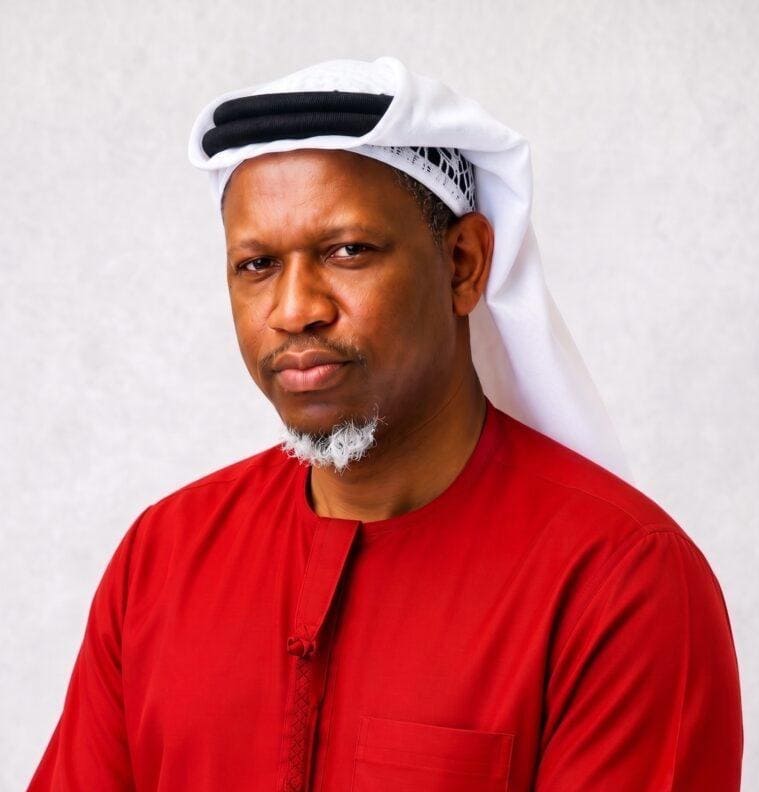
Omar FaFa M’Bai is a Legal Practitioner, a governance advocate, and a parent based in Dubai, UAE. He writes regularly on institutional integrity, leadership, and education across Africa, Middle East, and Asia.
Author’s Reflection
This article is more than an academic reflection on financial governance and institutional integrity. It is also a deeply personal tribute to values that I witnessed throughout my life.
My late father, Alhaji FaFa Edrissa M’Bai, believed that public office was a sacred trust and that no nation could achieve lasting prosperity without strong institutions, accountability and respect for the rule of law.
At a time when strengthening financial discipline and promoting institutional accountability required exceptional courage, he championed reforms, including commissions of inquiry, in the belief that public confidence in government could only be sustained through transparency and accountability. Those convictions were not without personal cost. His commitment to principle attracted determined opposition from powerful interests resistant to reform, The Mafia. Although those struggles ultimately resulted in his departure from public office, they never diminished his belief that institutions must always be stronger than individuals and that integrity should never be sacrificed for convenience or political expediency.
Time has a remarkable way of revealing truth. Positions of authority are temporary. Public opinion evolves. Those who once opposed reform may later acknowledge its necessity. Yet principles endure. Integrity endures. Service endures. Legacy endures.
As I reflected on the themes explored in this article, I was reminded that governance is ultimately about character. It is about doing what is right, even when doing so comes at personal cost. It is about leaving institutions stronger than we found them. Those were principles my father lived by, and they remain the values that continue to inspire my own writing on governance, leadership and institutional integrity.
When my father passed away during the blessed month of Ramadan, I expressed my reflections in a poem. It remains a personal reminder that while truth may be challenged and those who defend it may endure hardship, a life dedicated to principle ultimately outlives both adversity and opposition.
The Mafia’s plan failed, because purpose cannot be buried.
Truth outlives power.
Integrity outlives office.
And a life lived in faithful service to Ya Allah (SWT) and country can never be crucified.
May Ya Allah (SWT) grant him Al-Jannahtul Firdaws and accept his lifelong service to The Gambia as an act of enduring charity. Ameen Yarab.
Enjoyed this story?
Applaud it for the newsroom — one clap per reader, per story.