


By Omar Bah
Dr Lamin Keita, a US-based political analyst, has called on key Gambian opposition figures to open immediate talks with President Adama Barrow to avert a deepening national crisis and secure the country’s democratic future.
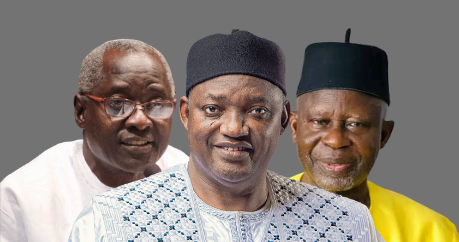
Keita urged UDP leader Ousainu Darboe, PDOIS’s Halifa Sallah, Sidia Jatta and GDC’s Mamma Kandeh to set aside partisan rivalry and meet the president “over a simple cup of coffee” to discuss the nation’s direction.
He warned that rising polarisation, growing public frustration, and entrenched mistrust threaten democratic consolidation unless political elites show the courage to negotiate.
“Politics is not won by permanent enemies or permanent friends but by permanent interests,” Keita said, stressing that high-stakes national questions require pragmatic compromise, not prolonged confrontation.
He pointed to successful African precedents—such as Kenya’s rapprochement between William Ruto and Uhuru Kenyatta, and South Africa’s negotiated transition—as evidence that quiet elite dialogue can prevent political competition from spiraling into national destruction.
Keita framed his appeal in scholarly terms, invoking research that links democratic resilience to elite cooperation and inclusive political settlements.
He referenced the work of scholars like Nic Cheeseman and Leonardo Arriola to argue that pragmatic negotiation and broad coalitions are essential in fragmented political systems. For Keita, political pragmatism is not capitulation but a strategic choice to prioritise the country’s long-term stability over short-term partisan gain.
During a recent visit to The Gambia (July 9–21), Keita said he found a political climate marked by mounting polarisation and public disillusionment.
He warned that leaders who fail to manage disagreement constructively risk leaving fragile institutions—and the social cohesion that underpins them—exposed. “Emotions rarely build nations; dialogue does,” he said.
Keita’s added that immediate, leader-led talks with President Barrow could defuse tensions, rebuild trust, and create the space for durable solutions to the country’s political and economic challenges. He urged Gambian political leaders to treat such dialogue as an act of patriotism—one that places national interest above partisan ambition.
As the country approaches critical decisions on governance and the economy, Keita argues that if Gambian leaders value the republic more than political point-scoring, they must stop posturing and start talking.