Education stakeholders demand urgent increase in education financing at GAWE 2026
By Olimatou Coker
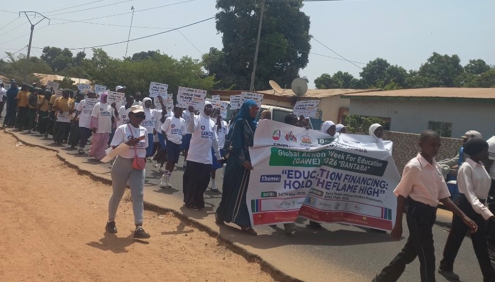
The Gambia’s education sector issued a unified call Thursday for increased investment in public education during the commemoration of Global Action Week for Education 2026, organised by the Education For All Campaign Network (EFANet) at a community _bantaba_ in Sifoe.
GAWE is the Global Campaign for Education’s annual push to defend and advance the right to education for all. Now in its 24th year, the campaign presses governments to honor commitments to quality, accessible education for every child.
This year’s theme, “Education Financing: Hold the Flame High,” is a direct challenge to governments and decision-makers to protect education budgets as countries disinvest amid global crises, including war, conflict, climate shocks, steep cuts in education aid, and rising threats to public services.
In a solidarity statement, Essa Sowe, deputy general secretary of the Gambia Teachers’ Union, said he stands with millions of activists, teachers, and learners marking GAWE 2026.
“Today, we declare that education is a fundamental human right and a public good, never a commodity to be privatised, neglected, or bargained away. Here in The Gambia and across developing nations, the reality on the ground demands decisive, immediate state intervention,” Sowe said.
He warned that underfunded classrooms produce overstretched teachers, deficient infrastructure, and vulnerable children pushed to the margins.
“We cannot transform education, nor can we achieve Sustainable Development Goal 4, if we continue to relegate its funding to the margins of our national budgets,” he stated.
GTU is demanding that the Government of The Gambia and international partners sustainably increase domestic budgets by meeting global benchmarks of 4% to 6% of GDP or 15% to 20% of public expenditure on public education; and prioritise the teaching workforce by directing spending toward motivating, recruiting, and protecting teachers, ensuring decent wages, continuous professional development, and the dignity they deserve.
Buba Kanteh, Councilor of Sifoe, said education is one of the strongest foundations for national development, social progress, and poverty reduction.
“Every child, regardless of background, gender, or social status, deserves access to quality education,” Kanteh said. “The Brikama Area Council recognises that investing in education is investing in the future of our communities and our country. As a council, we remain committed to supporting educational development across the West Coast Region through initiatives and partnerships, including scholarships for students from Senior Secondary School to the University of The Gambia and support to Arabic and Islamic schools.”
Kebba Omar Jarjursey, national coordinator of EFANet, said education underpins lasting peace, sustainable development, and future innovation.
“Yet global and national commitment to education has remained stagnant,” Jarjursey warned. “The 2025 SDG 4 report states that Goal 4 will be missed if actions are not accelerated. The target will be missed if we do not act now.”
Other speakers stressed that education is a fundamental human right and a key driver of national development, peace, and social transformation. They called for sustained financing to improve learning conditions, expand access, and support vulnerable learners.
Stakeholders also urged government, development partners, and civil society to strengthen collaboration and maintain education as a top national priority.
The Sifoe Bantaba was part of activities marking Global Action Week for Education 2026, as campaigners push for stronger commitments toward equitable, quality education for all.