

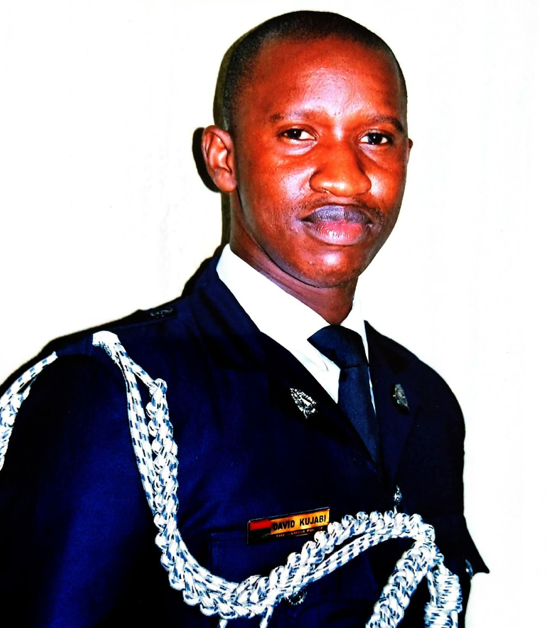
The call came without warning. In November 2011, IGP Sonko returned from an IGPs conference with news that felt almost too good to be true. He had secured ten coveted slots for cadet officers to embark on a transformative six-month Cadet Officers Course at the prestigious Ghana Police College. I was among the fortunate few. There was no time to celebrate, no time to second-guess. We were swiftly instructed to prepare for the journey because the course was already in progress. Within days, I found myself packing a bag, saying hurried goodbyes, and boarding a flight toward an experience that would forever change how I understood policing, professionalism, and myself.
Nestled in Tesano, Accra, the Ghana Police College (GPC) was established in 1959 as an esteemed Higher Educational Institution of the Ghana Police Service. Its mission was clear: to deliver top-tier professional and practical training, enhancing the command, staff, operational, and managerial capabilities of senior police officers. From the moment I stepped onto its grounds, I knew I had entered a different world.
Our cohort was named Course 44, signifying that we were the 44th group of officers to undergo training since the college’s inception. Forty-three groups before us had walked these paths, studied in these classrooms, and graduated into service. That sense of history was palpable. Here, I truly grasped the essence of policing. I gained a more profound understanding, an enriched appreciation, and a newfound love for this vocation. This experience was equally illuminating in highlighting the areas where the Gambia Police Force needed development. It emphasised the significance of elevating the value and respect accorded to service personnel. In Ghana, policing was a highly esteemed profession, underscored by competitive entry requirements and enticing remuneration packages. Officers were proud, not just of their badges but of the institutions that trained them.
Tesano was not just home to the Police College. It resembled a veritable police village, housing diverse units such as the Police Training School, the Police Band, the Criminal Investigations Academy, the Armoured Car Squadron, the Formed Police Unit, and quarters for both senior officers and non-commissioned officers. Markets, bars, restaurants, and mess facilities abounded. I looked around and thought of our makeshift training school in Yundum. The contrast was not merely striking; it was humbling. Our entire facility in The Gambia could have fit inside a corner of this place.
Our officer training transcended practical policing, command, and leadership. It was an initiation into the esteemed officer cadre of the police services. Within the service culture, two primary categories existed: NCOs and the Officer Corps. Entry into the Officer Corps was not simply a matter of seniority. It was a rigorous process that groomed individuals for their officer roles. It was akin to joining an exclusive society, necessitating a distinct mindset. Officers were tasked with leadership and managerial roles, demanding the selection of the finest and most capable personnel.
In Ghana, entry into the Officer Corps mandated passage through the Police College. It was also subject to NCOs at the rank of Chief Inspector successfully sitting and passing an entrance examination. Additionally, police officers recruited as professionals, such as doctors, nurses, and engineers, were eligible for the college. Nothing was handed out freely. Every commission was earned through demonstrated competence.
The Gambian scenario, however, starkly contrasts with this model. This contrast contributed to many of the security service problems witnessed during the 22-year rule of President Jammeh. Most security services lacked a coherent promotion policy. Service chiefs wielded arbitrary authority over promotions. These promotions often bypassed merit-based criteria, relying instead on personal relationships or executive influence. Some individuals ascended through multiple ranks in short timeframes. I distinctly recall a Minister of Interior recommending a corporal for promotion to sergeant due to his impressive command presence and marching skills during a ceremonial quarter guard. Not for investigative ability, not for integrity, not for knowledge of the law. For marching. That was the difference between a system built on merit and one built on whim.
The Ghana experience proved both enlightening and rigorous. It forged officers out of us and moulded us into refined gentlemen. Alongside our Gambian contingent were ten officers from the Liberia Police Service. Strict adherence to rules was paramount. We were confined to barracks except for monthly exeat Saturdays, granting us limited freedom from 10:00 am to 5:00 pm. A stringent dress code was enforced, with violations subject to penalties. Our drill attire comprised neatly pressed long brown khaki trousers, marching shirts, and pristine black combat boots. In the classroom, we sported navy blue shirts and trousers with black loafers. For evening mess, we wore long black trousers, a white long-sleeved shirt, and a black tie. Officer etiquette and conduct standards became second nature. We learned to walk differently, to speak differently, to carry ourselves with a bearing that signalled authority not through aggression but through quiet confidence.
Amidst our adherence to these standards, we humorously contemplated the challenges of maintaining such exacting criteria back home in The Gambia. The most glaring obstacle was our meagre salaries, which fell short of supporting the lifestyle expected of an officer. While the Ghana Police Service provided some educational resources, others had to be procured independently, a financial burden we often struggled with. To cope, we resorted to photocopying sections of required books, sometimes sharing a single copy among several officers. Additionally, we learned that our Ghanaian peers preferred bottled water over tap water. To save costs, we discreetly refilled empty bottles with tap water while appearing to use only bottled water. It was a small deception, but it spoke to a larger truth. We were determined to fit in, to measure up, even when our resources said otherwise.
Despite these trials, we Gambians forged a formidable esprit de corps throughout the training. We wholeheartedly supported and encouraged one another. During leisure, we often congregated to brew and share ataya, a ritual that attracted the curious interest of fellow trainees who believed it enhanced one’s virility. That added a peculiar twist to our camaraderie, but we did not correct the assumption. Let them wonder. What mattered was that we sat together, poured tea together, and reminded each other why we had come so far from home.
The course was divided into two semesters, each culminating in an examination. During the initial semester, I was dedicated, punctual, and studious, spending hours in the library. I wanted to prove myself not just to my instructors but to my country. However, by the second semester, my adventurous side emerged. I formed a close friendship with Yancy Blama, a Liberian Police Officer who mirrored my penchant for exploration. We frequented the Officers’ mess, sampled Ghanaian beer, and expanded our social circles beyond our coursemates. Soon, we began venturing out beyond the confines of our barracks at night to explore Kokomlemle, Abeka, and Kaneshie. These were not dangerous expeditions. They were small acts of rebellion, reminders that we were young men as much as we were officers in training.
My roommate, Muhammed Lamin Sonko, often chastised my perceived unruly behaviour. He conscientiously adhered to every college rule and rarely left the campus, dedicating his evenings to watching TV in the anteroom. He could have easily been awarded the title of the most compliant officer, except for one lapse just before our course’s conclusion, when he broke a rule and was caught. That lapse became a story we would tell for years.
To facilitate our stipend distribution, we opened a collective bank account, with Sonko entrusted to manage the funds. However, during our final month before graduation, our stipends arrived, and due to my financial strain, I urged Sonko to collect the money on our behalf. On a Saturday, after our physical training session, I convinced Sonko to withdraw the funds, assuring him that his absence for a few hours would go unnoticed. Unfortunately, our timing coincided with a surprise roll call summoned by Deputy Commissioner of Police Yaagy Akuriba, the Commandant of the College. Several officers, including Sonko, were absent. The Commandant was incensed and mandated a daily punishment. During lunch hours, the defaulters were required to change into their drill outfits, collect rifles from the armoury, and briskly march around the parade ground under the blazing sun.
As I prepared to head to the mess for lunch each day, I witnessed Sonko donning his drill attire, enduring the punishing heat. At first, I teased him, highlighting the irony of his predicament as a grown man with two wives representing The Gambia, yet facing punishment for flouting rules. I could not resist the jab. Here was the most rule-abiding officer among us, marching in circles while the rest of us ate. However, as the days passed, I ceased my jests. I recognised the severity of his situation. He was paying the price for my urging, for my impatience. That lesson stayed with me. Leadership is not just about giving orders. It is about bearing the consequences of the influence you exert over others.
Unfortunately, the six-month intensive training program stretched to nine months due to unforeseen circumstances. We completed the training within six months and were poised for graduation.
However, this was postponed due to the illness of then-President John Atta Mills. Although not a legal requirement, it was customary for the president to commission officers into the Ghana Police Service. Consequently, we waited three more months as President Mills battled his illness. Regrettably, he succumbed. On 24 July 2012, President John Atta Mills passed away. Vice President John Mahama assumed office, and on 1 August 2012, we finally graduated in a vibrant and colourful ceremony. Foday Fofana won the Best Foreign Officer Award, a source of pride for our entire Gambian contingent.
With newfound knowledge, enthusiasm, and preparedness, we returned to The Gambia on 4 August as well-trained officers, ready to serve our nation with dedication and commitment. But I carried something else with me as well. I carried the image of what a police force could become. I carried the memory of a police village in Tesano, of officers who were respected and well compensated, of a system that valued competence over connections. And I carried the quiet determination to help build something like that back home.
The Ghana Police College did not just teach me how to be a better officer. It taught me how to imagine a better police service. For nine months, I lived inside a vision of what policing could be.
Professional. Respected. Structured. Fair. I returned to The Gambia with my eyes opened, and my resolve strengthened. The journey transformed me not because I learned new tactics or new laws, though I learned both. It transformed me because I saw, with absolute clarity, the gap between where we were and where we could be. Bridging that gap would take more than one officer. It would take a generation. But standing on that graduation day, watching the Ghanaian sun set over the parade ground, I decided that I would be part of that generation. I would carry the lessons of Tesano back to Yundum, back to Banjul, back to every police station I would ever serve. The badge means something, and the Ghana experience taught me exactly what.