

By Kebelo Demba Nyimaz
The Ousainou Bojang case has transformed from a criminal investigation into a political battleground, obscuring vital discussions on governance. Amid protests and legal turmoil, the legitimacy of state actions hangs in the balance. Can justice prevail in the face of political distraction?
This commentary argues that the Ousainou Bojang murder case is increasingly functioning as an agenda-displacing political spectacle not because the underlying security incident is trivial, but because post-judgment state actions, street mobilisation, and elite political framing have shifted the case from a criminal justice and national-security domain into an election-adjacent struggle over legitimacy. The result is a self-reinforcing cycle: each institutional move (appeal filings, detention decisions, police crowd control, public statements by senior actors) triggers counter-mobilisation and rhetorical escalation, crowding out policy debate on elections administration, youth livelihoods, and security sector reform.
The Attorney General’s Chambers and Ministry of Justice formally acknowledged the acquittal, expressed dissatisfaction with the trial court’s evaluation of evidence, and announced that the state, after oral notice by the Director of Public Prosecutions, filed an appeal to the Court of Appeal seeking to set aside the acquittals and substitute convictions. This is not merely political discretion; it sits within a statutory framework. Section 325 of the Criminal Procedure Act 2025 provides for oral notice of intention to appeal and contemplates detention or bail pending hearing, as well as a 30-day window for filing the petition of appeal.
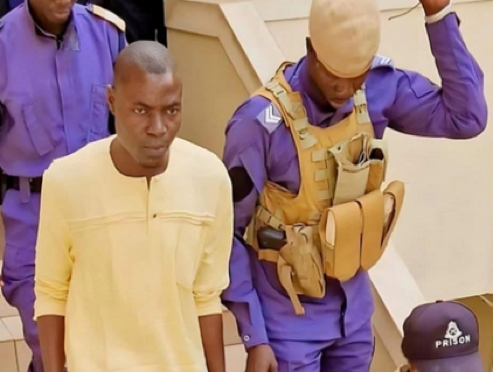
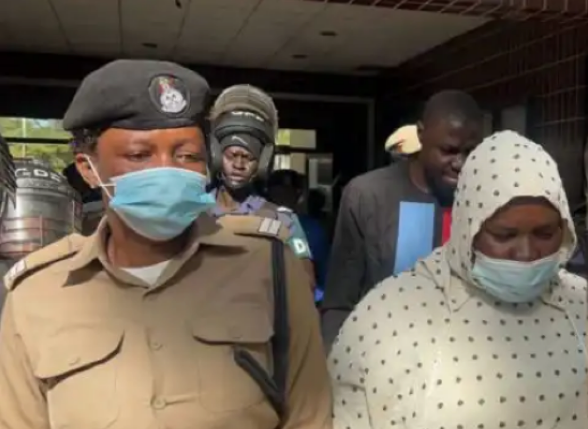
The turning point, transforming a high-profile prosecution into a mass political issue, was what happened after the judgment. Reporting indicates that after bail was granted, the defendants were re-arrested and returned to Mile 2 Central Prison amid state applications to vary or stay bail (including an ex parte motion). Protests followed rapidly. Gambians Against Looted Assets mobilised demonstrations at Westfield and in Brufut, demanding release and accountability, with domestic reporting documenting police crowd dispersal measures. International coverage similarly describes tear gas and water cannon use and notes that police later announced the siblings’ release.
The legal-administrative sequence became muddier and politically combustible when even Dawda A. Jallow (speaking as justice minister) was reported as describing the re-arrest after release as “unlawful and regrettable,” adding that a fuller court order would have been needed and that interventions resulted in release. The National Human Rights Commission subsequently issued a press statement condemning police conduct, reporting investigative monitoring visits, and asserting that the detainees were committed to prison “without a warrant,” while also criticizing indiscriminate tear gas and water cannon usage affecting bystanders.
How the case becomes a political distraction
The “distraction” dynamic is best understood as agenda displacement driven by a focusing event and reinforced by institutional and political feedback loops. In public-policy theory, sudden, harmful events can become “focusing events” that mobilise groups and force attention onto particular issues. Once elevated, media and political actors can amplify salience—an agenda-setting effect in which attention and perceived importance track the visibility and emphasis of an issue. And as Downs’ issue-attention cycle predicts, public attention can surge sharply around a dramatic problem (even if unresolved), rearranging the hierarchy of national debate.
In this case, the original focusing event (the killing of police officers) was already structurally primed to dominate attention because it touched core state functions: monopoly of force, officer safety, and cross-border security narratives. But the post-verdict sequence created a second focusing event, the apparent rupture between judicial outcome and executive/police practice, which reframed the story from “who committed the crime?” to “does the state respect court orders and due process?” That reframing is politically explosive because it supplies a simple referendum-like narrative (“rule of law vs. impunity”) that can be carried in chants, placards, and viral clips more easily than complex evidentiary reasoning.
The role of GALA intensifies this dynamic. Although best known for mobilising youth-led anti-corruption protests and demanding transparency over recovered assets, CIVICUS reporting describes GALA as an accountability-focused civil society initiative capable of large-scale mobilisation and organisation (including legal-compliance efforts and marshaling). When such a movement shifts its repertoire from corruption transparency to a criminal-justice controversy, the framing naturally broadens: the Bojang case becomes a symbolic container for grievances about policing, governance, and state credibility, rather than only a discrete homicide prosecution.
A further accelerant is elite politicisation. Reporting in early April 2026 explicitly situates the case inside partisan contestation, describing public statements and counter-statements by Adama Barrow and Ousainou Darboe, and portraying the case as a source of political accusation and “polarised public opinion.” Where political leaders treat an ongoing criminal appeal as raw material for legitimacy battles, the justice process risks being perceived, fairly or not, as political theatre, thereby empowering street mobilisation and increasing the incentives for further rhetorical escalation.
This dynamic also echoes comparative research on the politicisation of crime and justice in election periods. While contexts differ, the literature on “penal populism” and related phenomena warns that near elections, political competition can reward toughness signalling and moralised blame over evidence-based criminal justice governance, intensifying polarisation and undermining institutional trust. A locally circulated analysis similarly argued that early state communications projected institutional certainty and contributed to a later legitimacy crisis when court findings did not align with initial narratives.
Rule of law and security implications
The core irony is that a case born of a national-security shock has, through politicisation, begun to erode the very institutional legitimacy needed for effective security governance. When a national human rights institution asserts that detainees were committed to prison without warrant and that crowd-control tactics indiscriminately harmed bystanders, this is not merely reputational damage; it signals procedural breakdowns that can reduce voluntary compliance and widen the “legitimacy gap” between citizens and law enforcement.
From the perspective of international legal standards, the Commission’s concerns intersect with widely accepted norms. The UN Office of the High Commissioner for Human Rights hosts the Basic Principles on the Use of Force and Firearms, which emphasise non-violent means where possible and restrict force to necessity and proportionality. Likewise, Article 9 of the International Covenant on Civil and Political Rights prohibits arbitrary arrest or detention and requires deprivation of liberty to follow established law and procedure. Regionally, Article 11 of the African Charter protects freedom of assembly subject only to necessary restrictions provided by law (including national security and public safety). The NHRC’s own framing treats the episode as a democratic rule-of-law concern, not simply a partisan dispute.
The legal mechanics of appeal further complicate the politics. Section 325 of the Criminal Procedure Act 2025 is designed to preserve appeal rights while managing liberty risks through detention orders or bail pending appeal, with time limits intended to prevent indefinite limbo.
The author is a Gambian scholar and political commentator based in Atlanta, Georgia, USA. He is a legal and national security analyst whose work focuses on governance, rule of law, and democratic accountability in The Gambia. He holds several advanced academic degrees, including a Master’s in Intelligence and National Security Studies. His research and writing focus on governance, and his writings have been published in several media outlets, where he engages critically with public policy, security issues, and political developments.