

By Ebrima Ceesay
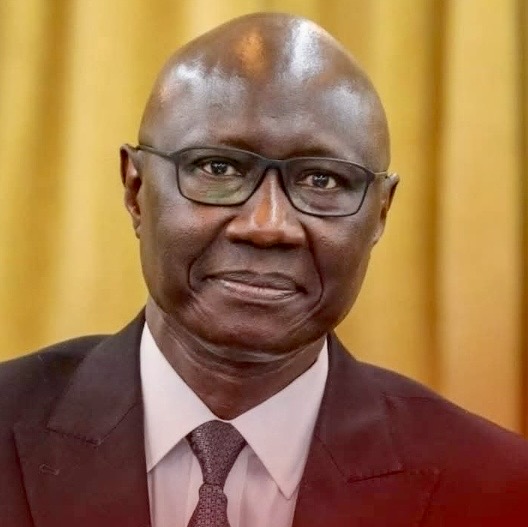
The nomination of an army General Birame Diop as Senegal’s candidate for the presidency of the Ecowas Commission from July 2026 to July 2030 has generated debate across West Africa.
At first glance, the choice of a retired military officer to lead a regional organisation founded to promote economic integration appears unconventional. Yet, the appointment comes at a moment when Ecowas faces perhaps the greatest challenge in its history: the withdrawal of three member states, rising insecurity across the Sahel, and growing questions about the future of regional cohesion.
This commentary argues that the nomination should be understood not simply as a personnel decision, but as a strategic response to a changing regional landscape. The piece explores what the choice of General Birame Diop reveals about Senegal’s reading of the current West African moment and what it may signal about the future direction of Ecowas itself.
To begin with, the discussion surrounding Senegal’s nomination of General Birame Diop to lead the Ecowas Commission (from July 2026) should not begin with the question of whether he is qualified. By all accounts, he is more than qualified.
From my perspective, the more interesting and politically significant question is what President Bassirou Diomaye Faye is trying to tell West Africa through this appointment.
At first glance, the nomination appears unusual. Ecowas is, after all, an economic community. Its founding mission is to promote regional integration, facilitate trade, encourage the free movement of people and goods, and advance economic development across West Africa. One would therefore expect the organization to be led by a seasoned economist, a veteran diplomat, or a respected technocrat with expertise in regional governance.
Yet that assumption rests on a vision of Ecowas that increasingly belongs to the past rather than the present.
Over the last decade and a half, the most consequential issues confronting Ecowas have not been tariff barriers, customs harmonisation, monetary convergence, or infrastructure financing.
Instead, the organisation has found itself consumed by military coups, constitutional crises, democratic backsliding, violent extremism, and growing instability across the Sahel.
The military coups in Mali, Burkina Faso, Guinea, and Niger fundamentally altered the political landscape of the region. Jihadist insurgencies continue to threaten state authority across vast territories. Maritime insecurity persists in the Gulf of Guinea.
Electoral disputes and governance crises have become recurring features of regional politics. Most significantly, the withdrawal of Mali, Burkina Faso, and Niger from Ecowas represents the most serious challenge to the organisation’s cohesion since its creation.
The uncomfortable truth is that Ecowas today is no longer merely an economic integration project. It has evolved into a political and security actor struggling to preserve the very idea of regional unity. Its greatest challenge is no longer the integration of markets but the prevention of fragmentation.
Viewed from this perspective, the nomination of General Birame Diop begins to make strategic sense.
President Diomaye Faye appears to recognise a reality that many regional leaders have been reluctant to acknowledge openly: economic integration cannot advance in an environment characterised by political mistrust, insecurity, and institutional breakdown.
Trade corridors cannot function effectively when borders are insecure. Investment cannot flourish where governments are unstable. Regional cooperation becomes difficult when member states question the legitimacy and relevance of regional institutions.
Before Ecowas can deepen integration, it must first restore confidence in the regional project itself.
This is where General Birame Diop’s profile becomes particularly significant. He is not simply a military officer. Throughout his career, he has accumulated extensive experience in international peacekeeping, conflict prevention, strategic security policy, and multilateral diplomacy.
Perfectly bi-lingual in English and French, General Diop’s reputation has been shaped less by battlefield command than by engagement with complex security and governance challenges at both regional and international levels.
In many respects, he represents a rare combination of military credibility, diplomatic experience, and institutional understanding.
Those qualities may prove invaluable at a moment when Ecowas finds itself confronting military-led governments that increasingly view the organization with suspicion.
This brings us to what may be the most important dimension of the appointment. Whether intentionally or not, Senegal’s nomination sends a message to the military authorities in Mali, Burkina Faso, and Niger.
Relations between these three governments and Ecowas have deteriorated dramatically in recent years. Across parts of the Sahel, Ecowas came to be perceived as punitive, disconnected from local security realities, and overly influenced by external actors.
The threat of military intervention following the 2023 coup in Niger further deepened this distrust.
By nominating a retired general rather than a traditional bureaucrat, Senegal may be signalling that Ecowas is prepared to listen as well as lecture. It may be acknowledging that the security concerns driving political developments in the Sahel cannot simply be dismissed or sanctioned away.
A former military officer is unlikely to resolve these tensions by virtue of his background alone, but he may be able to create channels of communication that have largely broken down.
In this regard, I find persuasive the argument advanced by those who see the appointment as partly directed toward the Alliance des États du Sahel (AES). President Diomaye Faye is too astute a politician not to understand the symbolism involved.
Against this backdrop, the choice of General Birame Diop may well be an attempt to place at the head of Ecowas someone capable of engaging military rulers on terms they respect and understand.
However, reducing the appointment solely to the AES question would underestimate its broader significance. The crisis confronting Ecowas is not merely about bringing three countries back into the fold. It is about redefining the organisation’s role in a rapidly changing geopolitical environment.
West Africa is experiencing intense external competition involving Russia, China, Turkey, the Gulf States, Europe, and the United States. At the same time, anti-establishment sentiment is growing among younger populations who increasingly question both national and regional elites. Traditional assumptions about governance, sovereignty, and regional cooperation are being challenged from multiple directions.
Against this backdrop, General Birame Diop’s nomination to be the next President of the Ecowas Commission may represent an effort to reposition Ecowas for a new era, one in which security, governance, and economic integration can no longer be treated as separate policy domains.
There are, of course, risks. Critics will argue that appointing a military figure could further entrench the securitisation of Ecowas and divert attention from its core economic mandate. That concern should not be dismissed lightly.
There is a real danger that an organisation founded to foster prosperity and integration could gradually transform into a permanent crisis-management mechanism.
From my perspective, if security challenges become the organising principle of Ecowas, the organisation risks losing sight of the very purpose for which it was created.
Yet this criticism may overlook a crucial reality. Security and economic integration are not competing objectives; they are increasingly interdependent. In today’s West Africa, one cannot be achieved without the other. Sustainable development requires stability. Regional markets require political trust. Free movement requires secure borders. Economic integration requires functioning states.
The deeper significance of Senegal’s decision, therefore, lies in what it reveals about Dakar’s assessment of the region. By nominating General Birame Diop, President Diomaye Faye appears to be acknowledging that West Africa is passing through one of the most turbulent periods in its post-independence history.
In stable times, economic communities are led by economists and trade specialists. In moments of profound political uncertainty, these economic communities are often led by individuals whose authority derives from their ability to navigate crises and rebuild trust.
The appointment of General Birame Diop is not a departure from Ecowas’ mission. Rather, it is an admission that the organisation’s immediate task is to create the political and security conditions necessary for that mission to survive.
Senegal’s calculation seems to be that before West Africa can integrate its economies, it must first reconnect its politics, restore confidence among its states, and rebuild the cohesion that has been steadily eroding.
If that is indeed the thinking behind the nomination, then General Birame Diop’s candidacy is not merely a personnel decision. It is a strategic statement about the future of Ecowas itself.
Dr Ebrima Ceesay is a Gambian academic who lives and works in the UK. He was an editor of the Daily Observer newspaper.