

By Sheriff Bojang Jr
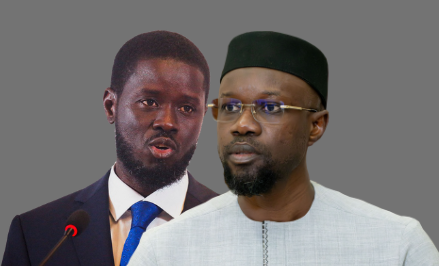
For two years, Senegal’s political revolution rested on an awkward arrangement. President Bassirou Diomaye Faye held constitutional power. Prime Minister Ousmane Sonko commanded the movement.
The formula worked because both men were united against a common enemy: the old political establishment and the elite networks many young Senegalese believed had monopolised power, wealth and influence for decades. Together, they rode a wave of anger, frustration and anti-system energy that swept their movement into office promising a “system change” and a complete break from the old order.
Now that arrangement has exploded in public. On Friday, Faye dismissed Sonko as prime minister, a step many in Senegal believed he would never dare take. But rather than ending the power struggle, the decision may have opened a far more dangerous chapter in Senegalese politics, with even seasoned observers in Dakar no longer entirely sure where the real centre of power lies.
What began as tensions inside government is rapidly evolving into a high-stakes battle over control of Pastef the movement, parliament, parts of the state apparatus and the political revolution that brought both men to power.
Increasingly, the fear within Senegal’s political class is that this is the beginning of a much wider confrontation between the presidency and the movement itself.
Sonko may be out of government but not out of power
The first sign came from Pastef itself. After Sonko’s dismissal, the movement did not rally behind President Faye. Instead, it issued a statement praising Sonko’s “leadership”, “vision” and “remarkable work”, describing his time in government as a key stage in Senegal’s “citizens’ revolution”.
The language was revealing because it reaffirmed loyalty to “the Project”, a political shorthand in Senegal for Sonko’s ideological movement and the anti-establishment vision that brought Pastef to political dominance.
Then came another striking communiqué from Pastef’s executive committee. The party addressed reports that senior state officials and political appointees linked to the movement had begun resigning following Sonko’s removal. But instead of condemning those resignations, Pastef effectively acknowledged the growing internal rupture while urging officials to follow formal procedures and remain at their posts until officially dismissed.
That statement reinforced the wide believe that large sections of the state machinery installed under Pastef still answer politically to Sonko rather than to the presidency itself.
Many heads of parastatals, agencies and government departments are believed to remain loyal to him. Some have already resigned in solidarity. Others are expected to be removed once Faye reshuffles the administration and begins rebuilding the state around trusted loyalists.
In effect, the purge may already be beginning.
The next real battle may happen inside Pastef
The next confrontation is unlikely to unfold inside the presidential palace.
It will happen inside the movement itself.
All attention is now turning toward Pastef’s congress scheduled for 6th June, where many expect delegates to overwhelmingly reaffirm Sonko as the movement’s undisputed political leader and quietly position him as its presidential candidate for 2029.
Officially, Faye was elected under the banner of the Diomaye President coalition rather than Pastef itself, largely because the party had been dissolved under Macky Sall before the 2024 election. But in political reality, it was Sonko, Pastef’s activist machinery and the movement’s anti-establishment momentum that carried Faye into office. Across much of the party base, parliament and grassroots structures, many supporters still see the presidency as a product of Sonko’s political capital rather than an independent power centre of its own.
The congress is unlikely to formally expel Faye from the movement. Such a decision would risk triggering a direct institutional clash between the presidency and the political force that brought it to power. But politically, the outcome could come dangerously close.
If delegates rally massively behind Sonko, Faye could emerge still holding the presidency while steadily losing control of the movement that helped carry him into office. His membership in Pastef may survive on paper, but his authority inside the movement may not.
That would leave Senegal facing a striking contradiction: a sitting president governing the country while the emotional loyalty of his political base, the movement’s activist machinery, parliamentary majority and future ambitions increasingly revolve around another man.
Who owns the numbers in parliament?
On paper, Pastef controls around 130 seats in Senegal’s 165-member National Assembly. In theory, that should make Faye one of the strongest presidents in Senegalese democratic history. But in reality, the overwhelming majority of those seats may no longer belong to him politically.
Most of those MPs owe their rise directly to Sonko’s years of populist confrontation with the old establishment, his anti-corruption message and his enormous popularity among younger voters. That matters because parliamentary numbers in Senegal largely determine who controls the political future of the government itself.
If the overwhelming majority of Pastef MPs continue aligning politically with Sonko rather than the presidency, Faye could find himself in the extraordinary position of governing with a parliamentary bloc that is technically his majority but politically loyal to somebody else.
That would severely weaken his room for manoeuvre as it could undermine efforts to reshape the administration and make it harder for Faye to fully break away from Sonko politically. Even routine government business could become more fragile if tensions deepen between the presidency and the movement’s parliamentary base.
Dramatic parliamentary comeback
In a sign that his political influence remains deeply entrenched despite his removal from government, Sonko is expected to officially resume his seat in Senegal’s National Assembly later on Tuesday. His return comes after the resignation of Speaker El Malick Ndiaye, a move widely seen in Dakar as designed to clear the path for Sonko to take over the leadership of parliament.
If elected speaker as expected, Sonko would immediately regain a major institutional power base only days after being dismissed as prime minister. Rather than disappearing from the state apparatus, he would move to the head of a National Assembly dominated by Pastef loyalists, reinforcing fears that Senegal’s power struggle is shifting into a dangerous new phase between the presidency and the movement’s parliamentary machinery.
The development would further complicate Faye’s efforts to consolidate authority after sacking the man still widely viewed by much of Pastef’s base as the true political centre of gravity behind Senegal’s ruling movement.
Could Sonko make Senegal ungovernable?
Many in Dakar now fear Sonko could become harder to contain outside government than he was inside it. As prime minister, he had already begun sharing responsibility for Senegal’s difficult economic realities, including inflation, subsidy pressures, IMF tensions and growing frustration over the slow pace of economic change.
Outside government, however, he is once again free to return to the politics that made him powerful in the first place. Few politicians in Africa can mobilise anger like Sonko. He built his rise through mobilisation, confrontation and pressure from the streets, presenting himself as the man willing to openly challenge Senegal’s political and economic establishment when others chose compromise.
Removed from the daily burdens and frustrations of governing, he may now try to reconnect with the anger and anti-system energy that first turned him into one of the country’s most influential political figures.
If Sonko concludes that the presidency is trying to politically erase him, there are fears he still has the ability to unleash sustained street mobilisation capable of paralysing the government politically and pushing Senegal into a prolonged period of chaos.
Why parts of the establishment may quietly move toward Faye
However, Sonko’s greatest political strength is also one reason powerful enemies may now quietly align behind the presidency.
Over the years, he built his popularity partly through uncompromising attacks on corruption, patronage and elite privilege. In doing so, he also created enemies across political, business and media circles that had learned not only to survive, but also to profit under every previous administration. From the era of Abdoulaye Wade to Macky Sall — and now increasingly around Faye — many political operators adapted easily from one regime to another, maintaining influence, access and privilege regardless of who occupied the presidential palace.
Sonko threatened that ecosystem. His refusal to accommodate certain networks, his hostility toward old patronage systems and his attacks on elite privilege unsettled many figures who had long benefited from proximity to power.
The same applies to parts of Senegal’s media establishment. Sonko’s supporters have long accused sections of the media landscape of benefiting financially from advertising contracts, patronage and political proximity to previous governments. His tougher posture toward those arrangements created resentment that never fully disappeared.
Now many of those actors may quietly see Faye as the safer and more manageable option.
Faye may now move closer to the old system
If Sonko consolidates control of the movement, Faye may eventually conclude that he can no longer rely on Pastef itself as the foundation of his political survival. In that scenario, he may have little choice but to begin building power elsewhere, through state institutions, technocrats, business elites, international partners and political figures linked to previous administrations.
Figures already around him — including former prime minister Aminata “Mimi” Touré — may bring institutional experience, elite connections and credibility within sections of the state, but they do not command the emotional loyalty or activist energy Sonko inspires inside Pastef
Already, speculation is growing in Dakar that Faye may increasingly lean on networks connected to former presidents Abdoulaye Wade and Macky Sall, alongside senior bureaucrats and economic elites uneasy about Sonko’s dominance, populism and confrontational style. Many within Senegal’s traditional establishment may ultimately decide that, despite their past hostility toward Pastef, Faye now represents the safer and more predictable option. That would be a stunning reversal for a president elected on promises of rupture and system change.
Most importantly, such a political realignment would come at a heavy price. To secure support from establishment actors, Faye may have to quietly abandon parts or all of the aggressive anti-corruption and accountability agenda that helped bring him to power in the first place. That could include slowing or shelving efforts to pursue figures from Macky Sall’s regime accused by Pastef supporters of corruption, abuse of office or involvement in the crackdown that led to the deaths of protesters during the anti-Sall unrest.
Many powerful figures are unlikely to back a president while simultaneously exposing themselves to possible prosecutions.
The same applies economically. Unlike Sonko, who was widely viewed by diplomats and financial circles as a major obstacle to IMF demands and orthodox economic reforms, Faye may now come under pressure to adopt a much more accommodating posture toward international lenders. That could mean accepting tougher IMF conditions, accelerating fiscal reforms, reducing subsidy pressures and reassuring investors worried by months of political uncertainty.
In other words, the presidency may increasingly move toward pragmatism while Sonko occupies the space of political resistance.
Faye may also come under pressure to soften Pastef’s hostile posture toward parts of the media establishment. For years, the movement attacked the patronage networks linking sections of the media to previous governments. But if Faye seeks political calm and elite backing, he may eventually have to restore parts of the same system Pastef once condemned.
But that carries enormous political risks because the more Faye compromises with the old order, the easier it becomes for Sonko to present himself as the only remaining defender of the revolution Pastef promised Senegalese voters.
Faye’s next appointments may reveal his real strategy
The clearest clue about Faye’s next move may come from his next set of appointments. If he chooses to keep the position of prime minister rather than abolish it altogether, the calibre and political profile of the next PM will be scrutinised closely.
A respected technocrat with international credibility would signal a pivot toward economic stabilisation, IMF accommodation and institutional reassurance. A compromise political figure linked to older establishment networks could indicate that Faye is building a broader anti-Sonko coalition inside the state. A loyal but politically lightweight figure would suggest the presidency wants tighter personal control over government while avoiding the emergence of another rival centre of power.
The same logic applies to the next cabinet. If key ministries begin filling with former establishment figures, bureaucrats linked to Wade or Sall-era networks, internationally respected technocrats or personalities once viewed suspiciously by hardline Pastef activists, it will become increasingly clear that Faye is repositioning himself away from movement politics and toward state survival.
Conversely, if the reshuffle remains dominated by Sonko loyalists or ideological hardliners (which is very unlikely), it may signal the president is still trying to preserve some form of coexistence inside the movement. Either way, the appointments will reveal not only Faye’s direction but also his endgame.
Faye’s nuclear option: dissolve parliament
One option likely under serious discussion inside the presidency is dissolving parliament once that becomes legally possible later this year. Fresh elections could allow Faye to reset the political landscape, rebuild presidential authority and test whether Pastef’s support base still belongs overwhelmingly to Sonko or whether voters are prepared to rally behind the presidency itself.
But the gamble would be enormous. If new elections simply reproduce another overwhelming Pastef majority still politically loyal to Sonko, Faye could emerge even weaker than before. He would remain president while presiding over a parliament aligned more closely with his rival, a party machinery slipping further beyond his control and a government trapped in permanent internal warfare.
In that scenario, dissolving parliament would blow it wide open instead of ending it.