

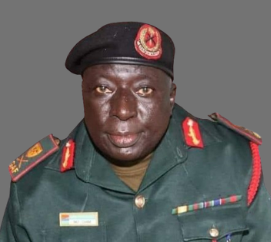
The Edward Francis Small Centre for Rights and Justice (EFSCJR) has stated that while it welcome the government’s decision to investigate the allegations of abuse of office and corruption levelled against the former Chief of Defence Staff (CDS), Lt Gen Mamat Cham, the approach lacks transparency, independence, and accountability.
EFSCJR contended that the Gambia Armed Forces is not the appropriate institution to take the lead in communicating or managing an investigation involving the conduct of its former highest-ranking officer and that the statement failed to disclose the composition of the board of inquiry, its terms of reference, reporting procedures, or timelines, thereby raising legitimate concerns about the transparency and credibility of the process.
It argued: “The allegations against former CDS Cham do not concern military operations or battlefield conduct. Rather, they relate to alleged corruption, abuse of office, misuse of public resources, improper business activities, and breaches of professional and ethical standards. These are matters of public accountability and governance that demand a civilian-led investigative process independent of the military chain of command.
The centre called on the president, who is the commander-in-chief, to address the nation on this matter and establish “a genuinely independent” inquiry led by a respected civilian or retired senior military officer of unquestionable integrity, supported by experts drawn from relevant institutions and disciplines, including law, public finance, auditing, procurement, governance, and security sector reform.
The centre advised that the inquiry should not be “narrowly confined” to the allegations against Lt Gen Cham alone. “The nature, scale, and duration of the allegations suggest deeper institutional weaknesses, systemic abuse of authority, inadequate oversight, and disregard for both the Constitution and the Gambia Armed Forces Act. This situation presents a critical opportunity to undertake a comprehensive review of the administration, management, oversight, leadership, and accountability mechanisms of the Armed Forces to identify and address corruption risks, governance failures, abuse of office, and institutional deficiencies.
We are particularly concerned that the allegations also have implications for the welfare and wellbeing of ordinary soldiers. It is widely acknowledged that many service members continue to face challenges relating to living conditions, remuneration, welfare, and career development. Where corruption and abuse of power are allowed to flourish, it is often rank- and-file personnel who suffer the greatest consequences. These concerns must therefore form part of any meaningful inquiry into the state of the Armed Forces.”