

By Jali Kebba
Not long ago, I stumbled upon an old interview titled Do You Know Who You Are? The conversation was simple but profound, the kind that lingers in your mind long after it ends. It reminded me that most of the answers we search for in life aren’t out there somewhere—they’re inside us, waiting to be uncovered.
We live in a time when we’re always looking outward for solutions. We chase new opportunities, read books, attend seminars, and listen to advice, hoping someone will hand us the key to success or happiness. But what if the key was never lost? What if the real journey is not about adding more to our lives but about understanding ourselves more deeply?
That was the message that came through clearly. If you don’t like your results, change yourself—because they are your results. It’s a humbling truth, but also a liberating one. The world around us mirrors what’s happening within us. Until we do the internal work, nothing outside will truly satisfy or last.
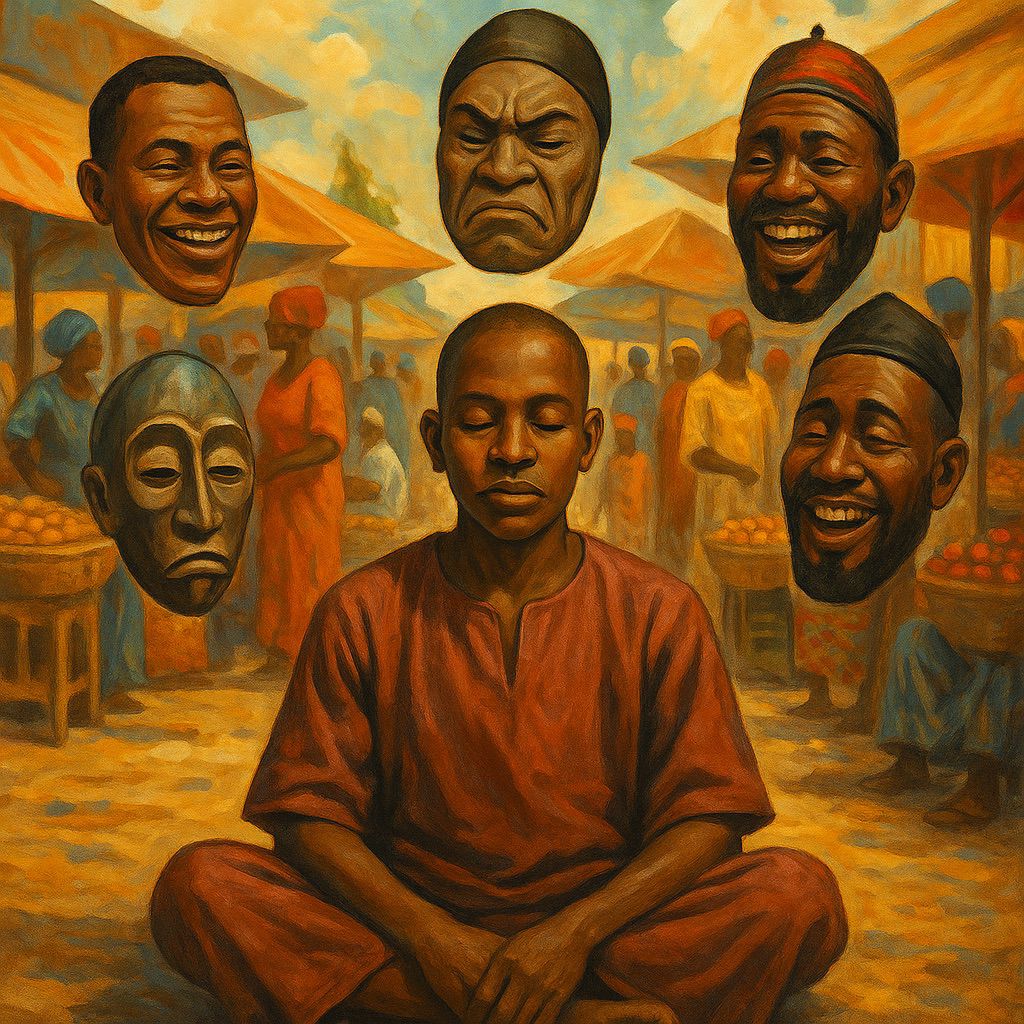
We often define ourselves by surface details—our names, jobs, age, or background—but those are only labels. They describe what we do, not who we are. Beneath all of that lies a deeper self: the part that thinks, feels, chooses, and dreams. Yet most of us spend our lives reacting to the world instead of understanding that inner landscape. We live more from habit than awareness.
True growth begins when we stop reacting and start reflecting. When we ask, Who am I, really? What do I believe? What am I chasing, and why? Those questions are uncomfortable because they strip away excuses. But they also give back power—the power to choose new patterns, new thoughts, new directions.
The interview also reframed what success means. Success isn’t about wealth, fame, or titles. It’s about progress—moving, even slowly, toward something meaningful. Anyone who knows where they’re going and takes steady steps in that direction is already successful. The real tragedy isn’t failing; it’s living a lifetime without ever daring to define what success personally means.
The reason so few people live fully, it was said, is because of two powerful influences: conditioning and environment. From birth, we absorb beliefs from the people around us—what’s possible, what’s realistic, who we can or cannot become. Those beliefs shape us quietly but completely. Then, as adults, we often surround ourselves with people who reinforce the same patterns. We stop questioning and start conforming. The first step toward freedom is to pause and think for ourselves—to ask whether the life we’re living is one we chose or one we simply inherited.
One insight from the conversation that stayed with me is that everything begins in the mind. Every invention, career, or transformation starts as an image, a thought, a possibility. What we continually picture in our minds eventually shows up in our reality. If we see ourselves as capable, disciplined, and confident, our actions follow that pattern. But if we see ourselves as limited or unworthy, the world will reflect that too.
The process of change doesn’t require magic—just clarity and repetition. Decide exactly what you want. Write it down. Picture it clearly. Then, each time a thought of doubt appears, choose to focus instead on how you can make it happen. Our attention is powerful; whatever we nurture in thought, we grow in life.
At the heart of this idea is attitude—the way we think, feel, and act toward life. Every situation has two sides, one positive and one negative. We can’t think both at once. Choosing the positive doesn’t mean ignoring problems; it means facing them from a place of possibility rather than fear. Even when things go wrong, there’s always something to learn, something good to extract.
Connected to attitude is our self-image—the picture we hold of ourselves deep inside. It’s the invisible ceiling that limits or liberates us. When we improve that image, everything changes: our confidence, our communication, our results. The simplest way to begin is to imagine the person we want to become and start acting as though we already are that person. The mind doesn’t resist what it consistently rehearses—it accepts it.
Listening to that interview reminded me that no seminar, book, or mentor can replace self-understanding. The journey inward is the hardest and most rewarding one we’ll ever take. We can move to new cities, change careers, or meet new people, but if we carry the same mindset, we’ll keep recreating the same experiences. Real peace, real growth, comes from the inside out.
So instead of asking, “What should I do next?” maybe the better question is, “Who am I becoming?” Because once we begin to truly know ourselves—beyond the noise, the names, and the roles—we stop walking in circles. We begin to walk forward, with clarity, purpose, and peace.