


By Omar Bah
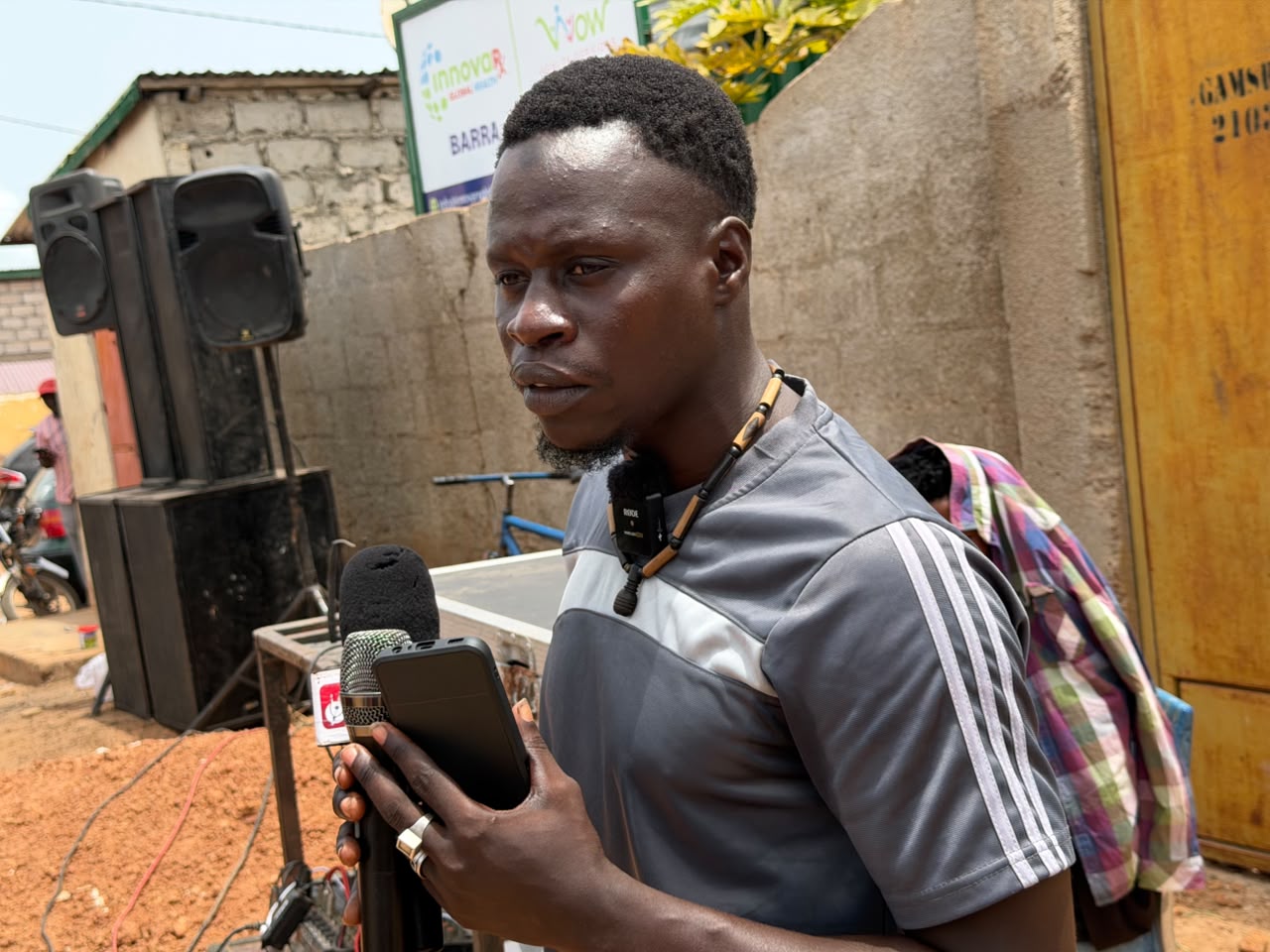
Frustration, not adventure, is increasingly driving Gambian youths to embark on the dangerous backway journey to Europe, according to Modou Lamin Joof, a former soldier from Barra whose own repeated attempts reveal the depth of the crisis.
Speaking about his experiences at a Barra event organised by the Ecowas Parliament to sensitise people on the dangers of irregular migration and human trafficking on Thursday, Joof recounted how he risked his life five separate times trying to reach Europe through irregular migration routes across the Sahara Desert and the Mediterranean Sea.
His story reflects a growing sentiment among young Gambians who feel trapped by limited opportunities at home.
“This is not about chasing luxury,” Joof said. “It is about survival and dignity. Young people are tired, disappointed, and feel abandoned.”
Joof explained that his first attempt ended in failure, but what followed deepened his desperation.
Upon returning to The Gambia, he was dismissed from the army — a decision he says stripped him of stability and hope. Instead of discouraging him, the dismissal pushed him further toward the ‘back way’.
“When I came back, I expected a second chance, but I was dismissed,” he said. “That made things worse. It left me with no option but to try again.”
He went on to attempt the journey four more times, each attempt exposing him to severe dangers, including harsh desert conditions, exploitation by smugglers, and the constant threat of death. Joof said though he survived, many of his fellow travellers did not.
Joof believes his experience is not unique but part of a broader pattern affecting Gambian youth. According to him, the root cause is not a lack of ambition or talent, but a lack of support systems.
“We have very talented young people in this country,” he said. “But talent alone is not enough. There is no support. No opportunities. No encouragement.”
He also criticised what he described as the silence and inaction of wealthy Gambians and influential figures, arguing that their failure to invest in youth development is worsening the crisis.
“Those who have resources are not helping the young people when they need it most,” Joof stated. “If they did, many would not risk their lives on this journey.”
The “backway” phenomenon has long been a major concern in The Gambia, with thousands of youths attempting irregular migration despite the well-documented dangers. While government and international partners have launched awareness campaigns, Joof insists that awareness alone is not enough.
“You cannot tell someone not to go when they see no future here,” he said. “People will always take risks when they feel they have nothing to lose.”
Joof’s testimony serves as a stark reminder that behind every migration statistic is a personal story shaped by hardship, disappointment, and resilience.
Final report
Meanwhile, the Ecowas Parliament has called on governments across West Africa to make the creation of decent and sustainable jobs for young people a top priority, warning that unemployment and shrinking economic opportunities continue to fuel irregular migration.
The regional legislature made the call after a week-long citizen engagement in The Gambia, where parliamentarians interacted with young people, returnees, community leaders and other stakeholders to identify the root causes of irregular migration.
Presenting the report of the engagement on Friday at the Gambia’s National Assembly, head of the delegation, Hon Billay Tunkara, said participants overwhelmingly identified unemployment, low incomes, limited access to education and uneven economic opportunities as primary factors pushing young people to undertake these dangerous journeys.
According to the report, many young people believe that the opportunities available in their home countries do not offer a realistic pathway to prosperity, reinforcing the perception that migrating through irregular routes is a viable option.
The Parliament also found that family expectations, peer pressure and social media platforms have become powerful drivers of irregular migration with attendees who are returnees and survivors painting a grim picture of irregular migration, detailing experiences of deception, forced labour, abuse, detention, family separation and severe psychological trauma. However, the Parliament noted that these survivors could play a vital role in discouraging others by sharing their experiences.