NPP kingpin disagrees with Bensouda over Bulock barracks demolition
By Olimatou Coker
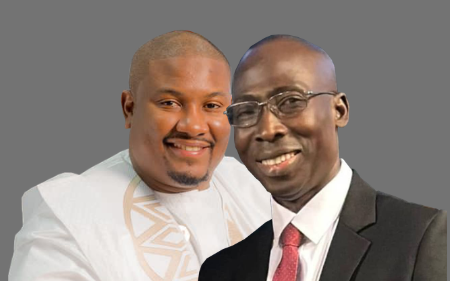
Lamin J Jawara, Deputy Secretary of the ruling NPP’s Diaspora Chapter, has taken issues with Unite Movement for Change UMC leader Talib Bensouda over the latter’s call for government to take matters of sovereignty with seriousness.
Commenting on the demolition of the Bulock military barracks fence demolition by Senegalese troops last Friday, Mayor Bensouda said he wondered why the Gambian president as commander-in-chief of the armed forces, has not come out to assure Gambians or condemn the acts.
Bensouda also stressed that governance requires deliberate and decisive leadership, emphasising that The Gambia is a sovereign nation whose territorial integrity must be respected.
“As I’ve always said, governance is a deliberate and serious exercise. It’s not about drifting or making things up. The Gambia is a sovereign nation,” he said.
While reaffirming the strong relationship between The Gambia and Senegal, Bensouda noted that friendly ties should not prevent the government from responding firmly to actions that could undermine the country’s sovereignty.
“We are neighbours with the Senegalese people, and we love them. We will continue to grow together and support one another. However, acts like this raise serious questions about our partnership, and it is important that President Barrow draws a red line. We are partners with Senegal, but we have our own country,” he said.
The UMC leader further argued that overreliance on other countries in key sectors weakens national authority.
“This is what happens when you outsource your security and your energy. Nations don’t take you seriously,” he remarked.
However in response, Mr Jawara of the NPP said while he respects Bensouda’s right to express concern about national sovereignty, “framing a sensitive bilateral incident through public pressure and electoral politics risks undermining the very principles that have kept The Gambia-Senegal relationship stable for decades”.
“More importantly, the tone and timing of the statement appear ill-suited to the demands of statecraft. If we were to address matters of this gravity in the manner suggested, it is unlikely the matter would be resolved amicably. Leadership in such moments requires maturity, measured communication, and an understanding of diplomatic process qualities that this public approach does not reflect,” Mr Jawara said.
He admitted also that while sovereignty is non-negotiable., it is defended not only through public statements, but through effective action and the
Government’s stated position has already addressed that when it said the act is “profoundly provocative and totally unacceptable”, and that it will be resolved through diplomatic engagement and existing bilateral mechanisms..
Jawara said diplomacy often requires restraint in public while engaging firmly in private and statements that seek immediate public confrontation, rather than channelling concerns through established structures, make de-escalation harder, not easier.
“The claim that the president is silent overlooks the fact that the Office of the Government Spokesperson has already issued an official statement, assuring the public that the situation is calm and under control, and committed to peaceful resolution.
In diplomacy, not every response must be made on Facebook or in real time. Credibility comes from coordinated messaging, not reactive statements. Premature public condemnation without full facts can close doors for de-escalation and project a lack of the steadiness expected of national leadership during a crisis.” Jawara cautioned.
He warned that linking an active border incident directly to the 2026 election sets a dangerous precedent, adding that diplomatic principle calls for national unity and the depoliticisation of security matters, especially when troops are involved.