


By Olimatou Coker
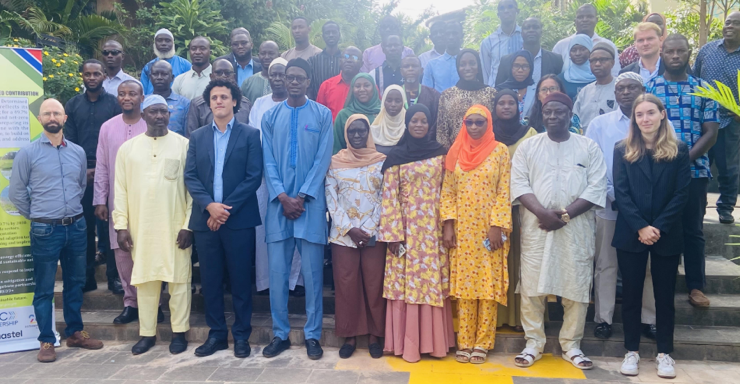
The Ministry of Environment, Climate Change and Natural Resources (MECCNAR), in collaboration with Climate Action Africa (CAA) and the United Nations Environment Programme (UNEP), recently convened a 3-day workshop to review Gambia’s Nationally Determined Contribution (NDC) 2.0 stocktake in preparation for NDC 3.0.
The workshop, held at Bakadiji Hotel, brought together key stakeholders and grassroots participants to assess progress, identify gaps, and prioritise actions for the next phase of climate action.
The stakeholders reviewed progress, identify gaps, and collect sectoral inputs on mitigation, adaptation, and cross-cutting themes, including Monitoring, Reporting, and Verification (MRV), finance, and gender.
They also laid the groundwork for the NDC 3.0 process, ensuring strong national ownership and alignment with The Gambia’s Long-Term Strategy 2050.
The meeting demonstrated enhanced ambition and alignment with the Paris Agreement, showcasing The Gambia’s commitment to climate action.
Bubacarr Zaidi Jallow, Deputy Permanent Secretary (Technical) at the ministry of Environment emphasised the importance of quantifying gains, identifying gaps, and recalibrating the approach to ensure NDC 3.0 is both ambitious and grounded in practical reality.
Lamin Jammeh, Climate Change Secretariat Director highlighted the central role of climate finance in enabling ambition and the need for credible financing strategies aligned with Article 9 of the Paris Agreement.
Rachid Ennassiri, Senior Advisor at UNEP noted the importance of providing support and facilitating discussions to develop a roadmap for NDC 3.0, ensuring strong national ownership and alignment with international frameworks.
The workshop laid the groundwork for NDC 3.0, identifying gaps and ensuring stronger national ownership and alignment with The Gambia’s long-term strategy.
The stakeholders are confident that NDC 3.0 will be ambitious in its vision and grounded in practical reality, serving as a strategic blueprint for sustainable development, climate justice, and transformative economic growth.