TSBy The Standard Newspaper10 April 2026 8 min read10 April 2026 8 min read
A Hussaini aristocrat’s vision: Immortal Bhutto, the nuclear chemist of the Islamic world and guardian of the finality of prophethood
By Professor Dr Sufi Atif Amin Al Hussaini
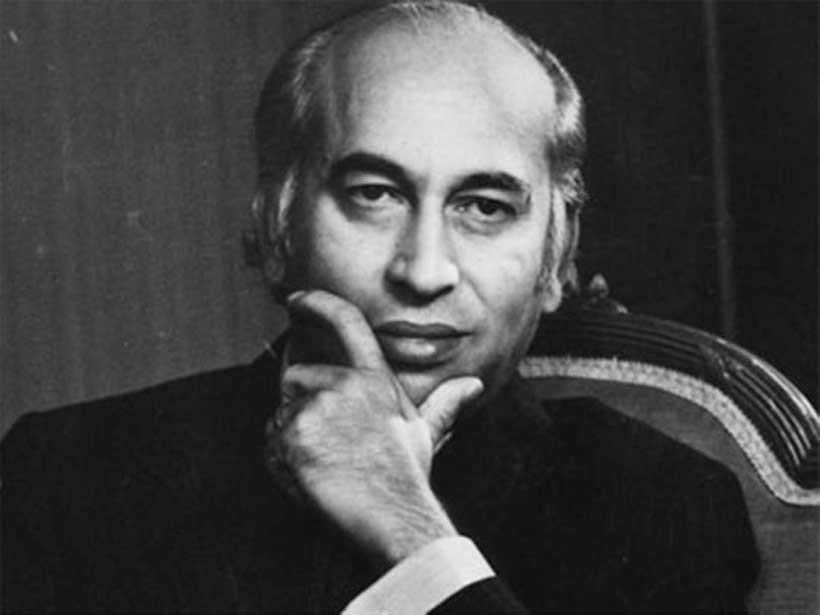
In the tapestry of the 20th century, few figures emerge with the spiritual gravity and intellectual brilliance of Quaid-e-Awam, Shaheed Zulfiqar Ali Bhutto. He was not merely a politician but a diplomatic dervish a man whose heart beat in sync with the underprivileged and whose mind charted the course for a defiant, sovereign Islamic Ummah. This article explores the quantitative milestones and the qualitative essence of a leader who chose the gallows over a “deal”, embodying the Hussaini Aristocracy of sacrifice for truth.
The sacred lineage and the dawn of a legend
Born on 5th January, 1928, in Larkana, Zulfiqar Ali Bhutto inherited a legacy of leadership from his father, Sir Shah Nawaz Bhutto, a prominent statesman. His family background was rooted in the soil of Sindh, yet his education at UC Berkeley and Oxford gave him a global lens. He was a synthesis of East and West, but his soul remained anchored in the Islamic tradition of justice.
The architect of people’s sovereignty
Bhutto’s political journey was a crusade against the status quo. On 30th November, 1967, he founded the Pakistan Peoples Party (PPP) with the revolutionary slogan “Roti, Kapra, aur Makan” (Bread, Clothing, and Shelter).
The quantitative shift: In the 1970 elections, Bhutto introduced the “one-man-one-vote” principle, effectively dismantling the feudal-bureaucratic grip on power. He empowered the common man, giving the marginalised a voice that had been silenced for decades.
National Empowerment: He gave Pakistan its first unanimous 1973 Constitution, a document that remains the sacrosanct bond between the state and its citizens.
The guardian of the finality of prophethood
Bhutto did not just build physical defences; he constructed a spiritual and ideological fortress. In 1974, responding to the pulse of the nation, his government passed a historic constitutional amendment declaring those who do not believe in the finality of prophethood (Khatm-e-Nabuwwat) of the Holy Prophet Muhammad (pbuh) as non-Muslims.
This was a “legislative doable action” that drew a clear ideological boundary, protecting the sanctity of the Islamic faith from internal hypocrisy and ensuring the ideological purity of the state.
The atomic alchemist: Sovereignty through the nuclear flame
Following the 1971 tragedy, Bhutto realised that conventional defence was insufficient. In the January 1972 Multan Meeting, he summoned scientists and declared his vision for a nuclear deterrent.
Defiance of IAEA: Bhutto famously refused to sign the NPT or succumb to IAEA pressures that would strip Pakistan of its right to self-defence. He famously stated: “We will eat grass, even go hungry, but we will get one of our own (nuclear bomb).”
The Multan Meeting (1972): Following the 1971 tragedy, he summoned scientists and famously declared that Pakistan would develop a nuclear deterrent.
Legacy: He is the true Nuclear Founder not just for Pakistan, but for the safety of the entire Islamic world, providing a “shield” for the Ummah.
The “Islamic Bomb”: He envisioned this not just as a Pakistani asset, but as a deterrent for the entire Islamic Ummah, providing a nuclear umbrella for the Muslim world.
The pan-Islamic Visionary (OIC and The Third World)
The 1974 OIC Summit, officially known as the Second Islamic Summit Conference, held in Lahore from 22nd to 24th February, remains a watershed moment in the history of the Muslim Ummah. Under the chairmanship of Quaid-e-Awam Zulfiqar Ali Bhutto, the summit transformed the OIC from a consultative body into a potent geopolitical force.
The Lahore Declaration: A manifesto of unity
The primary outcome was the Lahore Declaration, which served as a spiritual and political compass for the Muslim world. It proclaimed that the solidarity of Islamic peoples is based on justice and the rejection of all forms of colonial exploitation. It articulated a vision where the “Third World” (underprivileged nations) would no longer be a pawn in the Cold War between global superpowers.
Resolution on Palestine and Al-Quds Al-Sharif
The summit solidified the Palestinian cause as the “central issue” of the Ummah:
Recognition of the PLO: In a historic move, the summit recognized the Palestine Liberation Organisation (PLO) as the sole legitimate representative of the Palestinian people.
The status of Al-Quds: It declared that the liberation of Jerusalem (Al-Quds) is a paramount and unchangeable prerequisite for peace.
Withdrawal from Occupied Lands: Members unanimously demanded the immediate and unconditional withdrawal of Israel from all Arab territories occupied since 1967.
3. Economic sovereignty and the Islamic Development Bank
Bhutto’s vision for an “Islamic Common Market” began to take shape through several economic resolutions:
Foundation for the Islamic Bank: The summit provided the political mandate and expert framework that accelerated the operationalisation of the Islamic Development Bank (IDB).
Islamic World Development Programme: Leaders pledged approximately US$3 billion (with a significant US$1 billion grant from Saudi Arabia) for a development program to alleviate poverty and disease across member states.
Resource sovereignty: A resolution was passed asserting the right of developing countries to have full control over their natural resources, countering the exploitation by multinational corporations.
4. Global solidarity and African liberation
The summit was unique in its deep focus on the African continent, reflecting Bhutto’s “Third World” leadership:
Support for liberation movements: Resolutions were passed providing full political and material support to liberation movements in Mozambique, Angola, Guinea-Bissau, and Cape Verde (then under Portuguese colonial rule).
Sanctuary for the oppressed: During this era, Pakistan became a hub for African activists and students. Bhutto opened Pakistan’s military and educational institutions to them, effectively creating a “base” for future leaders of newly independent African nations. This included providing scholarships and technical training to hundreds of students from countries like Tanzania, Zimbabwe (then Rhodesia), and South Africa.
Intra-ummah reconciliation
The summit served as a bridge-builder for internal conflicts:
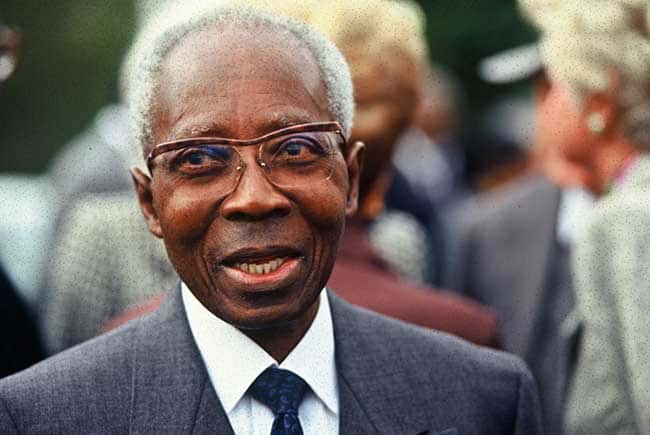
Pakistan-Bangladesh Reconciliation: Through the mediation of OIC leaders (especially from Kuwait and Senegal), Bhutto successfully extended diplomatic recognition to Bangladesh, ending the 1971 impasse and bringing the two brotherly nations back into the fold of the Ummah.
Brotherhood with the UAE and Libya: The summit deepened the bond between Pakistan and emerging powers like the UAE and Libya, leading to massive joint ventures and the export of Pakistani technical manpower to help build these nations.
Summary table of key resolutions
Resolution Type
Key Outcome
Political
Recognition of PLO as the sole representative of Palestine.
Religious
Reaffirmation of Al-Quds (Jerusalem) as Islamic trust.
Economic
Commitment to establish the Islamic Development Bank and poverty funds.
Geopolitical
Rejection of foreign military bases in Islamic territories.
Social
Eradication of “poverty, disease, and ignorance” through mutual aid.
The geopolitical mystic: Gwadar and the roots of CPEC
Bhutto’s foresight regarding Gwadar was legendary. By securing and focusing on the strategic potential of Gwadar (reintegrated earlier but prioritised by his vision), he laid the foundation for what we today call CPEC. He understood that Pakistan’s geography was a gift from Allah that could link the Islamic world with the rising East.
The Hussaini departure: A soldier of Allah
The ultimate proof of Bhutto’s character was his refusal to bend to the dictator General Zia-ul-Haq. Despite being offered deals and exile, he chose the path of Imam Hussain (RA).
Martyrdom: On 4th April, 1979, he embraced martyrdom with the dignity of a king and the humility of a Sufi. He proved that an ideological diplomatic warrior can be killed, but his vision is immortal.
Quantitative analysis of the Bhutto Era
Metric
Achievement
Prisoners of war (PoWs)
93,000 soldiers brought home with dignity via Simla Agreement.
Land recovery
5,000+ square miles of territory reclaimed from India.
Economic growth
6.5% GDP growth in 1973 despite the 1971 war aftermath.
Industrialisation
Foundation of Pakistan Steel Mills (1973) and Heavy Mechanical Complex.
Constitution
100% Unanimous approval of the 1973 Constitution.
The voice of defiance: Famous quotes
At the UN (1971): “I am not a rat. I have never ratted in my life… You can take your Security Council. I am going.” (As he tore the papers in protest against the UN’s inaction).
On sovereignty: “We do not want to be a great power. We want to be a sovereign power.” (Speech at the UN General Assembly).
Concluding Tribute: The poetry of Allama Iqbal
In his bravery and his refusal to bow to worldly powers, Bhutto reflected the “Mard-e-Momin” of Iqbal’s dreams.
Urdu:
ہر لحظہ ہے مومن کی نئی شان، نئی آن گفتار میں، کردار میں، اللہ کی برہان! قہاری و غفاری و قدوسی و جبروت یہ چار عناصر ہوں تو بنتا ہے مسلمان
English translation:
Every moment, a believer has a new glory and a new splendour,In speech and in character, he is the living proof of Allah!Power, Forgiveness, Purity, and Might—When these four elements combine, a true Muslim is born.
Concluding prayer: A Sufi’s plea for justice
Ya Allah, the Most Merciful and the Disposer of Affairs, We raise our hands in humble supplication for the peace and sovereignty of the ummah. Grant tranquility to the scorched lands of Palestine, the resilient hearts of Iran, and the weary souls of Pakistan . Ease the burden of those suffering from economic instability and the greed of global exploiters.
Ya Rab, we pray that You dismantle the enemies of peace and those who harbor agendas of destruction. Expose and weaken the non-state actors who seek to destabilise our societies. We pray for the downfall of the hypocrites who sit in the corridors of power in Islamic lands but turn a blind eye to the suffering of their brothers; those who value their thrones over the blood of the innocent.
Ya Allah, destroy the designs of those who seek to capture the world’s resources for their own vanity. Bless the common man with economic prosperity and dignity. Grant us leaders with the Hussaini spirit, who would rather face the gallows than betray the truth. Ameen.
Enjoyed this story?
Applaud it for the newsroom — one clap per reader, per story.