By Uthman A N Jeng
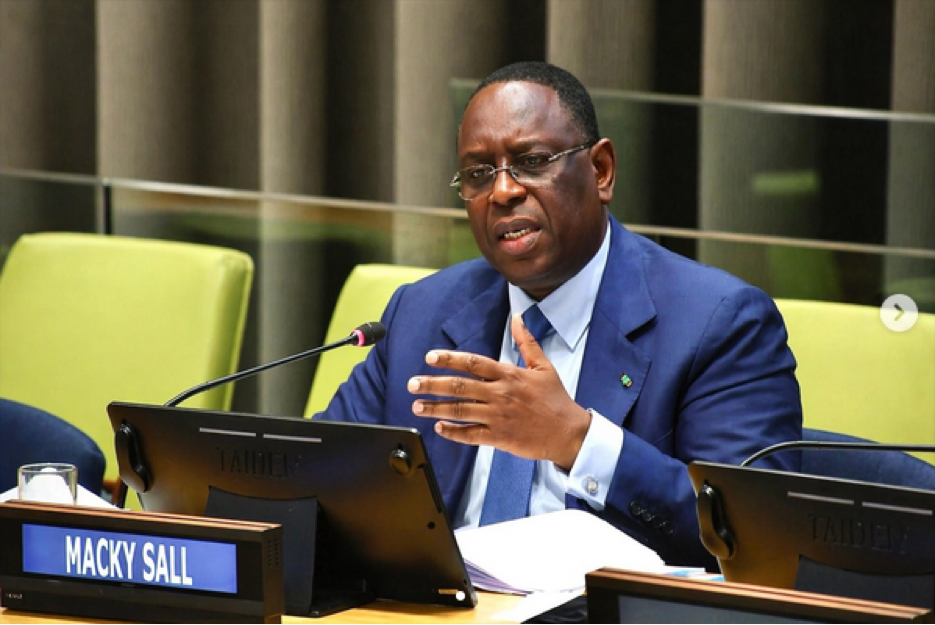
The renewed discussion around Macky Sall as a potential Secretary-General of the United Nations is being treated in some quarters as a question of personality, diplomacy, or political alignment. That framing is dishonest. This conversation is not about Macky Sall. It is about whether Africa is allowed to lead in a system deliberately designed to prevent it from doing so.
For over sixty years, Africa has been present at the United Nations in numbers but absent in power. Fifty-four African states sit in the General Assembly, yet when the most consequential decisions are made, authority is monopolised by five countries—the United States, United Kingdom, France, Russia, and China—each armed with veto power. One objection from any of them outweighs the collective will of an entire continent.
This is not an accident of history. It is a deliberate inheritance of post–World War II power, preserved long after colonial empires collapsed in name but not in influence. Africa gained flags, anthems, and seats in the General Assembly. What it did not gain was authority.
When African states flooded into the UN in the 1960s, they were welcomed rhetorically and sidelined structurally. Former colonial powers retained vetoes. Former colonies were invited to debate decisions already made. This imbalance has never been corrected.
The consequences are not abstract. They are written in African blood and African poverty. From the Congo crisis of the 1960s to the NATO-backed intervention in Libya in 2011, Africa has repeatedly been the laboratory where Security Council decisions are tested—often with catastrophic results. These interventions are authorised in chambers where Africa has no permanent voice, no veto, and no power to stop the damage.
The hypocrisy deepens when peacekeeping is discussed. African countries supply a significant share of UN peacekeeping troops. African soil hosts some of the most complex and long-running UN missions. African soldiers die enforcing mandates they had no role in shaping. Africa pays the price, but others hold the pen.
Even when Africa speaks with one voice, it is ignored. The African Union, through the Ezulwini Consensus and the Sirte Declaration, has been unequivocal: Africa demands permanent representation on the Security Council, with veto power if the veto continues to exist. This demand is not radical. It is logical. It has been acknowledged, praised, and systematically buried.
Macky Sall’s potential candidacy exposes the lie at the heart of global governance. We are told that the United Nations represents all humanity, yet the selection of its Secretary-General can be nullified by a single veto from one permanent member—overriding the will of 54 African states and more than a billion people. This is not democracy. It is oligarchy dressed in diplomatic language.
Africa’s exclusion weakens the UN itself. A body that preaches equity while institutionalising inequality cannot credibly arbitrate global justice. A Security Council that treats Africa as a subject rather than a stakeholder has forfeited moral authority over African crises.
The solution is no longer theoretical. It is political. The United Nations must confront its colonial inheritance. Security Council reform is not charity; it is overdue justice. Africa must have permanent representation, and the veto must either be extended equitably or abolished entirely.
Until that happens, every African candidacy for global leadership will hit the same invisible wall. The problem is not the quality of African leaders. The problem is a system built to ensure they never truly lead.
Africa is not asking for favours. It is demanding equity. Until global institutions reflect the realities of the 21st century—not the power arrangements of 1945—the promise of international cooperation will remain hollow.
This is not Africa’s failure. It is the world’s refusal to change.
A direct call to action: Africa must stop whispering
Africa’s marginalisation within global institutions is not sustained by external power alone. It is also sustained by African hesitation, fragmentation, and silence. If this injustice is to end, African leaders must move beyond ceremonial summits and rhetorical solidarity.
First, African heads of state must treat UN reform as a non-negotiable continental priority, not a diplomatic side issue. Every bilateral engagement with permanent members of the Security Council must carry a single, unified message: no reform, no legitimacy. Africa must stop offering unconditional cooperation to institutions that deny it power.
Second, the African Union must operationalises unity. Consensus documents like the Ezulwini Consensus cannot remain symbolic. Africa must agree on clear red lines, coordinated voting strategies, and collective diplomatic consequences for states that continue to block reform. Fragmentation is the system’s greatest ally; unity is Africa’s most powerful weapon.
Third, African leaders must leverage Africa’s real value in the international system. Africa supplies peacekeeping troops, strategic minerals, markets, and geopolitical legitimacy. These are not gifts—they are bargaining chips. Continued African participation in peacekeeping missions, multilateral initiatives, and global frameworks should be tied explicitly to progress on institutional reform. Power concedes nothing without pressure.
Beyond the continent, the African diaspora must recognise its strategic role. Across Europe, North America, the Caribbean, and Latin America, the diaspora influences elections, academia, media, and policy discourse. This influence must be organised. Diaspora intellectuals, lawmakers, journalists, and activists must frame UN reform not as an African complaint, but as a global democratic deficit that undermines international stability and fairness.
The diaspora can build alliances with civil society movements, progressive policymakers, and reform-minded states to internationalised Africa’s demand. Silence abroad is complicity. Advocacy abroad is leverage.
Finally, Africa must define its own success. The goal is not simply an African face in high office, but structural power. An African Secretary-General without Security Council reform is symbolism without substance. Representation without authority is a continuation of exclusion by other means.
This moment demands clarity and courage. Africa must stop appealing to the conscience of a system that has none. It must negotiate, pressure, condition, and insist. Global governance will not reform itself out of goodwill—it will reform only when exclusion becomes politically and economically costly.
Africa is not too weak to lead. It has simply been too polite in a system that respects only power.