


By Aminata Kuyateh
Parliamentarians and stakeholders on Friday demanded stronger legal protections, effective enforcement, and clear accountability measures to end sexual and gender‑based violence (SGBV) and harmful traditional practices in The Gambia.
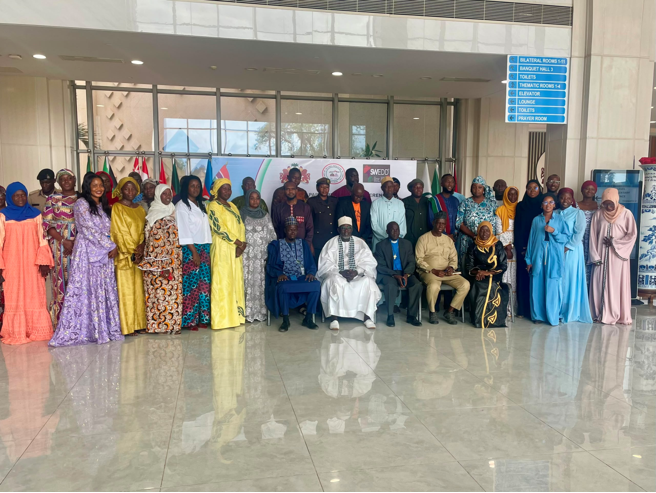
The call came at a high‑level parliamentary conference on SGBV and harmful practices, organised by the Network of Parliamentarians on Population and Development and the Legal Platform under the National Population Commission Secretariat, with support from the World Bank‑funded Sub‑Saharan Women Empowerment and Demographic Dividend Plus (SWEDD+) Project. The conference also aimed to strengthen lawmakers’ use of the Legal Compendium to drive reforms that protect women and girls.
Sukai F. Secka, representative of the Office of the Vice President, described the event as a crucial platform to confront SGBV and to build stakeholders’ capacity on legal frameworks for vulnerable groups. “This conference must produce practical solutions to advance the rights of women and girls,” Secka said.
Gibbi Mballow, chairman of the Network of Parliamentarians on Population and Development, warned that violence against women and girls remains a national emergency that demands urgent and collective action. He said harmful practices such as female genital mutilation still affect thousands of Gambian girls.
Citing WHO and the 2019–2020 Gambia Demographic and Health Survey, Mballow disclosed one in three women globally experiences physical or sexual violence in her lifetime, while 40 percent of ever‑married Gambian women have suffered physical, sexual or emotional violence from a partner. “These figures show SGBV is not a private matter but a national development crisis,” he said, urging enforcement, sustained advocacy and community engagement.
Mballow said parliament must go beyond drafting laws by using debates, oversight and constituency work to challenge harmful practices and support survivors. He stressed, however, that legislation alone will not end SGBV: “Laws are essential but must be matched with implementation, resources, strong institutions, public education and sustained community action.”
Niamina Dankunku NAM Samba Jallow, called SGBV a humanitarian crisis and public‑health emergency that undermines national development. “There can be no demographic dividend if half our population is held back by fear, trauma or harmful practices,” Jallow said. He urged lawmakers to update SGBV laws to address new threats, including digital violence and cyber harassment, and to replace a culture of silence and settlements with accountability and justice.
Jallow commended the World Bank and partners for investing in women’s empowerment and urged the conference to produce tangible outcomes. “Let this be a turning point. Let us commit to a Gambia where every woman and girl lives free from violence,” he said before officially opening the conference.