

By Lamin Keita
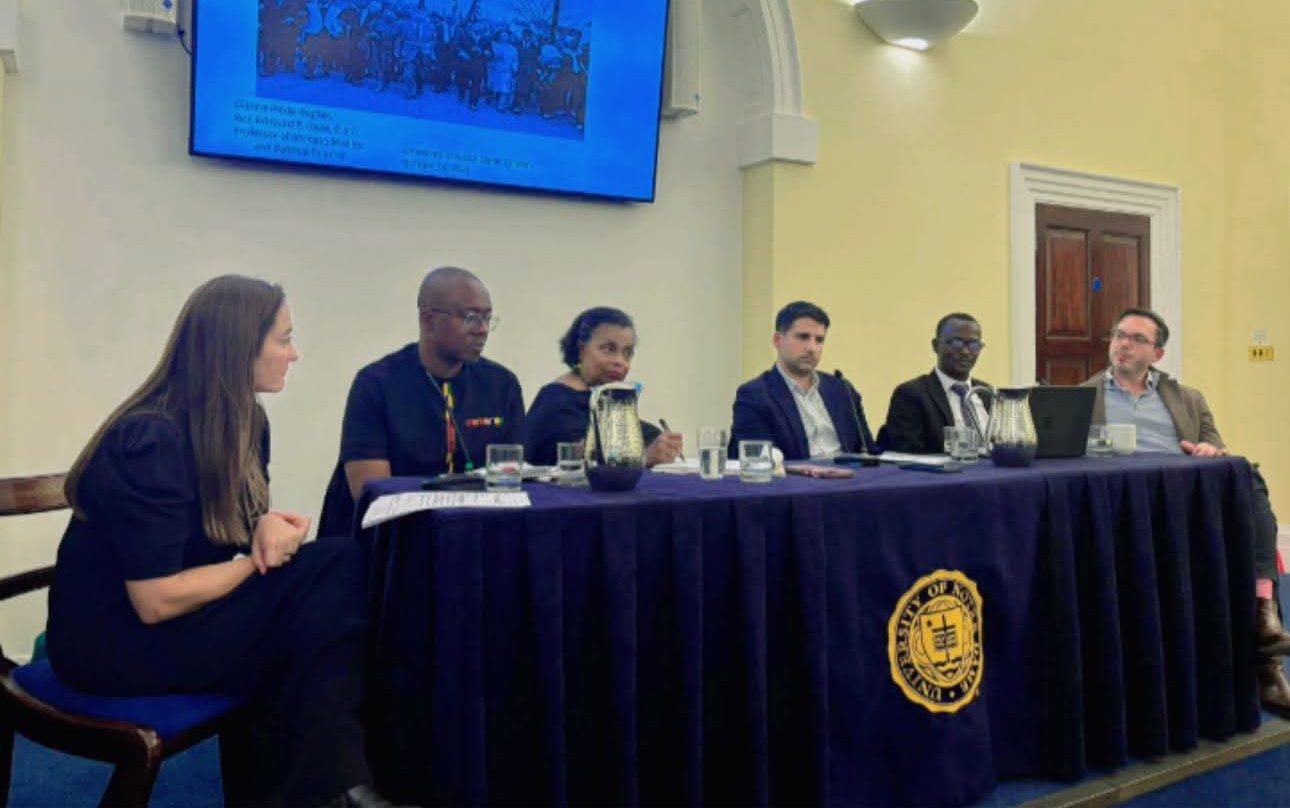
At the University of Notre Dame in London, I was asked to provide insights on perspectives regarding US democracy in challenging times, with a focus on a historical and comparative reflection. One area of interest is the key obstacles and discussions surrounding democracy in West Africa, which is the region I study.
Dianne Pinderhughes’s speech prompts me to reflect on the complexities of democracy in the context of the relationships between institutions, actors, and democratic outcomes amid contentious politics in West Africa. These developments indicate that the question of the feasibility of democracy in Africa is no longer a central concern. However, the existence of democracy requires ongoing support, and the mere presence of institutions does not guarantee that democracy can be easily established or consolidated, a point that echoes Samuel Huntington’s exploration of different forms and degrees of democracy.
Many West African countries, such as Mali, Burkina Faso, Niger, Guinea, Cameroon, and Madagascar, have experienced a reverse in democratic governance, marked by military coups, authoritarian tendencies, disputed elections, and rising militant extremism. These interconnected issues prompt a deeper discussion about how democracy is understood and practiced in different contexts. Wealth disparities and a complex modern economy have left many individuals feeling powerless, as if they lack control over their circumstances. Interestingly, people perceive that their politicians often struggle to manage the various forces they are supposed to govern and social media become the tool in inciting fear and anger towards those with differing opinions.
It is crucial to explore new forms of political participation, as proposed by Robert Dahl and Castel, that can empower individuals to create positive change for themselves and their families. Authoritarians often disrupt systems without offering constructive alternatives to the issues they criticise. We have observed that when people feel frustrated, they may resort to any action—even unlawful ones—simply to feel that something is happening. This is an important realisation for everyone.
We are currently witnessing politicians targeting civil society, undermining press freedom, and weaponising the justice system. These actions pave the way for populist movements, fuel sentiment, and stoke anger and grievances. These big men and deep state actors can dismantle existing structures, remove constraints on their actions, and empower a small group. When it comes to addressing significant issues like health care or education, progress is minimal because these challenges require the development of new systems. It’s not merely about securing a share, taking advantage of whatever resources are available, or ensuring that friends are rewarded while enemies are punished.
In West Africa, this has led to increased repression under the pretext of security concerns. In many African countries democracy is facing challenges from misinformation campaigns and political violence that undermine electoral integrity. These circumstances highlight that both external shocks and internal vulnerabilities can hasten democratic erosion, particularly when resilience mechanisms are weak or nonexistent. In theory, no one is immune: academics, policymakers, and society as a whole are grappling for solutions. Even countries that once believed they were insulated from significant attacks on democracy now realise that we are all part of a unified struggle.
My special thanks to the University of Notre Dame -London (the host), Kellogg Institution, my colleagues, Jaimie Bleck as well as Barnard Fojwuor and the wife for the special meal. I can’t forget my landed friend in the struggle, Ebrima Tunko Marenah and the wife, Mrs Drammeh for inviting me to a worth remembering dinner event.