


By Aminata Kuyateh
Ecowas leaders have intensified calls for stronger trade cooperation, tighter border management and accelerated economic integration across West Africa, following high-level meetings held in Banjul.
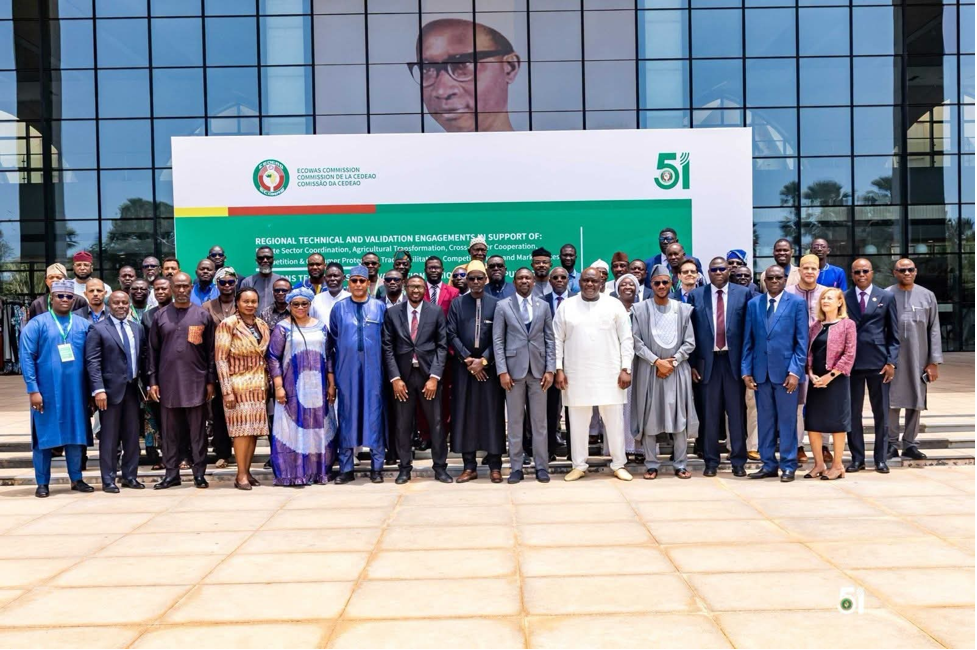
The meetings, convened from June 15 to 19, brought together policymakers, regional institutions, development partners and private sector actors to assess progress and push forward the bloc’s common market agenda.
Deliberations focused on closing implementation gaps in trade facilitation, strengthening coordination among Ecowas institutions, improving governance within business associations, advancing cross-border infrastructure projects and reinforcing consumer protection and competition frameworks.
Opening the sessions, Ecowas Resident Representative to The Gambia, Miatta Lily French, said the gathering underscored a shift from policy dialogue to practical integration.
“This is not just a series of technical discussions. It reflects concrete steps towards delivering the integration agenda,” she said.
French pointed to The Gambia’s geographic position and deep cross-border ties as clear evidence of the economic value of free movement and regional trade.
Interior Minister, Abdoulie Sanyang stressed that mobility and security must be pursued simultaneously, not treated as competing priorities.
“The task is not to choose between security and mobility, but to ensure they reinforce each other,” Sanyang said.
He warned that rising threats—including human trafficking, organised crime, cybercrime and arms smuggling—require stronger regional coordination. He called for real-time information sharing, harmonised border procedures and increased investment in technology to secure borders while facilitating legitimate trade and travel.
African Union Special Envoy on Food Systems, Dr Ibrahim Assane Mayaki, urged governments to prioritise agricultural transformation as the foundation for economic growth and job creation.
“The only viable path to absorb the millions of young people entering the labour market each year is through a transformed agri-food system,” he said.
Mayaki stressed that agriculture must be integrated with trade, transport, health, environmental management and industrialisation policies. He also called for stronger domestic resource mobilisation to reduce dependence on external funding.
Representing the Ministry of Finance, Permanent Secretary Baboucar Jobe reaffirmed the central role of the private sector in driving growth.
“Economic expansion and job creation will not happen without a dynamic and competitive private sector,” Jobe said, highlighting the role of entrepreneurs and investors in boosting industrialisation and regional trade.
Ecowas Commissioner for Economic Affairs and Agriculture, Dr Kalilou Sylla, acknowledged ongoing challenges but maintained that regional integration remains non-negotiable.
“We face challenges, but we remain committed as fifteen member states. Integration must continue,” he said.
Sylla emphasised that outcomes from the meetings must translate into measurable gains in trade, investment, food security, employment and consumer protection.
Speaking on behalf of the Minister for Agriculture, WALIC Director Momodou Jeng reiterated that agriculture remains central to The Gambia’s economy and regional food security.
He called for harmonised policies, shared infrastructure and coordinated investment across member states, while outlining national reforms aimed at improving input distribution, strengthening food security data systems and enhancing seasonal preparedness.
The meetings are expected to conclude with concrete recommendations on agricultural policy, trade facilisation and cross-border development initiatives, aligned with Ecowas’ vision 2050.