


By Olimatou Coker
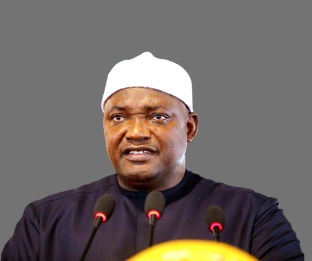
President Adama Barrow has said The Gambia is committed to lasting peace in West Africa and the Sahel, and urged regional leaders to embrace peace and unity as a cornerstone to regional development.
The Gambian leader said this in a statement read on his behalf by Higher Education Minister Prof Pierre Gomez, at a regional forum organised to strengthen security and stabilisation in the Sahel and West Africa at the Sir Dawda Kairaba Jawara Conference Centre.
The forum discussed issues around peace and security in West Africa and the Sahel.
In attendance were The African Union Mission for Mali and the Sahel (MISAHEL), in collaboration with the European Union’s Special Representative for the Sahel, Swiss Special Envoy for the Sahel, Danish Special Envoy for the Sahel, Germany’s Special Envoy for the Sahel, the Netherlands Ministry of Foreign Affairs (DSH), and International IDEA.
The two-day workshop was convened against the backdrop of a regional context marked by persistent and multidimensional challenges.
According to President Barrow, security cannot be achieved through military means alone, ”Bullets do not build classrooms, armoured vehicles do not bring rainfall, checkpoints do not restore trust between a government and its people, meaning that the nexus between security, governance and development is not merely theoretical. “It is the lived reality of communities across this region. Stabilisation without governance, accountability breeds resentment, security without justice, breeds resistance, development without inclusion breeds inequality, and inequality breeds conflict,” the Gambian leader said.
“We call upon the international community to support our efforts through coordinated investment in human security, this means moving beyond practical military aid to supporting long term stabilisation projects, climate adaptation programmes, judicial reforms and infrastructure that connects our markets, we need a multilateral response that addresses the root causes of radicalisation,” the president said.