

By CWAD consulting
UK Africa
By Mohammed Jallow

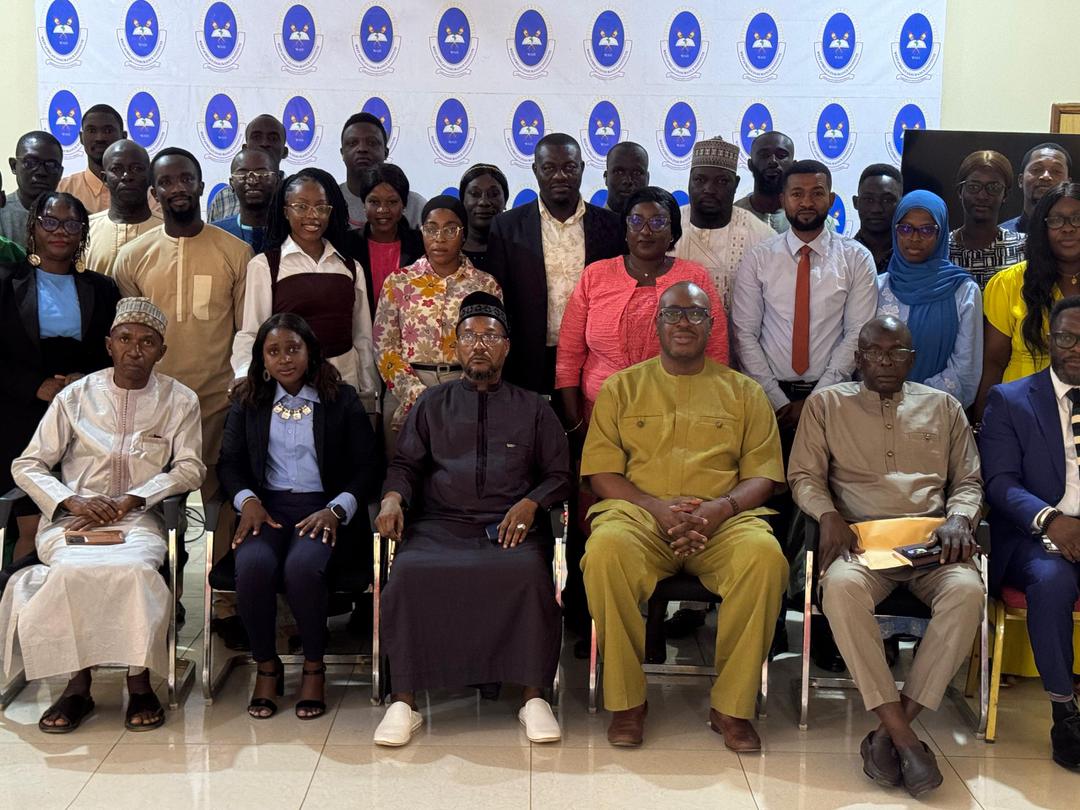
The insurance industry in The Gambia continues to evolve within a rapidly changing economic and regulatory landscape, where emerging risks, increasing customer expectations, and the growing complexity of financial systems demand higher standards of professionalism and technical competence. In this regard, the recently held Free Two Day Risk Management Training Program at the prestigious West African Insurance Institute stands as a timely and strategic intervention for the advancement of the country’s insurance market.
Facilitated by the distinguished Sir Reverend Michael Winston Kuti George, Chief Executive Officer of C-WAD Consultancy, alongside renowned Risk Management Specialist Dr. Bintou Jobe Sanyang, the intensive training program brought together professionals and practitioners from across the insurance sector to deepen knowledge, sharpen practical skills, and reinforce institutional resilience within The Gambia’s insurance ecosystem.
This initiative could not have come at a more critical moment.
The insurance market in The Gambia is gradually transitioning from a traditional claims based model into a more dynamic, analytical, and preventive framework that requires robust risk assessment mechanisms, proactive planning, and data driven decision making. As industries become increasingly interconnected and exposed to local, regional, and global disruptions ranging from climate related events to cyber vulnerabilities, financial instability, operational risks, and regulatory compliance challenges, the need for competent risk management professionals has become indispensable.
The two day training program focused on critical areas including mastering risk surveys and Key Risk Indicator analysis, identifying and classifying hazards, conducting regulatory gap analysis in insurance, building practical risk management tools through Excel based systems, preparing professional risk reports, and applying structured planning methodologies such as Gantt chart analysis.
These are not merely academic exercises. They are practical competencies that directly influence the efficiency, profitability, credibility, and sustainability of insurance institutions.
For years, one of the major challenges confronting insurance development in The Gambia has been the limited depth of specialized technical capacity in areas of enterprise risk management. While the market has witnessed commendable growth in underwriting operations, claims administration, customer service innovation, and product diversification, the need for advanced risk intelligence remains a pressing priority.
Training interventions such as this bridge that gap.
Sir Reverend Michael Winston Kuti George brought to the sessions a wealth of practical international experience, offering participants not only theoretical frameworks but also tested operational insights applicable across African insurance markets. His delivery reportedly challenged participants to rethink risk beyond compliance obligations and to embrace it as a strategic management discipline capable of creating institutional value.
Dr. Bintou Jobe Sanyang, with her academic depth and professional expertise, enriched the discourse through evidence based methodologies and contextual applications relevant to the Gambian market. Her contributions reinforced the critical connection between technical risk governance and organizational performance.
Their combined facilitation reflected an ideal blend of practical industry wisdom and scholarly precision.
The significance of this training extends beyond the walls of the classroom.
A stronger insurance sector is fundamental to national economic resilience. Insurance is not simply about compensating losses after they occur. It is about enabling confidence for investment, facilitating entrepreneurship, protecting assets, stabilizing businesses, and creating the financial assurance necessary for economic expansion.
When insurers possess stronger risk management capabilities, they price products more accurately, assess exposures more effectively, improve claims predictability, reduce unnecessary losses, and build stronger public confidence.
Public confidence remains one of the defining pillars upon which the future growth of insurance penetration in The Gambia depends.
For many Gambians, insurance remains poorly understood, underutilized, and in some instances viewed with skepticism. This perception can only be changed when insurance institutions demonstrate professionalism, transparency, technical excellence, and reliable service delivery.
Risk management training of this nature contributes directly to that transformation.
It equips insurance professionals with the competence required to anticipate emerging threats, strengthen operational systems, improve governance standards, and deliver products that respond more effectively to the realities faced by businesses and households.
Moreover, such capacity building aligns perfectly with the aspirations of The Gambia’s broader financial sector reforms and regulatory modernization agenda. As regional integration within the ECOWAS subregion advances, Gambian insurers must position themselves to compete confidently within an increasingly sophisticated marketplace.
Professional development is therefore no longer optional. It is an imperative.
The leadership shown by the organizers, including the collaboration between industry institutions and expert facilitators, deserves recognition and replication. Continuous technical education must become embedded within the culture of the insurance sector if meaningful transformation is to be achieved.
This should inspire further partnerships involving regulators, insurers, brokers, academic institutions, and international consultancy bodies to create regular platforms for advanced professional learning.
The future of insurance in The Gambia will depend not solely on capital adequacy or product innovation, but equally on the quality of human capital steering the industry.
Knowledge remains the most powerful risk mitigation asset.
As participants depart from this training with newly acquired competencies in hazard analysis, regulatory diagnostics, professional reporting, and strategic risk planning, the broader expectation is that these skills will cascade into stronger institutions, better decision making, improved service standards, and greater market confidence.
The Free Two Day Risk Management Training Program was therefore more than a workshop.
It was a statement of intent.
It signaled a collective commitment to elevating professional standards, strengthening institutional resilience, and preparing The Gambia’s insurance sector for the demands of a future shaped by complexity, uncertainty, and opportunity.
The message is clear.
A resilient insurance market begins with informed professionals.
The Gambia’s insurance industry must continue to invest in knowledge, embrace innovation, and cultivate technical excellence if it is to fulfill its strategic role as a pillar of national development.
This training was a commendable step in that direction, and its relevance to the Gambian insurance market cannot be overstated.