

By Musa Basadi Jawara
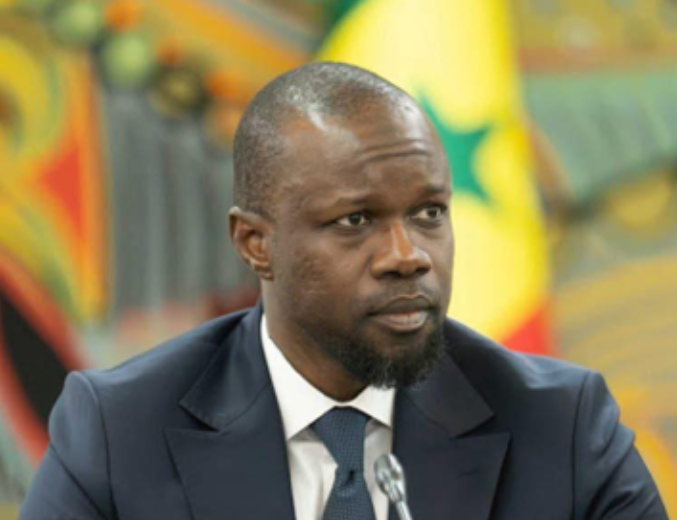
Prime Minister Ousmane Sonko’s recent English-language intervention must first be acknowledged for what it is technically: a masterclass in delivery. For a francophone statesman, his command of English was outstanding. Vocal tone, sentence structure, cadence, and clarity were near flawless. No contemporary African authority rivals him in that moment for pure linguistic command of English. The delivery was perfect, and credit is due. It demonstrated preparation, discipline, and a rare ability to project authority in a non-native tongue.
That linguistic excellence is precisely what makes the substance of the speech so consequential. When a leader speaks this well, the world listens. Words land harder. Implications travel faster. Eloquence amplifies both wisdom and error. And in Sonko’s case, the error was diplomatic brinkmanship of a kind that Senegal, and Sonko himself, can ill afford.
The rhetorical posture Sonko adopted mirrored the ex-Pan-Africanist titans — Thomas Sankara, Patrice Lumumba, and Kwame Nkrumah. The cadence of defiance, the invocation of sovereignty against external powers, the moral absolutism — all were present. These men were giants who reshaped Africa’s political imagination. But they also carried the scars of how confrontational rhetoric toward Western superpowers can end.
Sonko’s error is one of context. Sankara, Lumumba, and Nkrumah stood as heads of state. They were the number one authority in their nations, with full constitutional and symbolic command of foreign policy. Sonko is not. He is Prime Minister under President Bassirou Diomaye Faye. He does not hold supreme authority. To borrow the rhetoric of heads of state without the office is to create a dangerous mismatch between language and legitimacy.
That mismatch became a diplomatic blunder when he declared, “Mr Trump is not a man of peace he is a man of world destabilisation.” As a direct, personal attack on a sitting U.S. President, the statement breaches diplomatic protocol. For a Prime Minister, it is outside his remit. For any head of government of a state that is a droplet in the ocean compared to the United States, it is brinkmanship at its worst.
To be clear on scale: The United States commands the world’s most powerful military, the largest economy by GDP, and the most technologically advanced infrastructure. Its Artemis II mission just circled the Moon’s far side. It remains the sole military and economic superpower. Senegal, by contrast, is navigating university violence and complex IMF negotiations to secure financial support. The asymmetry is not moral, but material. Statecraft requires recognising it.
President Diomaye Faye, as head of state, might carry marginally more latitude to make pointed remarks about foreign leaders. Even then, such language would be a no-go area for a state seeking IMF support and stable partnerships. For Sonko as Prime Minister, it is simply not his lane. Foreign policy pronouncements of that magnitude are the prerogative of the presidency, and even presidents weigh them against national interest.
The historical pattern Sonko invoked works against him. The Pan-Africanist leaders he echoed did not last once their confrontations with Western superpowers peaked. Lumumba was deposed and killed within months. Nkrumah was overthrown. Sankara was assassinated. Their moral courage is undeniable. But their tenures were cut short at the precise moment rhetoric outpaced state capacity. Mimicking their rhetoric without their constitutional authority, and without a Cold War bipolar system to play for leverage, is not strategy. It is nostalgia weaponised.
Sonko’s intransigence and stubbornness have reached a boil. That trait built PASTEF and carried him through prison to the premiership. But the same trait, unchecked, risks costing him terribly. He now leads a party with a parliamentary majority and threatens to return to opposition if President Faye deviates from PASTEF’s vision. That is domestic hardball. Exporting it to Washington is a different game with different rules.
The IMF context makes this starker. Senegal’s debt burden reached 132% of GDP by end-2024. Sonko has declared the country will not pursue debt restructuring despite IMF concerns. Ongoing negotiations are complex and fragile. A public attack on the US President by the Prime Minister does not strengthen Senegal’s hand in those talks. It weakens it. The U.S. holds decisive influence at the IMF. Diplomacy is arithmetic.
There is also the matter of personal trajectory. Sonko’s rise from opposition figure barred from the 2024 ballot to Prime Minister is extraordinary. But a leader who, only a few years ago, lacked modest cash for decent massage facilities in Dakar must understand the weight of words once in office. Statements that plunge a country into a diplomatic morass carry unintended consequences for millions who never chose the fight.
This is not an argument against Pan-Africanism or sovereignty. Sonko’s April 9, 2026 dialogue with Pascal Boniface on “Senegal’s place in the new world order, African sovereignty, and international relations” is the correct forum for those debates. The subject at hand is autonomy, heritage, and the mutual world — how Senegal asserts sovereign identity and historical legacy while navigating an interdependent global order. Rebalancing relations with global powers requires intellect, not insult. Sovereignty is built through leverage, growth, and alliances — not through ad hominem attacks on superpower leaders.
The theme demands discipline. Autonomy without capacity invites isolation. Heritage without strategy becomes grievance. The mutual world rewards states that pair conviction with calibration. Senegal’s leverage lies in ideas, stability, and economic reform — not in personalising disputes with Washington.
Sonko’s English was impeccable. His message was not. The first proves he can command any room in the world. The second proves he must choose his rooms, and his words, more carefully. If this essay brings him to that realisation, then eloquence will finally be matched by prudence. Senegal needs both.
The stakes are not abstract. A Prime Minister’s words move markets, sway negotiators, and shape alliances. When delivery is flawless but judgment lapses, the cost is paid in lost goodwill and hardened positions. The speech showed Sonko can be heard anywhere. The challenge now is ensuring Senegal is still welcome everywhere he speaks.
I have written extensively and vociferously when this Pastef government took power two years ago. My prophecy has been proven beyond doubt and my warnings are accurate and right on the money. There is confusion, missteps, and amateurism everywhere; they are not better than the system they replaced and the incompetence is everywhere. They accused the former administration of holding foundations for First Ladies and the like, and of _caisse noire_ — slush funds, in French — yet the same system exists. Hardship in Senegal, in making ends meet by ordinary citizens, is widespread and life is difficult.
The inexperience and cavalier authorities are already preoccupied with the 2029 presidential elections. What else is this but shortsightedness and misplaced priorities from a greedy, inexperienced, and megalomaniac bunch of recalcitrant and misguided authority? Senegal and the Senegalese people have suffered a colossal disappointment. History is patient, but time will not be kind to the rulers of the day.